
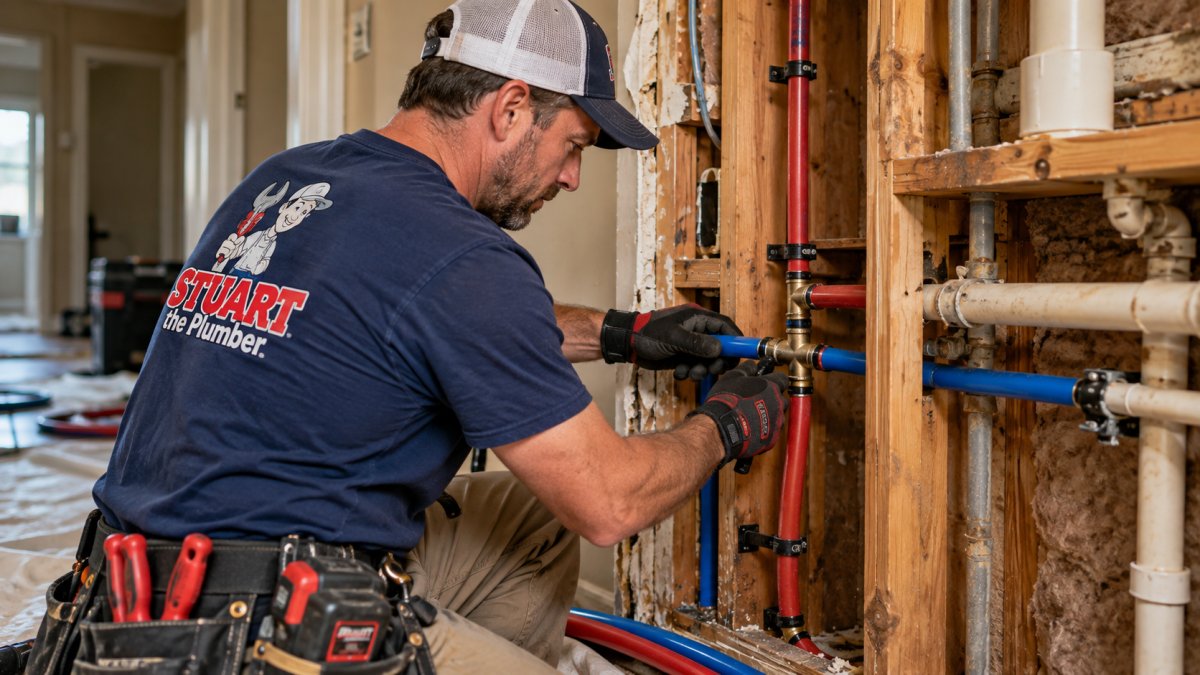
Every single polybutylene pipe system in Georgia has now outlived its intended service life. If your home was built between 1978 and 1995, those dull gray lines behind your walls aren’t something you can safely ignore. Scheduling a polybutylene pipe replacement Georgia homeowners can rely on is no longer a matter of if, but when.
It’s completely normal to feel uneasy about the risks. Nobody wants to deal with catastrophic leaks while away from home, unexpected insurance policy cancellations, or drops in resale value during a future home sale. You deserve dependable plumbing that protects your equity instead of keeping you on edge.
This guide explains why polybutylene pipes fail in Georgia homes and how a professional replacement protects your property value and daily peace of mind. As a licensed local plumbing company serving Braselton and North Georgia, Stuart the Plumber, LLC breaks down common warning signs, modern repiping options, and the installation timeline so you know what to expect.
Essential Facts About Polybutylene Pipe Replacement
- Discover why standard municipal water additives cause gray plastic piping to deteriorate from the inside out.
- Learn how to locate hidden polybutylene lines and spot physical warning signs around water heaters and crawlspaces.
- Understand the step-by-step process of polybutylene pipe replacement Georgia homeowners use to upgrade to modern PEX.
- Find out how proactive repiping helps prevent insurance coverage denials and preserves your property value.
Understanding the Polybutylene Problem in Georgia Homes
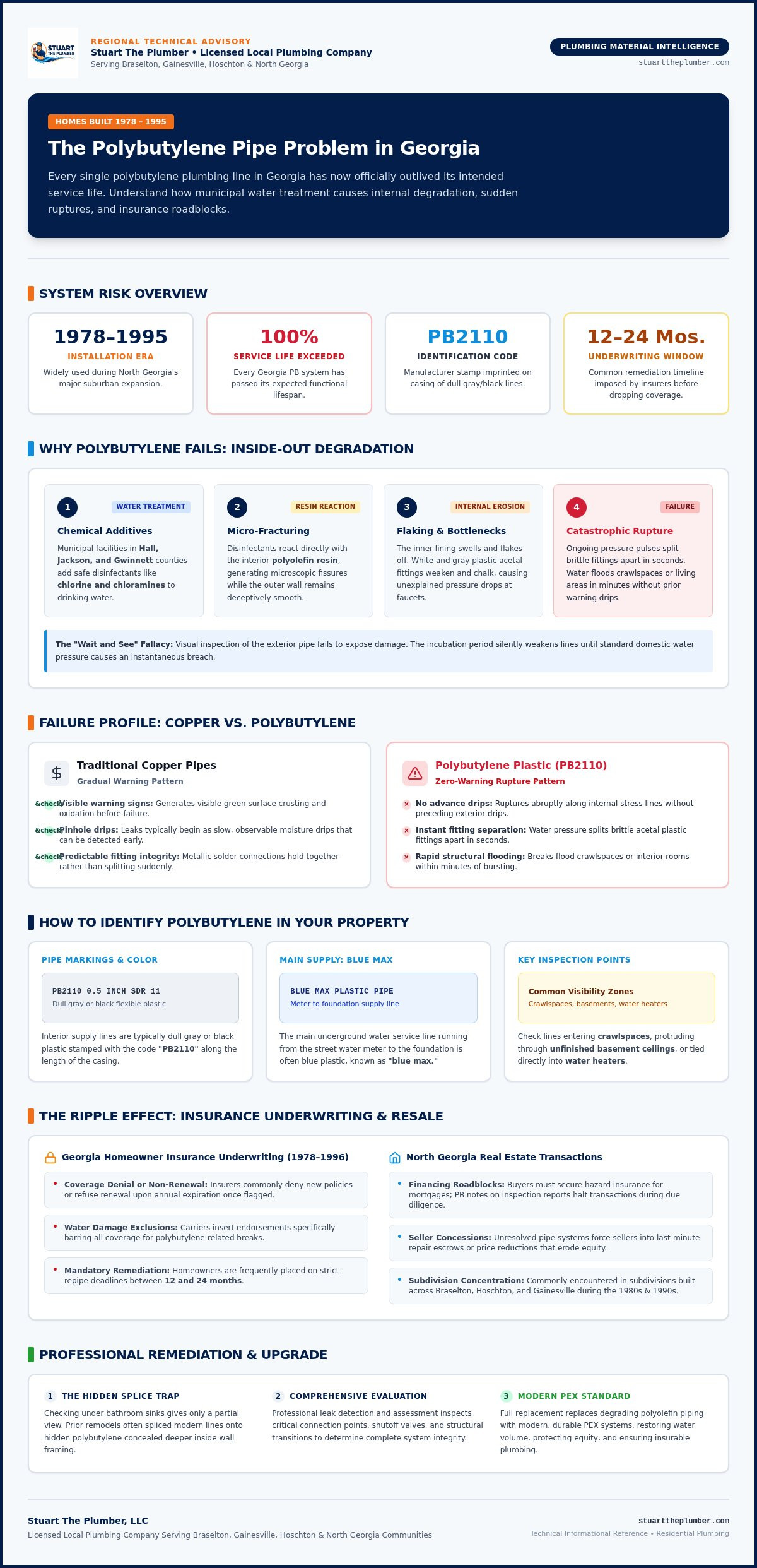
Polybutylene is a flexible, dull gray plastic pipe installed extensively in residential construction between 1978 and 1995. During North Georgia’s massive suburban expansion, builders favored this material because it was inexpensive and simple to rough in compared to rigid copper. Today, that short-term convenience creates serious liabilities for property owners. Scheduling a polybutylene pipe replacement Georgia specialists recommend is often the only permanent fix, because these lines fail from the inside out.
A standard visual check will not tell you the whole story. The outer surface of the pipe can look completely smooth while the interior wall is flaking apart. That hidden degradation leaves homeowners unaware of the danger until a line suddenly lets go.
The Role of Georgia Water Chemistry
Municipal water treatment facilities across Hall, Jackson, and Gwinnett counties rely on chlorine and chloramines to keep drinking water safe. While harmless to drink, these disinfectants react directly with the polyolefin resin inside polybutylene. Over time, that chemical exposure creates microscopic fractures throughout the pipe walls and plastic fittings.
As water pressure continuously pulses through the plumbing system, those micro-fractures spread. At Stuart the Plumber, LLC, our technicians regularly see these internal structural failures in subdivisions built across Braselton and Gainesville during the late 1980s and early 1990s.
Why “Wait and See” is a Risky Strategy
Pinhole leaks in copper lines typically give warning signs, such as green corrosion crust or slow, visible drips. Polybutylene behaves differently:
- It ruptures along internal stress lines without dripping first.
- Water pressure can split brittle fittings completely apart in seconds.
- Unattended breaks can flood crawlspaces or finished living areas within minutes.
The incubation period of polybutylene failure in Georgia climates is the multi-year chemical breakdown where treated water silently weakens the pipe until regular water pressure forces a sudden, catastrophic breach. Delaying your polybutylene pipe replacement Georgia project simply leaves your home vulnerable to sudden structural flooding when you least expect it. If a line does fail before you can schedule a replacement, having access to reliable emergency plumbing North Georgia homeowners can call immediately is critical to limiting water damage.
Signs You Need Polybutylene Pipe Replacement
Spotting trouble before a pipe bursts starts with knowing what materials sit behind your baseboards. Polybutylene interior lines are typically dull gray or black plastic, stamped with the code “PB2110” along the casing. You will most often spot them running into your crawlspace, sticking out from unfinished basement ceilings, or tied directly into your water heater connections. The main underground supply line running from your water meter out by the street to the foundation might also be blue plastic, known in the trade as “blue max.”
Pay close attention to the fittings joining these pipes together. White or gray plastic acetal fittings often develop a chalky, flaking exterior as they break down. When water treatment chemicals weaken the plastic from within, the inner lining can swell and flake off. That internal bottleneck restricts water flow, causing unexplained pressure drops at your faucets. Worse, micro-fractures frequently create silent leaks inside stud bays, dripping into subfloors for months before peeling paint or musty odors expose the damage.
Insurance and Resale Challenges in Georgia
Carriers writing homeowners policies in Georgia maintain strict underwriting rules for properties built between 1978 and 1996. When underwriting inspections flag polybutylene, insurers commonly take one of three actions:
- Deny new coverage or refuse to renew existing policies upon expiration.
- Add specific water-damage exclusion endorsements that deny coverage for PB-related breaks.
- Require homeowners to complete a repipe within a strict remediation window, often between 12 and 24 months.
These policy restrictions directly affect home sales across Braselton and Hoschton. Buyers must secure hazard insurance to finalize mortgage financing. If a home inspector lists polybutylene, deals often stall during due diligence, forcing sellers into last-minute price concessions or repair escrows that hurt home equity.
Visual Inspection vs. Professional Assessment
Checking under a bathroom sink only gives you a tiny snapshot of your system. Many past remodels simply spliced modern materials onto hidden polybutylene lines deeper in the walls. Scheduling a professional leak detection can uncover active, hidden seepage before it destroys your flooring.
During an on-site evaluation, a Stuart the Plumber, LLC technician examines connection points, shutoff valves, and structural transitions to determine the true state of your plumbing. If you suspect your lines are past their prime, you can reach out to our local team to review the best approach for a lasting polybutylene pipe replacement Georgia property owners can trust.
The Replacement Process: What to Expect
A full home repiping project sounds overwhelming, but an organized plan keeps the work running smoothly. The process breaks down into four practical stages:
- Site assessment and mapping: Technicians survey the existing layout, locating all branch lines, main supply lines, and fixture connections throughout the structure.
- Material selection: Modern flexible PEX piping is chosen for its longevity, thermal endurance, and resistance to municipal chlorine degradation.
- Strategic access: Rather than tearing out entire walls, plumbers cut small, precision openings in drywall near fixture hookups to thread flexible lines through existing stud cavities.
- Installation and testing: New lines are routed, secured, and pressure-tested before connecting to your fixtures, ensuring zero leaks prior to wall patching.
Executing a proper polybutylene pipe replacement Georgia property owners can depend on means treating the home with care from start to finish.
Trenchless Options for Service Lines
Replacing the exterior polybutylene line that runs from the street meter to your foundation does not require destroying your front yard. With modern trenchless sewer and water line repair techniques, plumbers install durable new piping underground using minimal entry pits. This no-dig approach preserves mature Georgia landscaping, protects paved driveways, and completes exterior line work much faster than traditional open-trench digging.
Minimizing Disruption in Your Daily Life
Daily routines matter. Stuart The Plumber plans repipe work in organized zones, keeping your main water supply operational as long as possible each day. Service is usually shut off only during active line cutovers, with water restored by late afternoon whenever possible.
Crews protect flooring with drop cloths, set up dust containment, and clean workspaces daily. For a standard North Georgia home, the plumbing installation typically takes between one and three days, followed by final county inspections and straightforward drywall restoration.
Investing in Your Home: ROI and Peace of Mind
Replacing aging plumbing before it ruptures is one of the smartest investments a property owner can make. Emergency water extraction, structural drying, and mold remediation can quickly disrupt your life and generate huge out-of-pocket expenses, especially if an insurer denies the claim. A proactive upgrade eliminates that constant threat. Installing modern PEX tubing also delivers immediate daily improvements. PEX dampens the loud banging sounds caused by water hammer in older systems, and its smooth interior walls restore consistent water volume to your faucets and showers.
Completing a professional repipe closes the loop with county inspectors and underwriters. Once the work receives final sign-off, you have the official documentation needed to satisfy insurance carriers and restore clean insurability to your title.
Long-Term Durability of PEX vs. Polybutylene
While polybutylene proved to be an unreliable experiment, PEX carries an expected design lifespan of up to 50 years. It handles North Georgia’s seasonal temperature swings with ease. Because flexible PEX tubing expands slightly under pressure changes, it provides superior resistance to splitting during harsh North Georgia winter freezes compared to rigid, embrittled plastic lines. In the event a freeze does cause a sudden pipe failure, knowing how to reach a trusted provider of emergency plumbing in North Georgia can make the difference between minor repairs and major structural damage.
Choosing a Licensed Local Expert
Repiping a residence involves pulling permits through county building offices in Jackson, Barrow, Hall, or Gwinnett. Working with a licensed Braselton plumber ensures every line meets the Georgia State Minimum Standard Plumbing Code. Local knowledge counts when navigating regional construction styles, crawlspace layouts, and utility connections.
Scheduling a timely polybutylene pipe replacement Georgia homeowners can count on protects your equity before hidden leaks develop. Stuart The Plumber provides straightforward guidance and skilled craftsmanship to keep your water running safely. Protect your home and regain lasting peace of mind by getting in touch with our team today.
Secure Your Georgia Home With Modern Piping
Aging polybutylene plumbing puts your property at risk of sudden water damage, denied insurance claims, and complications during future resale. Proactive replacement solves these issues before a hidden line fails. Swapping fragile gray tubing for modern PEX restores reliable water pressure, eliminates pipe chatter, and provides dependable freeze resistance through cold Georgia winters.
Stuart The Plumber is a licensed and insured local plumbing company serving Braselton and surrounding North Georgia communities. Our team specializes in repiping structures and trenchless utility line solutions, delivering careful craftsmanship with minimal disruption to your home. Taking control of your plumbing today ensures lasting protection for your investment and total peace of mind tomorrow.
Scheduling a timely polybutylene pipe replacement Georgia experts recommend puts an end to plumbing worries and protects what matters most.
Frequently Asked Questions
How do I know if my Georgia home has polybutylene pipes?
Inspect visible supply lines where water enters the house, such as around your water heater, basement ceilings, or crawlspace access points. Look for flexible, matte-gray tubing stamped with the code “PB2110” or blue plastic lines entering from the yard. If your property was built between 1978 and 1995 in communities like Braselton or Buford, having a licensed plumber confirm your pipe material removes the guesswork.
Will my homeowners insurance cover a polybutylene pipe burst in 2026?
Coverage depends entirely on your specific policy, but many Georgia carriers now restrict or completely exclude water damage caused by polybutylene failures. Insurers often add explicit exclusion endorsements or decline renewals once these pipes are flagged on an inspection report. Scheduling a proactive polybutylene pipe replacement Georgia plumbers perform is the safest way to prevent costly, uncovered restoration bills and maintain clean policy terms.
How long does a full polybutylene pipe replacement take?
The active plumbing installation typically takes one to three days for most single-family residences in North Georgia. Total time frames vary based on the square footage of your home, the number of bathrooms, and whether your house sits on a slab or crawlspace. Following the pipe installation, local county plumbing inspections and professional drywall patching usually take an additional day or two to wrap up completely.
Do I have to move out of my house during the repiping process?
No, you do not need to move out or book a hotel during the repiping process. Professional plumbing teams work in coordinated zones across your home to minimize daily disruption. Water service is shut off only during working hours while technicians install and tie in new lines. Crews make sure essential water service is restored by the end of each workday so your household remains functional overnight.
What is the best material to replace polybutylene pipes with in Georgia?
Cross-linked polyethylene, commonly known as PEX, is the preferred replacement material for Georgia residential plumbing systems. PEX is exceptionally durable, resists scaling and chlorine degradation from municipal water, and handles sudden regional freeze cycles better than rigid alternatives. Its flexibility allows plumbers to snake lines through existing wall framing with fewer fittings and significantly fewer drywall cuts than traditional copper pipe installations.
Can I just replace the sections of pipe that are leaking?
Spot repairs are not recommended because polybutylene breaks down uniformly throughout your entire plumbing system. Splicing a repair coupling onto a cracked line only shifts pressure to the next brittle section, practically guaranteeing another burst down the road. Investing in a comprehensive polybutylene pipe replacement Georgia specialists carry out permanently resolves the underlying risk, keeping your home dry and protecting your property value.

Article by
Stuart Balestracci
Stuart is a third-generation master plumber dedicated to providing dependable, honest plumbing service throughout Braselton and North Georgia. Building on a family tradition of hands-on trade expertise, he brings practical problem-solving and high standards to every job—from urgent leaks and clogged drains to water heaters, sewer lines, and whole-home repiping.
Stuart believes customers deserve clear answers, quality workmanship, and repairs that address the real issue—not a quick fix that creates another problem later. Through Stuart the Plumber, LLC, he serves homeowners, property managers, and businesses with professional service, straightforward communication, and respect for their property. The company operates as a licensed Georgia plumbing business, license MP208668.
Disclaimer
The information in this article is provided for general educational and informational purposes only. While Sturat the Plumber, LLC makes reasonable efforts to keep information accurate and current, plumbing conditions, building systems, local codes, manufacturer instructions, and repair requirements vary by property and may change over time.
This content is not a substitute for an on-site inspection, diagnosis, estimate, professional plumbing service, or advice from a properly licensed professional. Do not rely on this article to diagnose gas leaks, sewer backups, hidden water leaks, water-heater failures, burst pipes, or other potentially hazardous conditions.
Plumbing work can involve risks including water damage, electrical hazards, gas hazards, sewage exposure, structural damage, and personal injury. Always follow applicable local codes, product instructions, and safety requirements. For active leaks, suspected gas leaks, sewage backups, flooding, loss of water service, or any situation that may create an immediate safety risk, contact a qualified professional or emergency services as appropriate.
Sturat the Plumber, LLC does not guarantee that the information in this article is complete, suitable for every property, or applicable to your specific circumstances. Any decisions or actions taken based on this content are at your own risk. Sturat the Plumber, LLC disclaims liability for loss, damage, injury, expense, or other consequences arising from the use of or reliance on this information.
For an evaluation of your specific plumbing concern, contact Sturat the Plumber, LLC for professional service. Sturat the Plumber, LLC is a licensed Georgia plumbing business, license MP208668.
Leave a Reply