
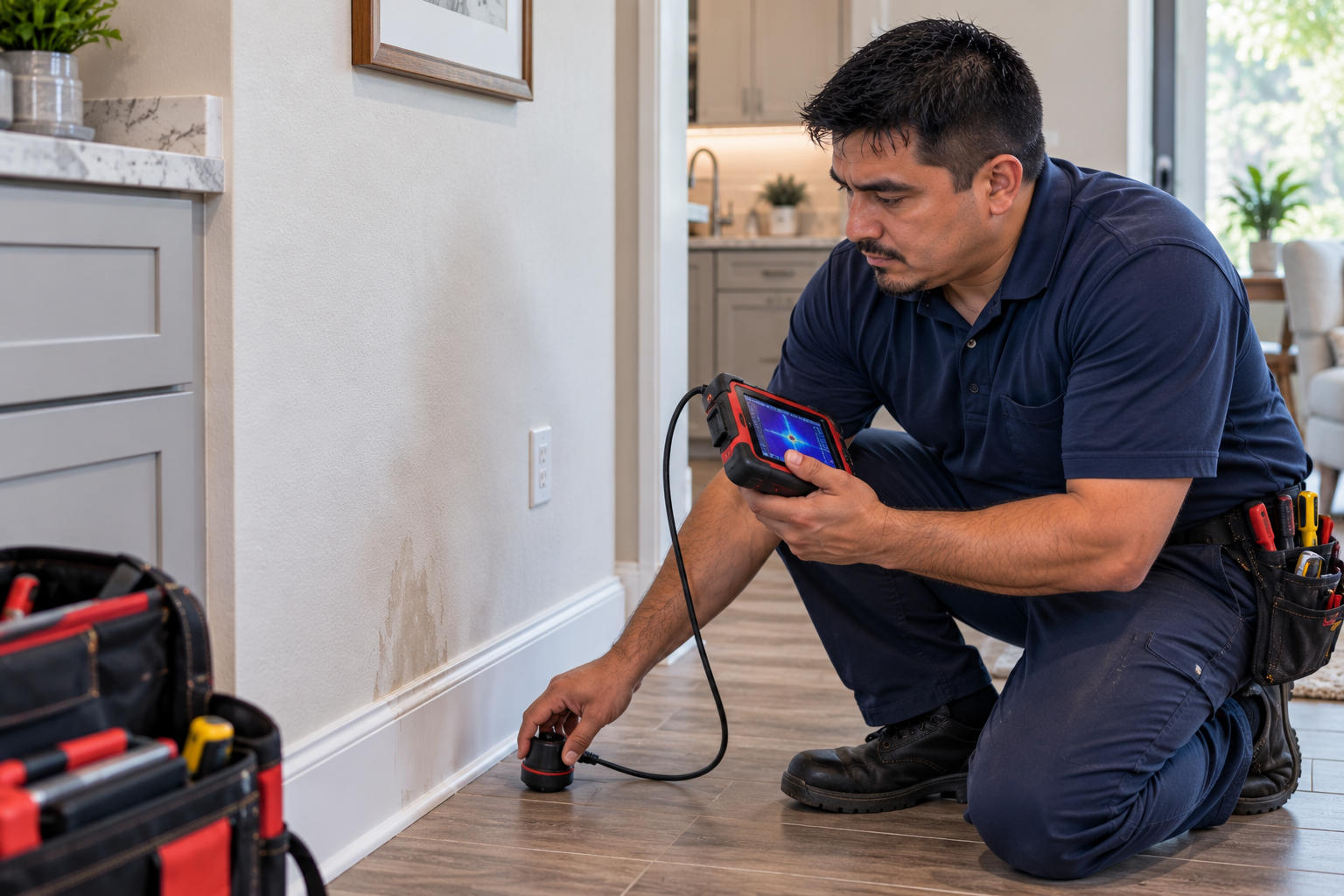
Hidden leaks in Braselton and North Georgia homes often start behind walls or under floors, silently wasting water until bills spike unexpectedly. Watching the water meter with every fixture closed reveals hidden flow instantly. Homes with various types of plumbing can face leak risks, so prompt professional leak detection is essential for all homeowners.
Why should you find a leak before it finds you?
A hidden water leak rarely starts with a dramatic burst pipe. The problem begins quietly behind a wall, under a floor, or inside a fixture, wasting water and spreading damage where homeowners cannot see it. Finding that leak early prevents a small issue from becoming a costly emergency.
What happens when a leak goes undetected?
Even a small, undetected leak wastes thousands of gallons of water annually. That steady drip causes extensive structural damage that may cost thousands to repair. The damage spreads to flooring, drywall, and framing before any visible sign appears on a surface.
What is the first warning sign of a hidden leak?
An unexplained jump in the water bill often provides the first clue. This spike happens even when every faucet and fixture in the home appears closed. Homeowners who ignore that higher bill risk letting the damage grow for weeks or months.
Plumbing leak detection catches these problems before they escalate. A licensed local plumbing company serving Braselton and North Georgia can perform a thorough inspection. The process identifies the exact source of the leak without tearing into walls or guessing at the location.
Slab leak detection addresses a particularly dangerous type of hidden leak. A leak under a concrete foundation can go unnoticed for months, weakening the slab and inviting mold growth. Professional water leak detection service uses specialized equipment to find these buried leaks quickly.
Water line leak detection locates breaks in the main supply line running to the home. A break in this line wastes water continuously and can undermine the soil around the foundation. Catching it early protects both the water bill and the structural integrity of the property.
The cost of a professional inspection is a fraction of the repair bill for water damage that has spread through walls and floors. Homeowners who act at the first warning sign save money, time, and stress.
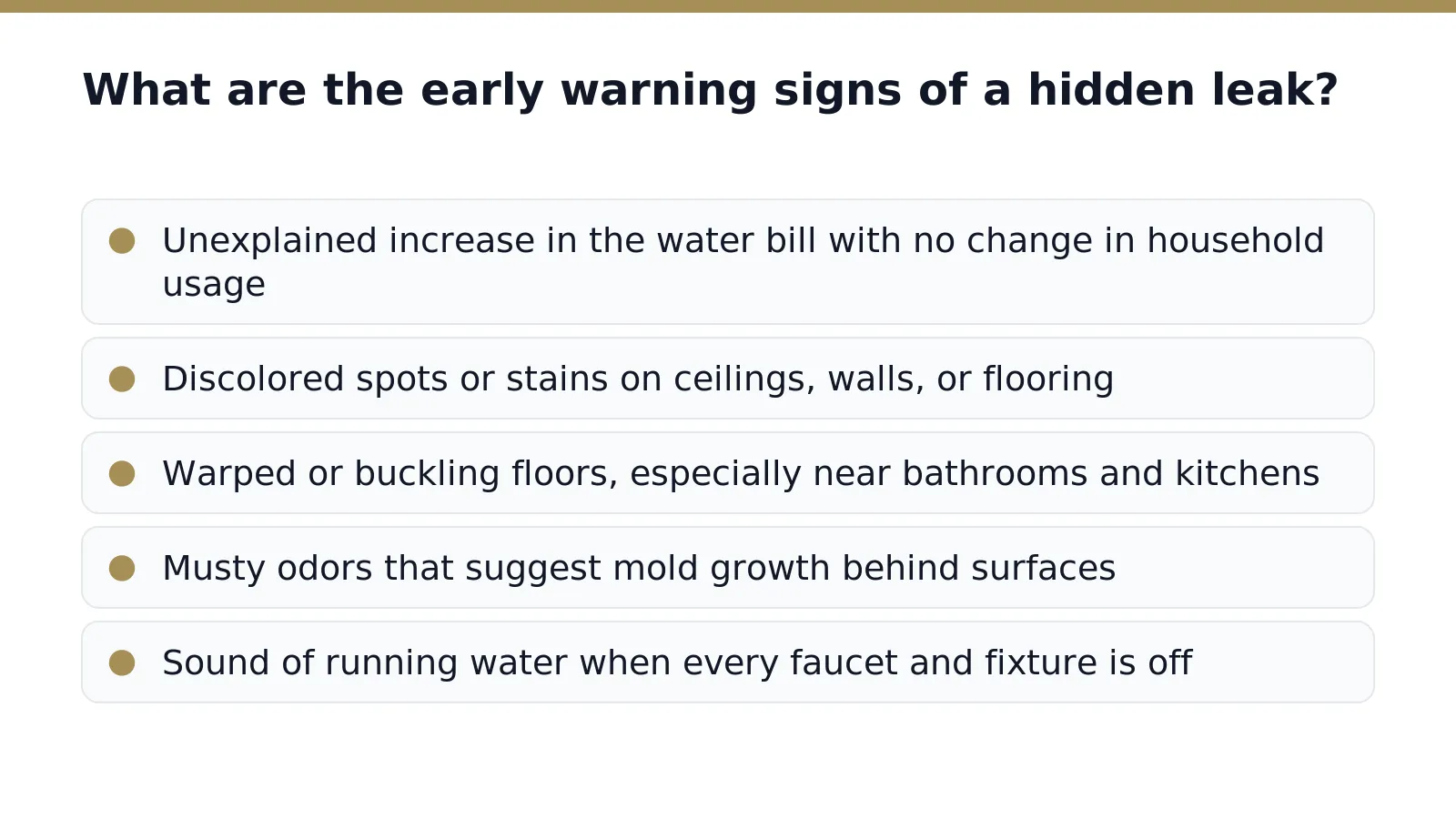
What are the early warning signs of a hidden leak?
Some leaks announce themselves with a dripping faucet or water pooling beneath a sink. Others occur behind walls, under floors, or above ceilings, where the damage spreads unseen. A small leak can quietly stain a ceiling, weaken flooring, invite mold, and raise a utility bill long before a puddle appears on the floor.
Homeowners in Braselton and North Georgia should watch for these common indicators:
- Unexplained increase in the water bill with no change in household usage
- Discolored spots or stains on ceilings, walls, or flooring
- Warped or buckling floors, especially near bathrooms and kitchens
- Musty odors that suggest mold growth behind surfaces
- Sound of running water when every faucet and fixture is off
How does a homeowner check for a hidden leak?
A simple meter test helps confirm a suspected leak. Turn off all water-using fixtures inside and outside the home. Check the water meter reading, wait one to two hours, and check again. A moving dial or changed reading indicates water is flowing somewhere it should not be.
When should a professional handle leak detection?
The CDC recommends checking systems for leaks as an important step in protecting a home. When the source remains concealed after basic checks, professional plumbing leak detection becomes necessary. Stuart The Plumber approaches each home with community-centric values, focusing on transparent and personalized service. The team treats every customer’s home like their own, which matters when walls and floors are at stake.
Early action prevents a minor issue from becoming a major repair. Ignoring the warning signs risks structural damage, mold growth, and rising utility costs. A quick response protects both the home and the household budget.
How do you perform a basic leak check at home?
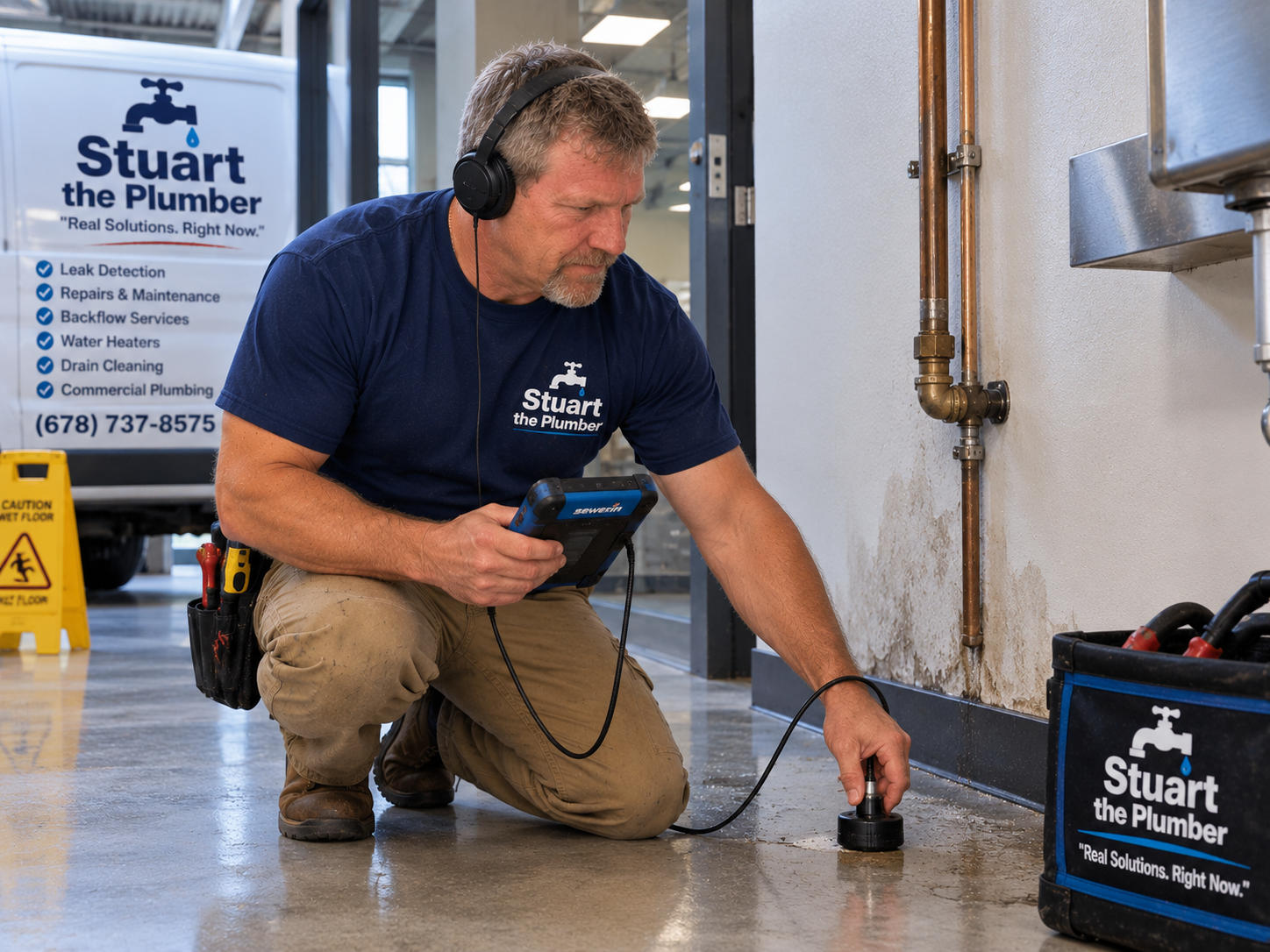
A basic home leak check starts at the water meter. Leak detection begins with a simple test: turn off every faucet, appliance, and fixture that uses water, then watch the meter. If the small triangle or low-flow indicator on the meter continues to spin, water is moving somewhere it should not. This single check reveals whether a hidden problem exists before any visible damage appears.
What should a homeowner look for after the meter test?
A confirmed meter movement points to a concealed leak. Plumbing leak detection then shifts to monitoring water usage patterns and inspecting for physical signs of leakage. Homeowners should check for damp spots on walls or floors, listen for running water sounds near toilets and water heaters, and watch for sudden increases in monthly water bills. These clues help narrow the search area without tearing into walls.
When does a homeowner need professional help?
The goal is not to guess at the source or cut into drywall. Recognizing warning signs early allows a homeowner to call for the right repair before a minor issue becomes major damage. Slab leak detection and other concealed leaks require professional tools that go beyond a homeowner’s basic check. A water leak detection service brings specialized equipment to locate the exact point of failure. Water line leak detection inside concrete slabs or behind finished walls demands this professional approach. Stuart The Plumber provides upfront pricing, ensuring plumbing issues are fixed right the first time.
When should you call a professional for slab leak detection?
A homeowner should call a professional for slab leak detection at the first sign of unexplained moisture, a rising water bill, or the sound of running water when every faucet is off. Waiting too long turns a small problem into a costly one. A leak underneath a shower can go unnoticed for a considerable length of time and spread to several rooms below, causing thousands of dollars in damage.
What warning signs demand immediate professional attention?
Several signals point to a hidden leak beneath a concrete slab. Homeowners should act quickly when they notice any of the following: plumbing excavation for sewer line replacement.
- Warm spots on the floor, especially in colder months
- The sound of running water with all fixtures turned off
- Cracks in walls, floors, or foundation that appear suddenly
- A spike in the water bill with no change in usage habits
Each of these signs suggests water moving where it should not be. Ignoring them allows moisture to weaken flooring, invite mold, and compromise structural integrity.
How does professional equipment change the outcome?
Modern detection technologies help identify concealed leaks without tearing into walls or guessing at the source. Professional plumbing leak detection uses specialized tools to pinpoint the exact location of a break. This approach limits water damage and reveals the right plumbing repair before a small leak grows into a larger problem.
A licensed plumber brings experience that DIY checks cannot match. Water line leak detection requires training to interpret readings accurately. Stuart The Plumber serves Braselton and North Georgia as a licensed, local plumbing company, ensuring plumbing issues are fixed right the first time. Homeowners who schedule a water leak detection service early protect their property value and avoid the stress of major excavation later.
What mistakes should you avoid when chasing a leak?
Chasing a hidden leak without a plan turns a small problem into major damage. Guessing at the source behind a wall or under a floor leads to unnecessary destruction. Homeowners who tear into drywall or break up concrete on a hunch often miss the actual leak entirely.
Why is guessing at the leak location so risky?
A concealed leak quietly stains a ceiling, weakens flooring, invites mold, and raises a utility bill long before a puddle appears. Cutting into a wall without proper leak detection tools creates new damage while the original leak keeps spreading. The goal is to recognize warning signs early and get the right repair before a minor issue becomes major damage.
What happens when homeowners ignore the warning signs?
Ignoring the signs carries real costs. Mold growth spreads behind finished surfaces. Flooring loses its structural integrity. Utility bills climb with every wasted gallon. Each day of delay compounds the expense.
Common mistakes homeowners make when chasing a leak:
- Cutting into walls or floors before confirming the leak location
- Shutting off the water and assuming the problem is solved
- Relying on visual checks when the leak sits behind a finished surface
- Delaying a professional plumbing leak detection appointment while damage spreads
When should a homeowner call a professional instead?
Professional slab leak detection and water line leak detection locate concealed sources without destructive guessing. A water leak detection service uses specialized tools to pinpoint the exact spot before any repair begins. Investing in early detection saves significant money and stress in the long run. Stuart The Plumber treats each customer’s home like their own, providing transparent and personalized service that protects the property instead of tearing it apart.
Conclusion
In closing, early leak detection protects your home and budget far better than waiting for visible damage to appear. The warning signs covered here, rising water bills, unexplained moisture, and running water sounds, demand prompt attention before a minor issue becomes a costly repair. Professional leak detection equipment pinpoints the exact source without destructive guessing, saving you money and stress. Treating your home’s plumbing system with the same care you would give your own property means acting fast when something feels wrong.
Leave a Reply