
Recurring leaks can point to aging pipes, but replacing the whole system may not be necessary. One plumbing problem doesn’t automatically mean every pipe in your home needs attention. When leaks return or symptoms appear in different areas, it’s sensible to look beyond a single repair. This old pipes replacement home checklist can help you sort through warning signs without jumping to conclusions.
You’ll learn which symptoms deserve a plumber’s attention, how a targeted repair differs from broader repiping, and what details to gather before scheduling an evaluation. Pipe age matters, but so do the material, the location of the problem, and whether symptoms are isolated or occurring across the home. An assessment can help clarify the likely scope and what the work may involve.
Stuart the Plumber, LLC is a licensed local plumbing company serving Braselton and nearby North Georgia communities. The company handles repiping and polybutylene pipe replacement. The checklist ahead will help you prepare useful information and have a clearer conversation about your home’s plumbing.
Essential Maintenance Tips for Georgia Sewer Systems
- Track recurring leaks, visible corrosion, water discoloration, pressure changes, and repeated drain problems, but don’t treat one symptom as proof that pipes have failed.
- Compare a localized repair, replacement of an individual line, and broader repiping based on the affected area and the pipes’ observed condition.
- Use an old pipes replacement home checklist to record when symptoms began, how often they occur, and which fixtures or areas are affected.
- The assessment findings, pipe access, and project scope help shape a repair or replacement plan.
- Stuart The Plumber serves Braselton and nearby North Georgia communities with repiping and pipe-replacement work for local homes.
Old Pipes in Your Home: Which Warning Signs Deserve Attention?
Start with what you can observe:
- Leaks that return or appear in different locations
- Corrosion, damp areas, or staining near exposed pipes
- Discolored water or changes in water pressure
- Repeated clogs, backups, or foul odors from drains
These changes deserve attention, but symptoms alone don’t confirm pipe failure or mean the whole home needs replacement. Note what’s happening and where. A problem at one fixture may have a different cause from similar issues in several rooms. Those details help a plumber assess whether the concern is isolated or broader, and whether old pipes replacement home options are worth discussing.
What changes in water, pressure, or visible pipes should you note?
Record when water looks discolored, tastes unusual, or pressure changes, and identify which fixtures are affected. Note whether the change is constant or comes and goes. If you can safely see the pipes, describe corrosion, moisture, or nearby stains without assuming you know the cause. Pipe materials and fittings vary, so types of plumbing pipes can help you recognize what you’re looking at, but appearance alone isn’t a diagnosis.
A pressure change at one faucet may point to a different issue than reduced flow at several fixtures. Include that distinction in your notes for the assessment.
When do recurring drain problems point to a pipe concern?
A single slow drain may be limited to one fixture. Repeated clogs, backups at multiple drains, or foul odors that keep returning can justify an assessment of the drain or sewer line. These symptoms don’t prove the line is damaged, but their frequency and location help clarify what needs investigation.
Keep drain and sewer symptoms separate from water-supply concerns in your notes. If sewage backs up or you have an active leak, seek professional plumbing attention promptly to address the immediate concern. For more information about this part of the system, see sewer-line repair and replacement.
Repair or Replace Old Home Pipes? Compare the Scope Before Deciding
A repair decision should match the problem found, not an assumption based on a pipe’s age or material alone. The plumber considers the pipe material, its observed condition, the pattern of symptoms, and which areas are affected. An evaluation helps distinguish one damaged section from a concern that may involve more of the plumbing system.
| Option | When it may fit | What it addresses |
|---|---|---|
| Localized repair | A limited affected section is identified. | The specific damaged area, such as a leaking section of water line. |
| Individual line replacement | Findings point to a particular line that needs replacement. | A defined water, drain, or sewer line rather than all household piping. |
| Broader repiping | Multiple areas show deterioration or findings indicate a wider pattern. | A larger portion of the home’s piping, based on the assessment and project scope. |
When might a targeted pipe repair address the problem?
If an assessment identifies one limited problem area, a targeted repair may be appropriate. For example, a leak at one section of a water line doesn’t by itself establish that other supply pipes need replacement. A sewer-line concern is different: recurring problems may lead the plumber to assess that line and determine whether repair or replacement is suitable. Additional symptoms or findings can change the scope under consideration.
When should a homeowner discuss broader repiping?
Repiping may be worth discussing if an assessment finds deterioration in multiple areas or repeated problems affecting different parts of the home. The evaluation should clarify which lines are involved and what options fit the findings. Pipe age or material can inform that conversation, but neither alone proves that whole-home replacement is needed. For background on whole-house repiping in Braselton, see the local guide.
If the concern involves lead components, review the EPA’s information on the dangers of lead pipes and discuss the specific piping identified in your home. Stuart The Plumber provides repiping and pipe-replacement work for local homes. To arrange an evaluation, contact Stuart The Plumber.
Old Pipe Replacement Checklist: What to Record Before an Assessment
A clear record helps a plumber understand what’s happening and where to look. Before discussing old pipes replacement home options, note the pattern of the problem rather than trying to diagnose it yourself. Don’t open walls, handle damaged pipes, or attempt unsafe plumbing work to gather information. Write down what you can observe safely and keep relevant maintenance notes handy.
What details help explain a recurring plumbing problem?
Use this checklist to organize what you’ve noticed:
- Location: List the affected rooms and fixtures. Note whether the issue involves one faucet, several fixtures, or multiple areas.
- Timing and frequency: Record when the problem began, how often it returns, and whether it seems to be getting worse.
- Water-supply observations: Note leaks, changes in water appearance or pressure, damp areas, staining, or visible corrosion near supply pipes.
- Drain or sewer observations: Record slow drains, recurring clogs, backups, or odors, and identify which drains are affected.
- Recent changes and history: Include recent plumbing changes you observed and prior repairs related to the symptoms.
Keep supply-line concerns separate from drain and sewer symptoms. A pressure change at several faucets is different from repeated backups at several drains. That distinction helps focus the assessment. Photos of visible changes may also help, provided you can take them without moving or touching damaged plumbing.
What should you expect during a professional pipe evaluation?
The plumber will discuss the symptoms you’ve recorded and assess the relevant plumbing areas. Share your notes, including which fixtures are affected and whether a problem returned after a repair. The findings help establish whether the concern appears limited to one section or line, or whether broader repiping should be considered. The appropriate scope depends on the assessment, not just the symptom history.
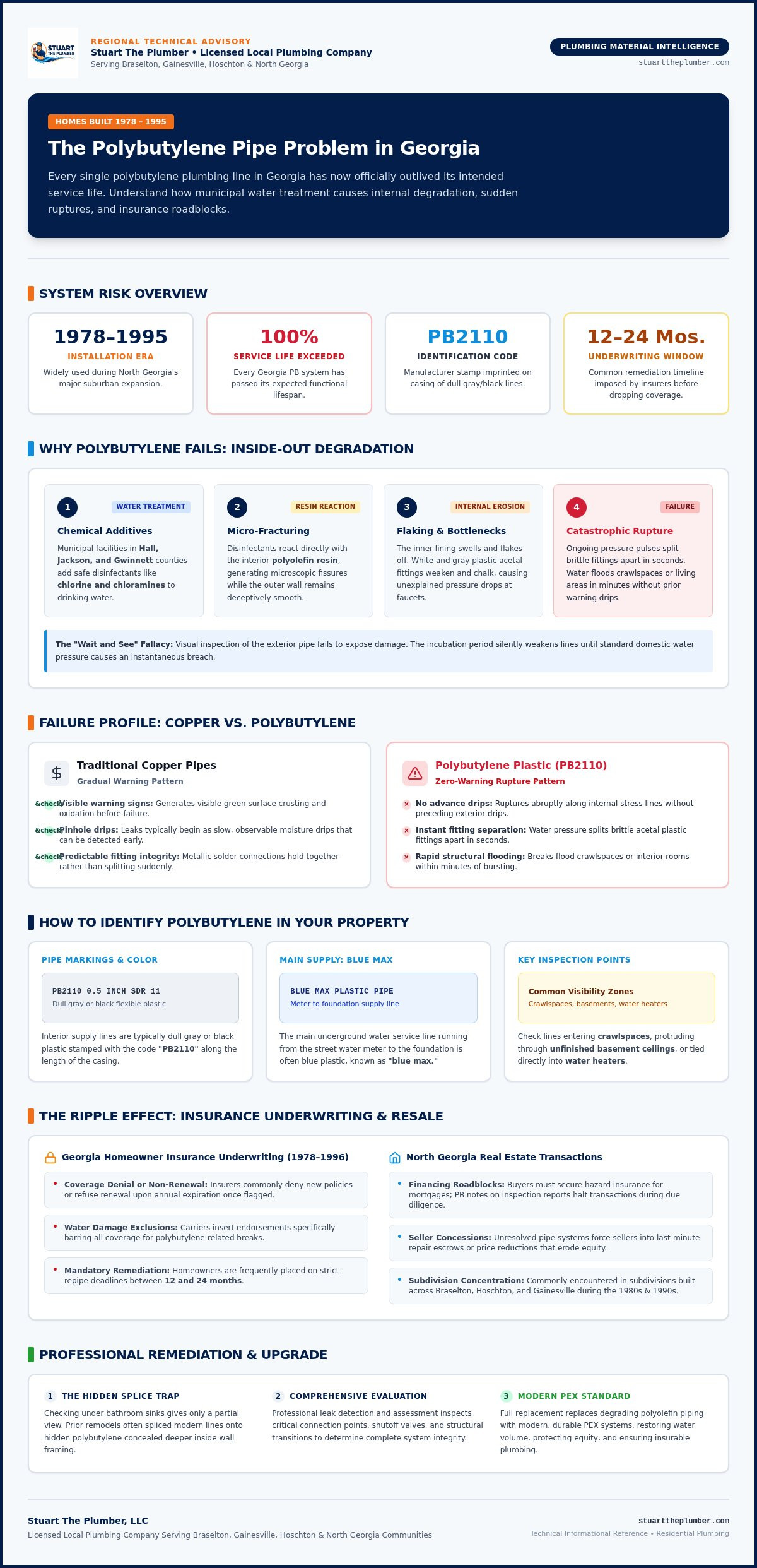
If you identify polybutylene piping, include its location in your notes and read this Georgia polybutylene replacement guide for more information. Stuart The Plumber serves Braselton and nearby North Georgia communities with pipe-replacement and repiping work.

Planning Old Pipe Replacement in North Georgia: Understand the Next Steps
A useful plan starts with the symptoms you’ve recorded, but the next steps depend on what a plumber finds. During an assessment, the plumber reviews the reported issues and examines the relevant plumbing areas. The findings help identify which pipe sections or lines are affected and whether a targeted repair, line replacement, or broader repiping may suit the situation.
How can homeowners plan for the work without assuming the scope?
Access matters. The location of the affected pipe and how it can be reached help shape the work, so the project plan becomes clearer after the assessment. Prepare by keeping your symptom notes available and identifying the areas where you’ve noticed changes. Avoid assuming that every pipe needs replacement or that a specific room will be affected before the scope is established.
Planning an old pipes replacement home project also means letting the plumber’s findings guide the next step. If the assessment identifies a water-line concern, review the water-line repair and replacement service for information about that work. The plan depends on the affected pipe sections, access, and overall scope.
Where can North Georgia homeowners take the next step?
Stuart The Plumber is a licensed local plumbing company serving Braselton and nearby North Georgia communities. The company handles repiping and pipe-replacement work, including polybutylene replacement. An assessment can help distinguish a limited plumbing issue from broader pipe deterioration, giving you a clearer basis for planning.
Take the Next Step Toward Clearer Plumbing Answers
Recurring leaks, changing water pressure, or repeated drain problems deserve attention, but they don’t automatically mean every pipe needs replacement. The right scope depends on what an assessment finds, including pipe condition, affected areas, and access. Keeping a simple record of symptoms can help make the evaluation more focused.
If you’re weighing old pipes replacement home options, Stuart The Plumber is a licensed local plumbing company serving Braselton and nearby North Georgia communities. The team handles repiping and polybutylene pipe replacement, with recommendations based on the plumbing concerns identified in your home.
Schedule a plumbing assessment to discuss what you’ve noticed and plan a practical next step.
Frequently Asked Questions
How do I know if the old pipes in my home need replacing?
Recurring leaks, visible corrosion, discolored water, pressure changes, or repeated drain problems can be reasons to arrange a plumbing assessment. None of these symptoms alone proves that pipes have failed or that the whole home needs replacement. Note which fixtures and rooms are affected, when symptoms occur, and whether they’re becoming more frequent. A plumber can assess the relevant areas and help clarify whether the issue is localized or broader.
Can old pipes be repaired instead of replaced?
Yes, a repair may be appropriate if an assessment identifies a limited problem area. The scope depends on the pipe’s condition, the symptoms, and which section or line is affected. A leak at one water-line section, for example, may call for a different response than recurring problems across several areas. If the assessment finds wider deterioration or repeated issues, replacing an individual line or discussing repiping may make more sense.
What happens if I leave aging pipes in my home?
Ignoring ongoing pipe problems can allow leaks or other plumbing issues to continue, potentially leading to water damage or recurring disruption. Drain or sewer concerns may also persist, especially if backups return. The risks depend on the pipe and the problem, so age by itself doesn’t predict what will happen. Seek professional attention promptly for an active leak or sewage backup, and have recurring symptoms assessed.
How do plumbers determine whether a home needs repiping?
Plumbers review the symptoms, identify the affected fixtures or areas, and assess relevant pipe sections and their condition. They consider the pipe material and whether problems appear limited to one location or occur across the home. These findings help determine whether a targeted repair, individual line replacement, or broader repiping is appropriate. An evaluation helps distinguish localized trouble from more widespread deterioration.
Does a home with galvanized pipes always need replacement?
No. Galvanized piping alone doesn’t establish that a home needs whole-house replacement. A plumber considers its observed condition, symptoms, and the extent of affected areas. Galvanized pipes can corrode internally, but the right next step depends on the assessment. If you’re weighing old pipes replacement home options, share recurring problems and visible pipe concerns so the evaluation can focus on your home’s actual condition.
How disruptive is replacing old pipes in a home?
The work and its impact depend on which pipes need replacement, where they’re located, how they can be accessed, and the project scope. Some work may require access to areas behind walls or under floors, but the specific needs can’t be determined without assessing the home. Stuart The Plumber serves Braselton, Hoschton, Auburn, Winder, Dacula, Jefferson, Flowery Branch, Oakwood, Gainesville, Buford, Sugar Hill, Lawrenceville, Suwanee, Duluth, Grayson, Loganville, Commerce, and Johns Creek. Schedule service to discuss the plumbing concerns in your home.

Article by
Stuart Balestracci
Stuart is a third-generation master plumber dedicated to providing dependable, honest plumbing service throughout Braselton and North Georgia. Building on a family tradition of hands-on trade expertise, he brings practical problem-solving and high standards to every job—from urgent leaks and clogged drains to water heaters, sewer lines, and whole-home repiping.
Stuart believes customers deserve clear answers, quality workmanship, and repairs that address the real issue—not a quick fix that creates another problem later. Through Stuart the Plumber, LLC, he serves homeowners, property managers, and businesses with professional service, straightforward communication, and respect for their property. The company operates as a licensed Georgia plumbing business, license MP208668.
Disclaimer
The information in this article is provided for general educational and informational purposes only. While Sturat the Plumber, LLC makes reasonable efforts to keep information accurate and current, plumbing conditions, building systems, local codes, manufacturer instructions, and repair requirements vary by property and may change over time.
This content is not a substitute for an on-site inspection, diagnosis, estimate, professional plumbing service, or advice from a properly licensed professional. Do not rely on this article to diagnose gas leaks, sewer backups, hidden water leaks, water-heater failures, burst pipes, or other potentially hazardous conditions.
Plumbing work can involve risks including water damage, electrical hazards, gas hazards, sewage exposure, structural damage, and personal injury. Always follow applicable local codes, product instructions, and safety requirements. For active leaks, suspected gas leaks, sewage backups, flooding, loss of water service, or any situation that may create an immediate safety risk, contact a qualified professional or emergency services as appropriate.
Sturat the Plumber, LLC does not guarantee that the information in this article is complete, suitable for every property, or applicable to your specific circumstances. Any decisions or actions taken based on this content are at your own risk. Sturat the Plumber, LLC disclaims liability for loss, damage, injury, expense, or other consequences arising from the use of or reliance on this information.
For an evaluation of your specific plumbing concern, contact Sturat the Plumber, LLC for professional service. Sturat the Plumber, LLC is a licensed Georgia plumbing business, license MP208668.