Tag: Braselton plumbers

  • Underground Plumbing Repair in Georgia: Causes, Options, and What to Expect

    Underground Plumbing Repair in Georgia: Causes, Options, and What to Expect

    Could a wet patch in the yard point to a broken water line, or is a slow drain coming from farther underground? The right underground plumbing repair Georgia property owners need starts with identifying the affected line, rather than guessing from surface clues.

    That uncertainty can be stressful, particularly if you’re concerned about landscaping, paving, or disruption to daily operations. Residential and commercial properties can have different underground plumbing layouts, so the repair plan depends on the line involved and site conditions.

    This guide covers common warning signs and possible causes, including root intrusion, aging pipes, shifting soil, and accidental damage from digging. It also explains how targeted repairs, trenchless pipe replacement, and excavation differ, and what to discuss before work begins.

    Stuart the Plumber, LLC is a licensed local plumbing company serving Braselton and nearby North Georgia communities. We handle leak and drain service, trenchless pipe replacement, service line installation, and underground main work for homes and businesses. Here’s what to expect when arranging service and what details can help describe the problem.

    Key Takeaways

    • Surface clues can point to an underground plumbing issue, but they don’t confirm its cause. Note where and when symptoms appear so you can describe the problem clearly.
    • Water-line concerns differ from sewer or drain problems. Identifying the affected line is an important first step in underground plumbing repair Georgia.
    • Trenchless replacement and excavation have different site impacts. The right approach depends on the damaged line and property conditions, and trenchless work may still require access points.
    • When arranging service, share the symptoms and any changes you’ve noticed. Discuss the assessment and suitable repair options before work begins.
    • Stuart The Plumber serves Braselton and nearby North Georgia communities with leak and drain service, trenchless pipe replacement, service line installation, and underground main work.

    Underground Plumbing Repair in Georgia: Warning Signs and Possible Causes

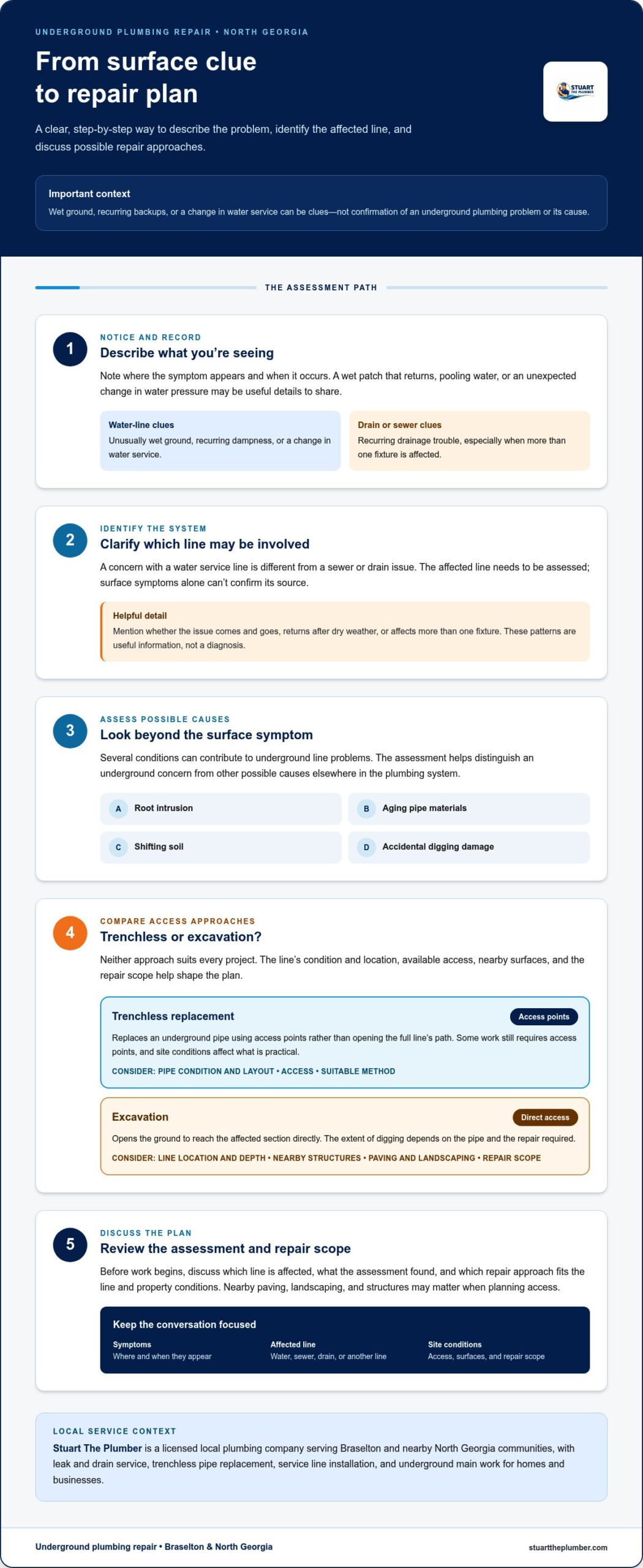
    Buried plumbing problems can be difficult to identify from surface symptoms alone. A wet patch or recurring backup may point to an underground issue, but it can also have another cause. For homeowners, property managers, and businesses, tracking where and when symptoms appear gives the plumber useful details for an assessment.

    Symptoms can suggest an underground plumbing issue, but they don’t identify its source. The affected line needs to be assessed before the cause can be determined. Tree roots, shifting soil, aging pipe materials, and accidental damage from digging can all contribute to underground line problems.

    What signs may point to an underground water-line problem?

    Look for unusually wet ground, pooling water, or a damp area that keeps returning without an obvious explanation. These are clues, not proof of a failed water line. A change in water service, such as an unexpected drop in pressure, can also have several causes, including plumbing issues inside the property.

    Before arranging an assessment, note the location and timing of the symptoms. Does the wet area return after dry weather? Did water service change suddenly, or does the issue come and go? These details can help the plumber narrow down which part of the system needs attention. Surface symptoms alone can’t confirm that a buried water line is responsible.

    How can sewer or drain-line trouble show up?

    Recurring drainage problems may raise concern about a drain or sewer line, especially if the issue returns after routine drain service. If more than one fixture is affected, the problem may involve a shared line rather than a single fixture. That pattern isn’t a diagnosis, but it’s useful information to share when arranging an assessment.

    Root intrusion, pipe deterioration, or a damaged section can affect how wastewater moves through a line. Stuart The Plumber provides leak and drain service, including sewer jetting and trenchless pipe replacement. For a broader overview of possible repair approaches, the Trenchless Technology article explains methods that may be considered alongside excavation, depending on the line and site.

    Recurring drain symptoms can also have causes elsewhere in the plumbing system. An assessment helps distinguish a localized drain concern from a problem that may involve an underground main. For related drain-line work in Braselton and North Georgia, Stuart The Plumber’s drain line repair service addresses the affected plumbing based on the issue identified.

    Underground Plumbing Repair Options in Georgia: Trenchless or Excavation

    Once the affected line and repair scope are clearer, the next question is how to reach or replace it. Trenchless pipe replacement and excavation are different approaches, and neither suits every project. For underground plumbing repair Georgia properties, the choice depends on the pipe’s condition and location, available access, nearby surfaces, and the work the line needs.

    Trenchless describes an approach, not a promise that no digging or surface impact will occur. Some work still requires access points, and site conditions can shape what’s practical. Use a general comparison as a starting point, not as a substitute for assessing the line.

    Approach What it generally involves Factors that may matter
    Trenchless replacement Replaces an underground pipe using access points rather than opening the full line’s path. Pipe condition and layout, access, and the method suited to the project.
    Excavation Opens the ground to reach the affected section directly. Line location, depth and condition, nearby structures, paving, landscaping, and repair scope.

    When might trenchless pipe replacement be considered?

    Trenchless replacement may suit some underground pipe projects, but it isn’t the right fit for every line or type of damage. The pipe’s condition and layout, along with access to the work area, help determine whether this approach is suitable. Stuart The Plumber provides trenchless pipe replacement in North Georgia. The recommended work depends on the specific line and site conditions.

    What can excavation involve for an underground repair?

    Excavation provides direct access to a pipe. It may be needed based on the pipe’s condition, location, or the repair required. The route may pass under landscaping, a paved area, or near a building, so those surroundings matter when planning the work. The extent of digging and any surface restoration needs are specific to the project and can’t be determined from symptoms alone.

    Before choosing an approach, discuss how the affected line, access, nearby surfaces, and repair scope inform the plan. Stuart The Plumber handles trenchless pipe replacement and underground main work for residential and commercial properties. To arrange an assessment, share what you’ve observed and schedule plumbing service.

    What to Expect During Underground Plumbing Repair in North Georgia

    Underground plumbing repair Georgia service starts with understanding what’s happening at the property. First, the concern needs to be identified as involving a water service line, sewer, drain, or another underground plumbing line. That gives you and the plumber a clearer basis for discussing repair options.

    The repair plan depends on the affected line, its condition, and site access. A clear sequence helps homeowners, property managers, and business operators know what information to provide and what decisions may come next.

    1. Describe the symptoms. Explain what you’ve noticed, where it appears, and when it started. Mention whether it happens repeatedly or was a one-time event.
    2. Assess the plumbing. The plumber evaluates the reported issue and works to distinguish between water service, sewer, drain, or other underground concerns.
    3. Discuss suitable options. The line’s condition, location, access, and the property’s surroundings help shape the work being considered.
    4. Carry out agreed work. Once the proposed approach and scope are discussed, the plumbing work proceeds based on the plan for the property.

    What information helps assess the problem?

    Before arranging service, note where symptoms occur and whether they’re isolated or recurring. Share any changes you’ve observed, such as when water service changed or which fixtures are affected. Property access details can also help with planning. Let the plumber know whether the site is a home or commercial property, and mention nearby paved areas, landscaping, or places that may be difficult to access. Don’t dig or perform plumbing tests yourself.

    How does the repair approach relate to the affected line?

    A water service line brings water to a property, while sewer and drain lines carry wastewater away. Because these lines have different functions, the reported symptoms and assessment guide what work may be relevant. If the concern involves water service, the assessment focuses on the line supplying the property. A drain-line concern calls for a different assessment and may involve the pipe carrying wastewater from fixtures.

    For a business, share any access constraints or operational considerations that could affect how the work is planned. Stuart The Plumber handles underground plumbing work for residential and commercial properties, with the approach based on the affected line and site.
    Underground Plumbing Repair in Georgia: Causes, Options, and What to Expect

    Underground Plumbing Repair in Georgia: Local Service and Next Steps

    Underground plumbing needs vary from one property to another. A household may need attention to a water service line, while a commercial site may have underground mains or plumbing connected to a grease trap. The affected line and how the property uses it help determine what work is relevant.

    Stuart The Plumber provides leak and drain service, trenchless pipe replacement, service line installation, and underground main work for residential and commercial properties. Homeowners and businesses seeking underground plumbing repair in Georgia can describe the concern and discuss the work that fits their site.

    Residential and commercial underground plumbing needs

    At a home, a concern may involve the line bringing water to the building or a buried drain or sewer line. Commercial properties can have broader underground plumbing needs, including service lines and mains serving the building. Depending on the project, underground plumbing may also connect to grease trap work. Stuart The Plumber provides commercial grease trap installation in North Georgia.

    For businesses, explain how the affected area relates to the building’s plumbing. Describe which parts of the property are affected and whether the concern appears tied to water supply, drainage, or other underground plumbing.

    How to arrange underground plumbing service in North Georgia

    When you contact Stuart The Plumber, be ready to describe the property, the affected area, visible symptoms, and whether the problem keeps returning. For a commercial site, note practical access details and which part of the property’s plumbing may be involved. For a home, mention where the symptoms appear and any changes you’ve noticed. You don’t need to determine the cause yourself; clear observations are a useful place to start.

    If you suspect a buried-line problem, call or schedule service through the contact page.

    Move From Uncertainty to a Practical Plan

    An underground plumbing concern doesn’t have to be diagnosed before you ask for help. A focused assessment connects what you’ve noticed with the plumbing line and property conditions involved. That gives you a clearer basis for discussing underground plumbing repair Georgia and deciding how to proceed.

    For a home, property manager, or business, consider who needs updates and which areas of the site may be involved. Share those practical details when arranging service. For commercial properties, noting access needs or areas used for daily operations helps keep the discussion grounded in how the site functions.

    Stuart The Plumber can discuss the underground plumbing concern and the work that may fit your property. Share your observations and questions to start a plan based on the affected line and site.

    Call Stuart The Plumber or schedule service to discuss your underground plumbing concern in Braselton and nearby North Georgia communities.

    Frequently Asked Questions

    Can underground plumbing be repaired without digging?

    Sometimes trenchless pipe replacement may suit an underground line, but it isn’t appropriate for every repair. The plumber needs to assess the pipe’s condition, access, and layout before discussing options. “Trenchless” doesn’t mean there will be no access work or surface impact. A property with paved areas near the line, for example, may need different planning from one with open ground.

    How can I tell whether an underground leak is coming from a water line?

    You can’t confirm the source from symptoms alone. Wet ground, pooling, or a change in water service can raise concern about a buried water line, but other plumbing issues may cause similar signs. Note the location, when the symptom appears, and whether it changes over time, then share those observations with a plumber. Don’t dig or handle buried lines to try to find the leak yourself.

    What affects the cost of underground plumbing repair in Georgia?

    There’s no single cost that fits every project. The work depends on which line is affected, its condition and location, site access, and the repair approach suited to the property. A commercial site may involve a different scope from a home. An assessment helps define the work involved so you can discuss costs for your specific project rather than rely on a general estimate.

    Is underground sewer-line trouble an emergency?

    Active sewage backup, wastewater entering occupied areas, or a plumbing problem that’s rapidly worsening calls for urgent professional attention. Keep people away from affected areas and arrange plumbing help. If symptoms aren’t actively worsening, record where and when they occur so you can describe the pattern. Don’t assume a slow or intermittent issue is harmless; a plumber can assess the sewer or drain concern and discuss next steps.

    How long does underground plumbing repair take?

    There isn’t one timeframe for every underground repair. The schedule can depend on the line involved, its condition, access to the work area, site conditions, and the agreed scope. A repair involving an accessible section may differ from work with more complicated site access. Ask about the planned work and the project factors that may affect timing for your property.

    Does Stuart The Plumber handle underground plumbing for commercial properties?

    Yes. Stuart The Plumber handles underground plumbing work for commercial and residential properties, including service line installation, heavy underground main work, trenchless pipe replacement, and grease trap installation. The relevant scope depends on the property and plumbing need. Stuart The Plumber serves Braselton, Hoschton, Auburn, Winder, Dacula, Jefferson, Flowery Branch, Oakwood, Gainesville, Buford, Sugar Hill, Lawrenceville, Suwanee, Duluth, Grayson, Loganville, Commerce, and Johns Creek. Call or schedule service to discuss the site.

    Stuart Balestracci

    Article by

    Stuart Balestracci

    Stuart is a third-generation master plumber dedicated to providing dependable, honest plumbing service throughout Braselton and North Georgia. Building on a family tradition of hands-on trade expertise, he brings practical problem-solving and high standards to every job—from urgent leaks and clogged drains to water heaters, sewer lines, and whole-home repiping.

    Stuart believes customers deserve clear answers, quality workmanship, and repairs that address the real issue—not a quick fix that creates another problem later. Through Stuart the Plumber, LLC, he serves homeowners, property managers, and businesses with professional service, straightforward communication, and respect for their property. The company operates as a licensed Georgia plumbing business, license MP208668.

    Disclaimer

    The information in this article is provided for general educational and informational purposes only. While Sturat the Plumber, LLC makes reasonable efforts to keep information accurate and current, plumbing conditions, building systems, local codes, manufacturer instructions, and repair requirements vary by property and may change over time.

    This content is not a substitute for an on-site inspection, diagnosis, estimate, professional plumbing service, or advice from a properly licensed professional. Do not rely on this article to diagnose gas leaks, sewer backups, hidden water leaks, water-heater failures, burst pipes, or other potentially hazardous conditions.

    Plumbing work can involve risks including water damage, electrical hazards, gas hazards, sewage exposure, structural damage, and personal injury. Always follow applicable local codes, product instructions, and safety requirements. For active leaks, suspected gas leaks, sewage backups, flooding, loss of water service, or any situation that may create an immediate safety risk, contact a qualified professional or emergency services as appropriate.

    Sturat the Plumber, LLC does not guarantee that the information in this article is complete, suitable for every property, or applicable to your specific circumstances. Any decisions or actions taken based on this content are at your own risk. Sturat the Plumber, LLC disclaims liability for loss, damage, injury, expense, or other consequences arising from the use of or reliance on this information.

    For an evaluation of your specific plumbing concern, contact Sturat the Plumber, LLC for professional service. Sturat the Plumber, LLC is a licensed Georgia plumbing business, license MP208668.

  • Old Pipes Replacement in Your Home: A Practical Homeowner Checklist

    Old Pipes Replacement in Your Home: A Practical Homeowner Checklist

    Recurring leaks can point to aging pipes, but replacing the whole system may not be necessary. One plumbing problem doesn’t automatically mean every pipe in your home needs attention. When leaks return or symptoms appear in different areas, it’s sensible to look beyond a single repair. This old pipes replacement home checklist can help you sort through warning signs without jumping to conclusions.

    You’ll learn which symptoms deserve a plumber’s attention, how a targeted repair differs from broader repiping, and what details to gather before scheduling an evaluation. Pipe age matters, but so do the material, the location of the problem, and whether symptoms are isolated or occurring across the home. An assessment can help clarify the likely scope and what the work may involve.

    Stuart the Plumber, LLC is a licensed local plumbing company serving Braselton and nearby North Georgia communities. The company handles repiping and polybutylene pipe replacement. The checklist ahead will help you prepare useful information and have a clearer conversation about your home’s plumbing.

    Key Takeaways

    • Track recurring leaks, visible corrosion, water discoloration, pressure changes, and repeated drain problems, but don’t treat one symptom as proof that pipes have failed.
    • Compare a localized repair, replacement of an individual line, and broader repiping based on the affected area and the pipes’ observed condition.
    • Use an old pipes replacement home checklist to record when symptoms began, how often they occur, and which fixtures or areas are affected.
    • The assessment findings, pipe access, and project scope help shape a repair or replacement plan.
    • Stuart The Plumber serves Braselton and nearby North Georgia communities with repiping and pipe-replacement work for local homes.

    Old Pipes in Your Home: Which Warning Signs Deserve Attention?

    Start with what you can observe:

    • Leaks that return or appear in different locations
    • Corrosion, damp areas, or staining near exposed pipes
    • Discolored water or changes in water pressure
    • Repeated clogs, backups, or foul odors from drains

    These changes deserve attention, but symptoms alone don’t confirm pipe failure or mean the whole home needs replacement. Note what’s happening and where. A problem at one fixture may have a different cause from similar issues in several rooms. Those details help a plumber assess whether the concern is isolated or broader, and whether old pipes replacement home options are worth discussing.

    What changes in water, pressure, or visible pipes should you note?

    Record when water looks discolored, tastes unusual, or pressure changes, and identify which fixtures are affected. Note whether the change is constant or comes and goes. If you can safely see the pipes, describe corrosion, moisture, or nearby stains without assuming you know the cause. Pipe materials and fittings vary, so types of plumbing pipes can help you recognize what you’re looking at, but appearance alone isn’t a diagnosis.

    A pressure change at one faucet may point to a different issue than reduced flow at several fixtures. Include that distinction in your notes for the assessment.

    When do recurring drain problems point to a pipe concern?

    A single slow drain may be limited to one fixture. Repeated clogs, backups at multiple drains, or foul odors that keep returning can justify an assessment of the drain or sewer line. These symptoms don’t prove the line is damaged, but their frequency and location help clarify what needs investigation.

    Keep drain and sewer symptoms separate from water-supply concerns in your notes. If sewage backs up or you have an active leak, seek professional plumbing attention promptly to address the immediate concern. For more information about this part of the system, see sewer-line repair and replacement.

    Repair or Replace Old Home Pipes? Compare the Scope Before Deciding

    A repair decision should match the problem found, not an assumption based on a pipe’s age or material alone. The plumber considers the pipe material, its observed condition, the pattern of symptoms, and which areas are affected. An evaluation helps distinguish one damaged section from a concern that may involve more of the plumbing system.

    Option When it may fit What it addresses
    Localized repair A limited affected section is identified. The specific damaged area, such as a leaking section of water line.
    Individual line replacement Findings point to a particular line that needs replacement. A defined water, drain, or sewer line rather than all household piping.
    Broader repiping Multiple areas show deterioration or findings indicate a wider pattern. A larger portion of the home’s piping, based on the assessment and project scope.

    When might a targeted pipe repair address the problem?

    If an assessment identifies one limited problem area, a targeted repair may be appropriate. For example, a leak at one section of a water line doesn’t by itself establish that other supply pipes need replacement. A sewer-line concern is different: recurring problems may lead the plumber to assess that line and determine whether repair or replacement is suitable. Additional symptoms or findings can change the scope under consideration.

    When should a homeowner discuss broader repiping?

    Repiping may be worth discussing if an assessment finds deterioration in multiple areas or repeated problems affecting different parts of the home. The evaluation should clarify which lines are involved and what options fit the findings. Pipe age or material can inform that conversation, but neither alone proves that whole-home replacement is needed. For background on whole-house repiping in Braselton, see the local guide.

    If the concern involves lead components, review the EPA’s information on the dangers of lead pipes and discuss the specific piping identified in your home. Stuart The Plumber provides repiping and pipe-replacement work for local homes. To arrange an evaluation, contact Stuart The Plumber.

    Old Pipe Replacement Checklist: What to Record Before an Assessment

    A clear record helps a plumber understand what’s happening and where to look. Before discussing old pipes replacement home options, note the pattern of the problem rather than trying to diagnose it yourself. Don’t open walls, handle damaged pipes, or attempt unsafe plumbing work to gather information. Write down what you can observe safely and keep relevant maintenance notes handy.

    What details help explain a recurring plumbing problem?

    Use this checklist to organize what you’ve noticed:

    • Location: List the affected rooms and fixtures. Note whether the issue involves one faucet, several fixtures, or multiple areas.
    • Timing and frequency: Record when the problem began, how often it returns, and whether it seems to be getting worse.
    • Water-supply observations: Note leaks, changes in water appearance or pressure, damp areas, staining, or visible corrosion near supply pipes.
    • Drain or sewer observations: Record slow drains, recurring clogs, backups, or odors, and identify which drains are affected.
    • Recent changes and history: Include recent plumbing changes you observed and prior repairs related to the symptoms.

    Keep supply-line concerns separate from drain and sewer symptoms. A pressure change at several faucets is different from repeated backups at several drains. That distinction helps focus the assessment. Photos of visible changes may also help, provided you can take them without moving or touching damaged plumbing.

    What should you expect during a professional pipe evaluation?

    The plumber will discuss the symptoms you’ve recorded and assess the relevant plumbing areas. Share your notes, including which fixtures are affected and whether a problem returned after a repair. The findings help establish whether the concern appears limited to one section or line, or whether broader repiping should be considered. The appropriate scope depends on the assessment, not just the symptom history.

    If you identify polybutylene piping, include its location in your notes and read this Georgia polybutylene replacement guide for more information. Stuart The Plumber serves Braselton and nearby North Georgia communities with pipe-replacement and repiping work.

    Old Pipes Replacement in Your Home: A Practical Homeowner Checklist

    Planning Old Pipe Replacement in North Georgia: Understand the Next Steps

    A useful plan starts with the symptoms you’ve recorded, but the next steps depend on what a plumber finds. During an assessment, the plumber reviews the reported issues and examines the relevant plumbing areas. The findings help identify which pipe sections or lines are affected and whether a targeted repair, line replacement, or broader repiping may suit the situation.

    How can homeowners plan for the work without assuming the scope?

    Access matters. The location of the affected pipe and how it can be reached help shape the work, so the project plan becomes clearer after the assessment. Prepare by keeping your symptom notes available and identifying the areas where you’ve noticed changes. Avoid assuming that every pipe needs replacement or that a specific room will be affected before the scope is established.

    Planning an old pipes replacement home project also means letting the plumber’s findings guide the next step. If the assessment identifies a water-line concern, review the water-line repair and replacement service for information about that work. The plan depends on the affected pipe sections, access, and overall scope.

    Where can North Georgia homeowners take the next step?

    Stuart The Plumber is a licensed local plumbing company serving Braselton and nearby North Georgia communities. The company handles repiping and pipe-replacement work, including polybutylene replacement. An assessment can help distinguish a limited plumbing issue from broader pipe deterioration, giving you a clearer basis for planning.

    Take the Next Step Toward Clearer Plumbing Answers

    Recurring leaks, changing water pressure, or repeated drain problems deserve attention, but they don’t automatically mean every pipe needs replacement. The right scope depends on what an assessment finds, including pipe condition, affected areas, and access. Keeping a simple record of symptoms can help make the evaluation more focused.

    If you’re weighing old pipes replacement home options, Stuart The Plumber is a licensed local plumbing company serving Braselton and nearby North Georgia communities. The team handles repiping and polybutylene pipe replacement, with recommendations based on the plumbing concerns identified in your home.

    Schedule a plumbing assessment to discuss what you’ve noticed and plan a practical next step.

    Schedule a plumbing assessment

    Frequently Asked Questions

    How do I know if the old pipes in my home need replacing?

    Recurring leaks, visible corrosion, discolored water, pressure changes, or repeated drain problems can be reasons to arrange a plumbing assessment. None of these symptoms alone proves that pipes have failed or that the whole home needs replacement. Note which fixtures and rooms are affected, when symptoms occur, and whether they’re becoming more frequent. A plumber can assess the relevant areas and help clarify whether the issue is localized or broader.

    Can old pipes be repaired instead of replaced?

    Yes, a repair may be appropriate if an assessment identifies a limited problem area. The scope depends on the pipe’s condition, the symptoms, and which section or line is affected. A leak at one water-line section, for example, may call for a different response than recurring problems across several areas. If the assessment finds wider deterioration or repeated issues, replacing an individual line or discussing repiping may make more sense.

    What happens if I leave aging pipes in my home?

    Ignoring ongoing pipe problems can allow leaks or other plumbing issues to continue, potentially leading to water damage or recurring disruption. Drain or sewer concerns may also persist, especially if backups return. The risks depend on the pipe and the problem, so age by itself doesn’t predict what will happen. Seek professional attention promptly for an active leak or sewage backup, and have recurring symptoms assessed.

    How do plumbers determine whether a home needs repiping?

    Plumbers review the symptoms, identify the affected fixtures or areas, and assess relevant pipe sections and their condition. They consider the pipe material and whether problems appear limited to one location or occur across the home. These findings help determine whether a targeted repair, individual line replacement, or broader repiping is appropriate. An evaluation helps distinguish localized trouble from more widespread deterioration.

    Does a home with galvanized pipes always need replacement?

    No. Galvanized piping alone doesn’t establish that a home needs whole-house replacement. A plumber considers its observed condition, symptoms, and the extent of affected areas. Galvanized pipes can corrode internally, but the right next step depends on the assessment. If you’re weighing old pipes replacement home options, share recurring problems and visible pipe concerns so the evaluation can focus on your home’s actual condition.

    How disruptive is replacing old pipes in a home?

    The work and its impact depend on which pipes need replacement, where they’re located, how they can be accessed, and the project scope. Some work may require access to areas behind walls or under floors, but the specific needs can’t be determined without assessing the home. Stuart The Plumber serves Braselton, Hoschton, Auburn, Winder, Dacula, Jefferson, Flowery Branch, Oakwood, Gainesville, Buford, Sugar Hill, Lawrenceville, Suwanee, Duluth, Grayson, Loganville, Commerce, and Johns Creek. Schedule service to discuss the plumbing concerns in your home.

    Stuart Balestracci

    Article by

    Stuart Balestracci

    Stuart is a third-generation master plumber dedicated to providing dependable, honest plumbing service throughout Braselton and North Georgia. Building on a family tradition of hands-on trade expertise, he brings practical problem-solving and high standards to every job—from urgent leaks and clogged drains to water heaters, sewer lines, and whole-home repiping.

    Stuart believes customers deserve clear answers, quality workmanship, and repairs that address the real issue—not a quick fix that creates another problem later. Through Stuart the Plumber, LLC, he serves homeowners, property managers, and businesses with professional service, straightforward communication, and respect for their property. The company operates as a licensed Georgia plumbing business, license MP208668.

    Disclaimer

    The information in this article is provided for general educational and informational purposes only. While Sturat the Plumber, LLC makes reasonable efforts to keep information accurate and current, plumbing conditions, building systems, local codes, manufacturer instructions, and repair requirements vary by property and may change over time.

    This content is not a substitute for an on-site inspection, diagnosis, estimate, professional plumbing service, or advice from a properly licensed professional. Do not rely on this article to diagnose gas leaks, sewer backups, hidden water leaks, water-heater failures, burst pipes, or other potentially hazardous conditions.

    Plumbing work can involve risks including water damage, electrical hazards, gas hazards, sewage exposure, structural damage, and personal injury. Always follow applicable local codes, product instructions, and safety requirements. For active leaks, suspected gas leaks, sewage backups, flooding, loss of water service, or any situation that may create an immediate safety risk, contact a qualified professional or emergency services as appropriate.

    Sturat the Plumber, LLC does not guarantee that the information in this article is complete, suitable for every property, or applicable to your specific circumstances. Any decisions or actions taken based on this content are at your own risk. Sturat the Plumber, LLC disclaims liability for loss, damage, injury, expense, or other consequences arising from the use of or reliance on this information.

    For an evaluation of your specific plumbing concern, contact Sturat the Plumber, LLC for professional service. Sturat the Plumber, LLC is a licensed Georgia plumbing business, license MP208668.
  • Emergency Plumbing in North Georgia: Rapid Solutions When Minutes Matter

    Emergency Plumbing in North Georgia: Rapid Solutions When Minutes Matter

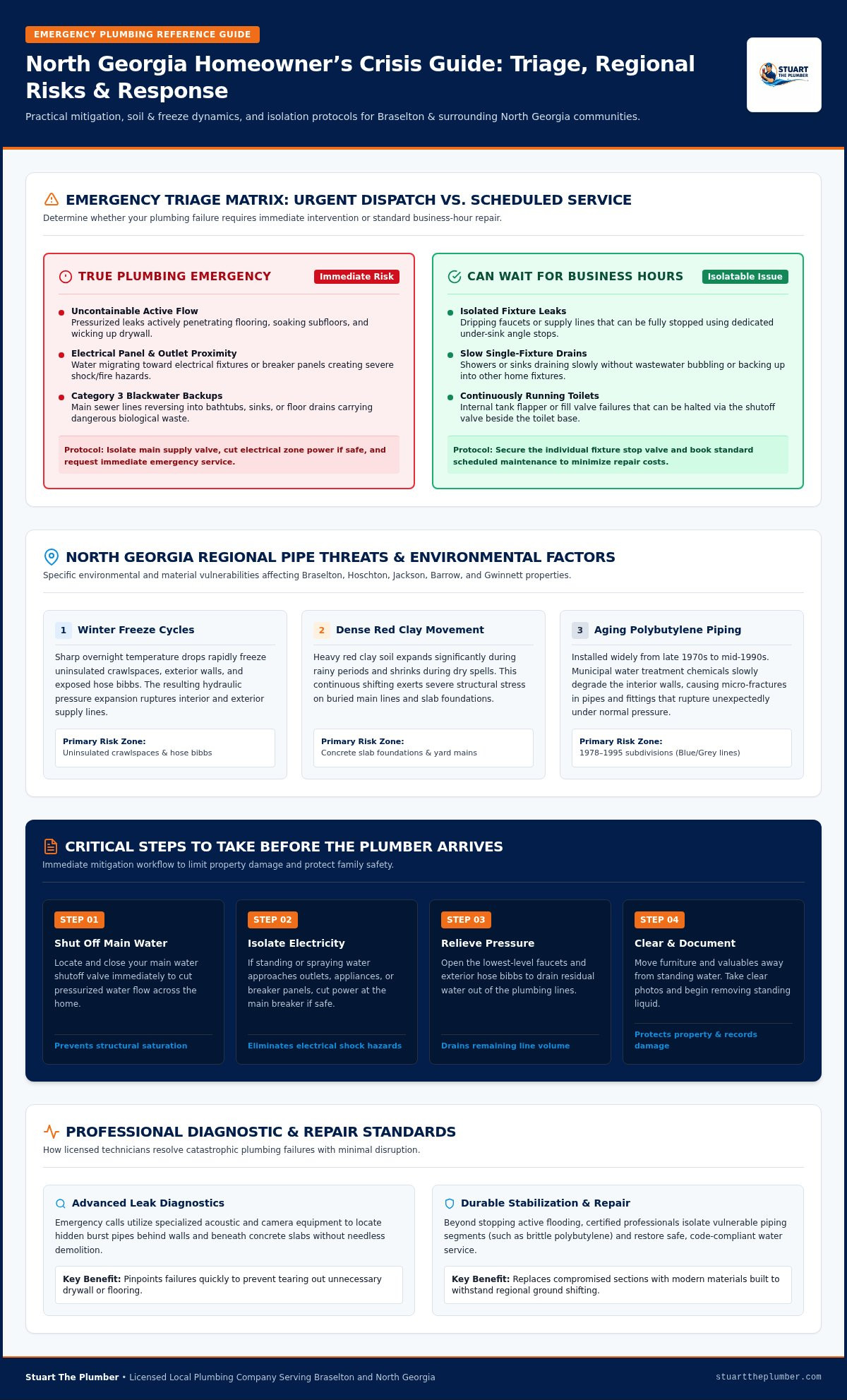
    Water is gushing across your hardwood floor, drywall is sagging overhead, and the sound of rushing water grows louder by the second. In a crisis like this, finding dependable emergency plumbing North Georgia homeowners can trust isn’t just about stopping the leak; it’s about protecting your property from structural damage before another gallon spills.

    Few household crises feel as stressful as an unexpected pipe burst or severe drain backup. You’re watching your living space flood, you might be unsure which valve cuts off the flow, and the fear of shoddy work or inflated bills only adds to the panic. You need practical solutions and steady guidance to regain control of your home without unnecessary disruption.

    In this guide, you’ll discover how to safely isolate your main water line, limit property destruction, and secure durable repairs from a licensed local team like Stuart the Plumber, LLC. We’ll walk through immediate mitigation steps, common regional pipe vulnerabilities, and exactly what to expect when an experienced technician arrives.

    Key Takeaways

    • Learn how to tell a true emergency involving active structural flooding apart from minor fixtures that can safely wait.
    • Understand how regional freeze cycles and shifting red clay trigger urgent plumbing failures across North Georgia homes.
    • Follow a quick step-by-step checklist to find your main shutoff valve and protect your property before a technician arrives.
    • Discover the advanced diagnostic tools used during professional emergency plumbing North Georgia calls to pinpoint leaks without needless demolition.
    • Find out how licensed professionals like Stuart The Plumber diagnose hidden pipe bursts and resolve vulnerable polybutylene line failures.

    Recognizing a True Plumbing Emergency in North Georgia

    A sudden plumbing failure can trigger instant panic, but not every dripping fixture demands immediate intervention. Knowing the difference between an inconvenient repair and an active catastrophe saves money, protects your living space, and ensures severe hazards receive prompt attention. In simple terms: a plumbing emergency is any situation involving uncontainable water flow, structural saturation, or severe biological and electrical hazards. If water is actively destroying building materials or threatening your health, you need professional emergency plumbing North Georgia homeowners rely on to stabilize the property.

    Immediate Property and Health Hazards

    Certain failures cannot wait until morning. When left unaddressed for even an hour, pressurized leaks penetrate flooring, soak subfloors, and wick up drywall. If water migrates toward electrical outlets or the main breaker panel, the situation turns into a severe shock or fire risk. Shut off power to the affected zone immediately if it is safe to do so.

    Drainage failures bring their own dangers. A main sewer backup sends Category 3 blackwater into your bathtubs, sinks, or lowest-level floor drains. This raw waste contains dangerous bacteria, viruses, and parasites that make living spaces uninhabitable. When waste lines refuse to flow or back up into clean fixtures, you are facing a serious health risk that requires rapid extraction and clearance.

    When Issues Can Wait for Regular Business Hours

    While modern plumbing systems carry high volumes of water daily, many common household malfunctions are completely isolated. You can often defer calling for urgent dispatch if the water can be securely contained:

    • Isolated fixture leaks: A dripping faucet or weeping supply line can be resolved temporarily by turning the dedicated angle stop valve underneath the fixture.
    • Slow showers or sinks: If waste drains slowly without bubbling or backing up into other drains, you are dealing with isolated buildup rather than a total main blockage. Learning to address simple clogged drains in North Georgia during standard business hours is often the most cost-effective move.
    • Running toilets: A toilet that runs constantly wastes water, but closing the wall valve beside the base prevents flooding until a technician can replace the tank flapper or fill valve.

    If you can isolate the problem without cutting off all water to the home, scheduled daytime repairs are your best path. If water is uncontrollable or contaminated, professional emergency plumbing North Georgia support is non-negotiable.

    Common Urgent Plumbing Failures Across North Georgia Homes

    Every region presents distinct challenges to residential piping, and North Georgia is no exception. Local environmental conditions place unique stress on supply lines and subterranean drains. When pipe failures strike, homeowners need emergency plumbing North Georgia technicians who understand these exact regional threats, from shifting ground to sudden winter deep freezes.

    Burst Pipes, Winter Freezes, and Clay Soil Stress

    North Georgia winters regularly produce sharp overnight temperature drops. Uninsulated crawlspaces, exterior walls, and exposed hose bibbs freeze rapidly, creating immense hydraulic pressure that ruptures supply lines. Homes built on concrete slabs across Braselton and Hoschton face an added threat: dense red clay soil. This heavy earth expands dramatically during rainy seasons and shrinks during dry stretches, placing structural strain on buried main lines. Homeowners dealing with a ruptured line can find detailed guidance on burst pipe repair in North Georgia to understand immediate steps and lasting repair options.

    When winter storms knock out electricity to well pumps, knowing the proper steps to take during a power outage helps prevent dry running and pressure surges. Repeated ground movement, combined with internal water hammer vibrations, eventually fractures rigid metal lines beneath yards and foundation slabs without warning.

    Aging Polybutylene Piping Failures

    Subdivisions built throughout Jackson, Barrow, and Gwinnett counties between the late 1970s and mid-1990s frequently contain blue or grey polybutylene pipes. Over time, standard municipal water treatment chemicals degrade these plastic lines from the inside out. Micro-fractures develop quietly along the pipe walls and plastic fittings until they blow apart under normal pressure. If your property still relies on these failure-prone lines, review our complete guide on polybutylene pipe replacement in Georgia to eliminate burst risks permanently.

    Sewer Line Collapses and Major Blockages

    North Georgia’s lush canopy of mature pine and hardwood trees presents a constant hazard to underground drainage. Searching for moisture, aggressive tree roots penetrate microscopic cracks in older clay or cast iron sewer laterals. Once inside, they feed on nutrients, creating dense subterranean dams that trap grease, toilet paper, and household waste.

    A completely blocked main lateral forces wastewater backward through your lowest home fixtures within hours. Routine maintenance through professional sewer drain cleaning in Georgia prevents these structural backups. If you notice gurgling drains or sewer smells in your yard, you can reach out to Stuart the Plumber, LLC to have your lines inspected before a minor obstruction causes an urgent sewer backup.

    Critical Steps to Take Before Your Emergency Plumber Arrives

    When pressurized water sprays through drywall or pools across flooring, waiting idly turns a manageable repair into a massive structural remediation. Taking immediate, calculated steps protects your foundation, personal belongings, and family. Follow this orderly stabilization routine while awaiting dispatch for emergency plumbing North Georgia homeowners rely on during high-stress failures.

    Shutting Off the Main Water Supply Safely

    Stopping water flow is the absolute first priority. Most homes feature an interior main shutoff valve near the water heater, inside the crawlspace, or along an exterior foundation wall in a finished basement. Turn ball valve handles a quarter-turn perpendicular to the pipe, or twist brass gate valves clockwise until completely snug.

    If the interior valve is stuck or missing, head to the street-side ground meter box. Remove the heavy iron lid and locate the curb-stop valve on the home side of the meter. Use a dedicated water meter key or sturdy adjustable wrench to turn the valve 90 degrees until the eyelets align. Once the supply is closed, open an outdoor hose bibb and the lowest indoor cold-water faucet to drain trapped pressure out of the system safely.

    Mitigating Water Damage and Protecting Belongings

    Safety comes before cleanup. If pooling water reaches electrical baseboards, appliances, or extension cords, go straight to the main panel and flip the breaker switches for those zones before stepping into the room. Keep children and pets away from wet areas entirely.

    Next, pull area rugs, furniture legs, and electronics away from the moisture path. Begin removing surface water immediately using towels, mops, or wet-dry vacuums. Follow the EPA guide to flood cleanup to keep indoor air clean and minimize hidden mold growth. Take detailed photographs and wide video sweeps of standing water levels and saturated materials. These clear visual records provide critical proof for your property insurance claims adjuster.

    What to Avoid During a Plumbing Crisis

    In the rush to fix a problem, bad choices can cause severe damage. Steer clear of these common pitfalls:

    • Never use chemical drain openers: Pouring caustic lye or acid cleaners into a blocked drain fills standing sewer water with harsh chemicals, endangering the technician who has to clear the physical obstruction.
    • Stop running other plumbing fixtures: Running a dishwasher, washing machine, or upstairs sink during a main sewer clog forces dirty water out of ground-level toilets and shower pans.
    • Do not force frozen lines open with torches: Applying direct open flame to frozen pipes risks steam explosions and house fires. If a frozen line has already ruptured, review what to do next in our guide to burst pipe repair North Georgia homeowners can follow before a technician arrives.

    Discover broader whole-home system safety and maintenance options on our plumbing services page.

    Emergency Plumbing in North Georgia: Rapid Solutions When Minutes Matter

    What to Expect from Professional Emergency Plumbing Services

    Watching an experienced plumber step through your front door brings immediate relief, but knowing what happens next removes uncertainty. A qualified technician does not rely on guesswork or start tearing out drywall blindly. Instead, they begin with a systematic diagnostic walk-through to isolate the failure point, establish containment barriers, and protect unaffected living areas from cross-contamination.

    Accurate Diagnostics and Non-Invasive Leak Detection

    Pinpointing the origin of pressurized water demands modern diagnostic technology. Professional technicians utilize high-frequency acoustic listening discs and thermal imaging sensors to trace pressurized line breaks concealed behind finished tile or deep within concrete slabs. Instead of guessing where water is originating, these tools map moisture signatures right through subfloors.

    For drainage crises, technicians deploy self-leveling fiber-optic cameras directly into lateral sewer cleanouts. This visual inspection uncovers root masses, line offsets, or crushed pipe segments in real time, eliminating destructive exploratory trenching across your landscape. Homeowners can discover how technicians isolate hidden slab leaks through professional leak detection in Braselton, GA without unnecessary property disruption.

    Immediate Repairs vs Permanent Plumbing Restorations

    Emergency plumbing calls typically follow a two-stage approach: immediate stabilization and lasting restoration. Stopping active flooding comes first, but restoring full system integrity ensures long-term reliability.

    • Phase 1: Urgent Stabilization. The technician installs heavy-duty mechanical pipe clamps, cuts away split copper sections to insert secure couplings, or clears mainline blockages using motorized root-cutting equipment to get waste draining safely again.
    • Phase 2: Permanent System Restoration. Once property damage is stopped, the technician reviews underlying vulnerabilities. If a fractured sewer line caused the backup or degraded polybutylene caused the leak, they will outline lasting solutions such as trenchless pipe lining or whole-house repiping.

    Stuart The Plumber is a licensed local plumbing company based in Braselton, serving North Georgia communities including Hoschton, Jefferson, Winder, and Buford with dedicated leak detection, pipe repair, and emergency response. Rather than relying on temporary patches that fail weeks later, booking an experienced emergency plumber gives you clear explanations, precise diagnostics, and durable workmanship that protects your home for the long haul. When urgent pipe problems threaten your home, dependable emergency plumbing North Georgia support ensures repairs are handled right the first time.

    Protect Your Home with Dependable Local Emergency Repairs

    When water lines rupture or sewage backs up, fast action prevents structural damage. Safely isolating your primary water supply and de-energizing affected electrical areas buys critical time. From freezing winter cold snaps to shifting red clay, regional plumbing stresses require lasting solutions rather than temporary quick fixes.

    Stuart The Plumber is a licensed local plumbing company rooted in Braselton, serving North Georgia communities including Hoschton, Jefferson, Winder, and Buford. Equipped for non-destructive electronic leak detection, trenchless sewer clearing, and whole-home repiping, our team brings dependable emergency plumbing North Georgia homeowners rely on to restore comfort and safety.

    Don’t let a sudden plumbing crisis compromise your property’s value and structural safety. You can regain control of your home today with skilled craftsmanship and straightforward local expertise.

    Frequently Asked Questions

    How do I know if my plumbing issue is an emergency?

    A situation is an emergency if water flow cannot be stopped with an individual fixture valve, or if sewage is backing up into living spaces. Active pipe bursts, slab leaks, and total drain failures pose immediate health risks or structural threats to your home. When uncontrolled water jeopardizes drywall, flooring, or electrical wiring, you need professional emergency plumbing North Georgia technicians immediately.

    Can I stop a burst pipe before the plumber arrives?

    Yes, you can halt the flow by shutting off your property’s main water valve right away. Look for an interior brass ball or gate valve near the water heater, crawlspace, or basement wall. If that valve is inaccessible, use a water meter key to turn the curb-stop valve inside your outdoor street-side meter box, then open an exterior spigot to release line pressure.

    What causes sudden loss of water pressure across my house?

    A sudden, house-wide drop in pressure typically signals a ruptured main water service line, a failed pressure reducing valve (PRV), or a municipal supply outage. In rural pockets of North Georgia, a tripped breaker to a well pump or a damaged underground pipe shifting in heavy red clay can also cut off household water instantly. Licensed technicians use acoustic tools to isolate the exact break.

    Is raw sewage backing up into my bathtub dangerous?

    Yes, sewage backups contain Category 3 blackwater loaded with harmful pathogens, bacteria, and viruses that create serious biological hazards. Coming into contact with this waste or inhaling indoor contaminants can lead to severe illness. Avoid using any sinks or running appliances until a professional technician clears the mainline blockage and restores sanitary drainage flow across your property.

    Will insurance cover emergency plumbing repairs and water cleanup?

    Homeowners insurance policies typically cover sudden, accidental water damage and structural drying, but policies frequently exclude the direct cost of repairing the plumbing pipe that broke. Coverage terms vary widely based on your provider and endorsements. Document every damaged room with clear photographs and video footage before cleanup begins, and contact your insurance carrier directly to confirm claim eligibility.

    How quickly should a water heater leak be addressed?

    A leaking water heater requires prompt attention within hours because internal tank corrosion can quickly lead to a full bottom rupture. If water is pooling around the base of the unit, shut off the dedicated cold-water inlet valve above the tank and switch off the electrical breaker. Stuart The Plumber provides dedicated water heater repair and replacement to prevent finished basements and utility closets from flooding. If you’re unsure which local provider to call first, our guide to finding a plumber emergency near me in North Georgia can help you compare licensed options and prepare the right questions before requesting service.

    Stuart Balestracci

    Article by

    Stuart Balestracci

    Stuart is a third-generation master plumber dedicated to providing dependable, honest plumbing service throughout Braselton and North Georgia. Building on a family tradition of hands-on trade expertise, he brings practical problem-solving and high standards to every job—from urgent leaks and clogged drains to water heaters, sewer lines, and whole-home repiping.

    Stuart believes customers deserve clear answers, quality workmanship, and repairs that address the real issue—not a quick fix that creates another problem later. Through Stuart the Plumber, LLC, he serves homeowners, property managers, and businesses with professional service, straightforward communication, and respect for their property. The company operates as a licensed Georgia plumbing business, license MP208668.

    Disclaimer

    The information in this article is provided for general educational and informational purposes only. While Sturat the Plumber, LLC makes reasonable efforts to keep information accurate and current, plumbing conditions, building systems, local codes, manufacturer instructions, and repair requirements vary by property and may change over time.

    This content is not a substitute for an on-site inspection, diagnosis, estimate, professional plumbing service, or advice from a properly licensed professional. Do not rely on this article to diagnose gas leaks, sewer backups, hidden water leaks, water-heater failures, burst pipes, or other potentially hazardous conditions.

    Plumbing work can involve risks including water damage, electrical hazards, gas hazards, sewage exposure, structural damage, and personal injury. Always follow applicable local codes, product instructions, and safety requirements. For active leaks, suspected gas leaks, sewage backups, flooding, loss of water service, or any situation that may create an immediate safety risk, contact a qualified professional or emergency services as appropriate.

    Sturat the Plumber, LLC does not guarantee that the information in this article is complete, suitable for every property, or applicable to your specific circumstances. Any decisions or actions taken based on this content are at your own risk. Sturat the Plumber, LLC disclaims liability for loss, damage, injury, expense, or other consequences arising from the use of or reliance on this information.

    For an evaluation of your specific plumbing concern, contact Sturat the Plumber, LLC for professional service. Sturat the Plumber, LLC is a licensed Georgia plumbing business, license MP208668.
  • Tankless Water Heater Repair North Georgia: Troubleshooting and Professional Fixes

    Tankless Water Heater Repair North Georgia: Troubleshooting and Professional Fixes

    Stepping into a warm shower only to get blasted by an icy shock midway through is the last thing any homeowner wants to face. Dealing with sudden temperature swings or staring at a cryptic digital error code is genuinely frustrating, especially when you worry that mineral scale has damaged your heat exchanger. When you need reliable tankless water heater repair North Georgia homeowners often wonder whether these unexpected failures mean a simple component fix or a complete system replacement.

    You shouldn’t have to guess why your system is acting up or endure cold showers while searching for answers. This guide breaks down the primary mechanical causes behind fluctuating temperatures, decodes common system alert codes, and explains how to evaluate your repair options clearly. We’ll also preview the thorough diagnostic approach used by Stuart The Plumber, a licensed local plumbing company serving Braselton and nearby North Georgia communities, to help you restore steady hot water without unnecessary disruption.

    Key Takeaways

    • Spot early warning signs like fluctuating water temperatures and rumbling sounds to address mineral buildup before it triggers a complete system shutdown.
    • Understand how critical components like flow sensors, ignition assemblies, and heat exchangers interact to prompt diagnostic safety codes.
    • Learn practical ways to evaluate your equipment’s age and overall condition so you can choose between a targeted repair and a full system replacement.
    • Discover what to expect during a diagnostic service visit when you need dependable tankless water heater repair North Georgia homes rely on for steady hot water.

    Common Signs Your North Georgia Tankless Water Heater Needs Immediate Repair

    Modern on-demand systems present distinct mechanical warning signs long before they suffer a total operational failure. Unlike conventional storage tanks that fail by leaking around rusted base pans, an on-demand unit alerts you through electronic sensor trips, fluctuating flow rates, and unusual combustion noises. Spotting these red flags early helps you arrange targeted tankless water heater repair North Georgia technicians can resolve before internal components face permanent stress.

    The Cold Water Sandwich and Temperature Fluctuations

    A momentary gap in hot water flow often creates the dreaded “cold water sandwich.” This happens when residual hot water exits your supply pipe, followed briefly by unheated water before the burner ignites again. While a brief delay is normal, frequent cycling points to a failing flow sensor switch or obstructed inlet filter. When scale chokes supply lines, restricted water volume triggers the unit’s high-limit safety switches, causing burner shutdowns during active showers. If you’re experiencing complete temperature loss, review our no hot water troubleshooting guide for Georgia homes for basic system checks.

    Digital Error Codes and System Lockouts

    Digital display interfaces provide real-time diagnostic telemetry, flashing alphanumeric codes when systems shut down. Common error codes highlight critical ignition lockouts, flame detection failures, or dangerous exhaust venting restrictions. Severe seasonal storms across North Georgia also trigger electrical line surges that scramble control board programming. Resetting your system might restore hot water temporarily, but repeatedly clearing lockout codes without addressing mechanical faults can burn out delicate printed circuit boards.

    Mineral Scaling and Hard Water Strain

    According to technical overviews of Tankless water heating engineering, continuous thermal transfer requires unobstructed internal fluid dynamics. Ground minerals bake directly onto intense heat exchanger surfaces during operation, creating thick calcium deposits that cut heat transfer efficiency and drop household water pressure. Overheating scale layers generate clicking or rumbling sounds inside the cabinet. If severe scale or line clogs cause backed-up drainage lines, pairing service with professional drain line repair keeps connected discharge pathways open and safe.

    Key Mechanical Components That Fail in On-Demand Water Heaters

    An on-demand water heater houses tightly synchronized water, electrical, and gas combustion assemblies inside a compact cabinet. Because modern units prioritize household safety, a fault in even one minor sensor triggers an immediate shutdown. When you need specialized tankless water heater repair North Georgia plumbing professionals test each circuit, valve, and probe individually to pinpoint the breakdown rather than swapping random parts.

    Heat Exchanger Corrosion and Thermal Cracking

    Rapid thermal cycling causes copper and stainless steel heating tubes to expand and contract repeatedly. Over time, that physical stress creates microscopic stress fractures. In high-efficiency condensing models, acidic moisture from exhaust gases can pool if drain traps clog, corroding external casing metals and piping joints. When visible moisture appears beneath the cabinet, knowing who to call for a leaking water heater helps prevent structural water damage to surrounding walls and flooring.

    Ignition Systems and Flame Sensor Malfunctions

    Gas-fired tankless units rely on delicate spark igniters and flame rectification rods. Microscopic carbon deposits gradually coat the metal probe, insulating it from the burner flame. When the control board cannot verify active combustion, it closes the gas solenoid valve to prevent raw gas leaks. Electric igniters can also wear down over time, causing repeated ignition failures. If your unit clicks repeatedly without lighting, you can reach out to our local team for accurate electrical component testing.

    Venting Blockages and Combustion Air Intake

    Proper airflow is just as vital as clean water delivery. Outdoor debris, leaves, and insect nests frequently obstruct concentric PVC and polypropylene intake pipes across North Georgia properties. Without adequate air intake, the burner starves of oxygen, causing incomplete fuel combustion and tripping internal draft sensors. A failing variable-speed exhaust blower fan can also drop air pressure, triggering sudden safety lockouts during hot water demand.

    Tankless Repair vs. Replacement: Making the Right Decision for Your Home

    Deciding between fixing a malfunctioning unit or replacing it outright comes down to age, service history, and component availability. While a conventional storage tank rarely lasts past a decade, on-demand hardware offers much greater durability when properly maintained. When weighing options for tankless water heater repair North Georgia homeowners should evaluate whether a targeted fix preserves an otherwise healthy appliance or merely delays an inevitable replacement.

    Evaluating Unit Age and Component Longevity

    Tankless water heaters deliver an expected lifespan of 15 to 20 years, roughly double the service life of standard 8-to-12-year storage tanks. If your on-demand system is under ten years old, replacing individual wear items like water valves, igniters, or sensors is usually the smartest path forward. Routine annual flushes protect those internal parts, keeping the system operating near peak efficiency across its full operational life.

    Repair Costs vs. Upgrading to Modern High-Efficiency Units

    A practical rule of thumb is to consider a new system if a major repair approaches half the cost of replacement hardware. When a primary heat exchanger fails on an older, non-condensing system, upgrading to a condensing model often proves more economical. Modern condensing units capture thermal energy from exhaust gases to achieve efficiency ratings exceeding 95%. Homeowners considering an upgrade can consult our Braselton water heater installation 2026 buying guide to assess high-efficiency configurations and regional code standards.

    Preventative Descaling and Maintenance Requirements

    Preventative care dramatically reduces the frequency of emergency calls. Professional descaling involves circulating a food-grade solution through service isolation valves using a specialized submersible pump to dissolve hardened calcium bonds. Technicians also remove and rinse the cold-water inlet filter screen to stop trapped sediment from starving water flow. Scheduling annual chemical flushes directly protects the heat exchanger and preserves active manufacturer warranties. Ensuring proper condensation runoff into your household plumbing or scheduling targeted drain line repair prevents acidic drainage backup from corroding nearby utility surfaces.

    Tankless Water Heater Repair North Georgia: Troubleshooting and Professional Fixes

    What to Expect During a Professional Tankless Water Heater Repair Service

    Professional service begins with safety isolation before anyone loosens a single screw. Technicians shut off incoming water valves, isolate fuel supplies, and disconnect high-voltage electrical breakers. When scheduling comprehensive tankless water heater repair North Georgia homeowners should expect methodical diagnostics rather than fast guesswork. Field specialists systematically inspect the burner box, check mechanical intake blowers, and verify water turbine movement to diagnose root causes accurately.

    On-Site Diagnostic Testing and Safety Verification

    Accurate troubleshooting relies on specialized testing equipment. Plumbers connect digital manometers to verify static and dynamic gas supply pressures under full operating load. They use digital multimeters to measure electrical resistance across thermostats, flame sensors, and printed circuit board pathways. Technicians also confirm that acidic moisture routes freely through condensation drains without backing up into combustion chambers.

    Component Replacement and System Recalibration

    Once diagnostic testing identifies the failed part, the replacement process follows strict manufacturer specifications:

    • Precision installation: Faulty parts like flow meters, solenoid valves, or control modules are swapped with certified replacements designed for your specific brand.
    • Fuel-air balancing: Burner assemblies are calibrated to ensure clean combustion and proper exhaust temperatures.
    • Joint and pressure testing: Plumbers complete soap-bubble gas checks and high-pressure water leak tests across all unions before restoring active utility lines.

    Partnering with Stuart The Plumber for Reliable Hot Water

    Stuart The Plumber serves Braselton and neighboring North Georgia communities with honest, skilled water heater service. We prioritize thorough diagnostics to repair your working equipment whenever practical, recommending system replacement only when extensive damage makes repairs unwise. If your on-demand system locks out or stops heating, schedule an on-site evaluation with Stuart The Plumber to get your home’s hot water flowing reliably again.

    Restore Reliable Hot Water to Your Home

    You shouldn’t have to tolerate cold showers or spend hours deciphering system error codes. Addressing early warning signs like flow fluctuations and mineral accumulation protects your equipment against premature failure. When an on-demand unit acts up, obtaining dependable tankless water heater repair North Georgia homeowners trust ensures pinpoint diagnostic testing and lasting mechanical resolutions.

    Stuart The Plumber delivers honest, licensed plumbing expertise to families throughout Braselton, Hoschton, Buford, and nearby communities. From targeted sensor replacements to preventative descaling and waterline care, our team focuses on finding the right fix for your specific system. Getting your hot water running smoothly again is just a phone call away.

    Take control of your home comfort today and let our local plumbing team handle the rest with care and precision.

    Frequently Asked Questions

    Why is my tankless water heater blowing cold water after running hot?

    This issue usually happens because of a sudden drop in water flow, a sticking flow sensor, or an overheating heat exchanger tripping internal safety switches. If water usage dips below your unit’s minimum activation flow rate, the burner shuts off immediately. Mineral scaling can also trap excessive heat inside the exchanger, prompting the high-limit thermostat to kill power and deliver an unexpected burst of cold water.

    Can hard water ruin a tankless water heater in North Georgia?

    Yes, dissolved calcium and magnesium bake directly onto internal heating chambers during rapid thermal transfer. Over time, this calcified layer restricts water flow and insulates critical temperature sensors. Without regular maintenance, severe scale creates localized hot spots across the copper or stainless tubing, causing metal fatigue, thermal stress fractures, and leaks that require professional tankless water heater repair North Georgia homeowners want to prevent.

    What do the error codes on my tankless water heater mean?

    Error codes are diagnostic signals generated by the internal computer board to pinpoint specific system faults. These alphanumeric indicators highlight issues like unstable gas pressure, blocked intake venting, failed electronic ignition, or severe scale buildup. Rather than guessing why your unit locked out, checking your manufacturer manual or contacting a licensed technician ensures the code translates into a precise, targeted mechanical repair.

    How often should a tankless water heater be flushed and serviced?

    Most manufacturers recommend flushing and servicing an on-demand system once every 12 months. Annual descaling with an approved solution dissolves stubborn mineral buildup inside heat exchanger passages before water flow is choked. Routine maintenance visits also include cleaning out the cold-water inlet filter screen, inspecting electrical connections, and verifying clean burner combustion to ensure dependable performance throughout the year.

    Is it better to repair or replace an aging tankless water heater?

    Repair is usually the best choice for units under 10 years old that have received regular maintenance and only need replacement parts like sensors, valves, or igniters. If your unit is approaching 15 to 20 years old or has a cracked, leaking heat exchanger, replacement is often the more sensible investment. A qualified technician evaluates overall equipment wear and component availability before advising on the smartest path forward.

    Can any licensed plumber repair my specific brand of tankless heater?

    While any licensed plumber understands household piping, modern on-demand units require specialized knowledge of digital control boards, combustion calibration, and advanced error diagnostics. When arranging tankless water heater repair North Georgia property owners should choose plumbers trained in electronic troubleshooting. Stuart The Plumber services major gas and electric tankless brands across Braselton and surrounding communities, resolving complex mechanical and venting issues safely.

    Stuart Balestracci

    Article by

    Stuart Balestracci

    Stuart is a third-generation master plumber dedicated to providing dependable, honest plumbing service throughout Braselton and North Georgia. Building on a family tradition of hands-on trade expertise, he brings practical problem-solving and high standards to every job—from urgent leaks and clogged drains to water heaters, sewer lines, and whole-home repiping.

    Stuart believes customers deserve clear answers, quality workmanship, and repairs that address the real issue—not a quick fix that creates another problem later. Through Stuart the Plumber, LLC, he serves homeowners, property managers, and businesses with professional service, straightforward communication, and respect for their property. The company operates as a licensed Georgia plumbing business, license MP208668.

    Disclaimer

    The information in this article is provided for general educational and informational purposes only. While Sturat the Plumber, LLC makes reasonable efforts to keep information accurate and current, plumbing conditions, building systems, local codes, manufacturer instructions, and repair requirements vary by property and may change over time.

    This content is not a substitute for an on-site inspection, diagnosis, estimate, professional plumbing service, or advice from a properly licensed professional. Do not rely on this article to diagnose gas leaks, sewer backups, hidden water leaks, water-heater failures, burst pipes, or other potentially hazardous conditions.

    Plumbing work can involve risks including water damage, electrical hazards, gas hazards, sewage exposure, structural damage, and personal injury. Always follow applicable local codes, product instructions, and safety requirements. For active leaks, suspected gas leaks, sewage backups, flooding, loss of water service, or any situation that may create an immediate safety risk, contact a qualified professional or emergency services as appropriate.

    Sturat the Plumber, LLC does not guarantee that the information in this article is complete, suitable for every property, or applicable to your specific circumstances. Any decisions or actions taken based on this content are at your own risk. Sturat the Plumber, LLC disclaims liability for loss, damage, injury, expense, or other consequences arising from the use of or reliance on this information.

    For an evaluation of your specific plumbing concern, contact Sturat the Plumber, LLC for professional service. Sturat the Plumber, LLC is a licensed Georgia plumbing business, license MP208668.

  • Polybutylene Pipe Replacement in Georgia: 2026 Guide

    Polybutylene Pipe Replacement in Georgia: 2026 Guide

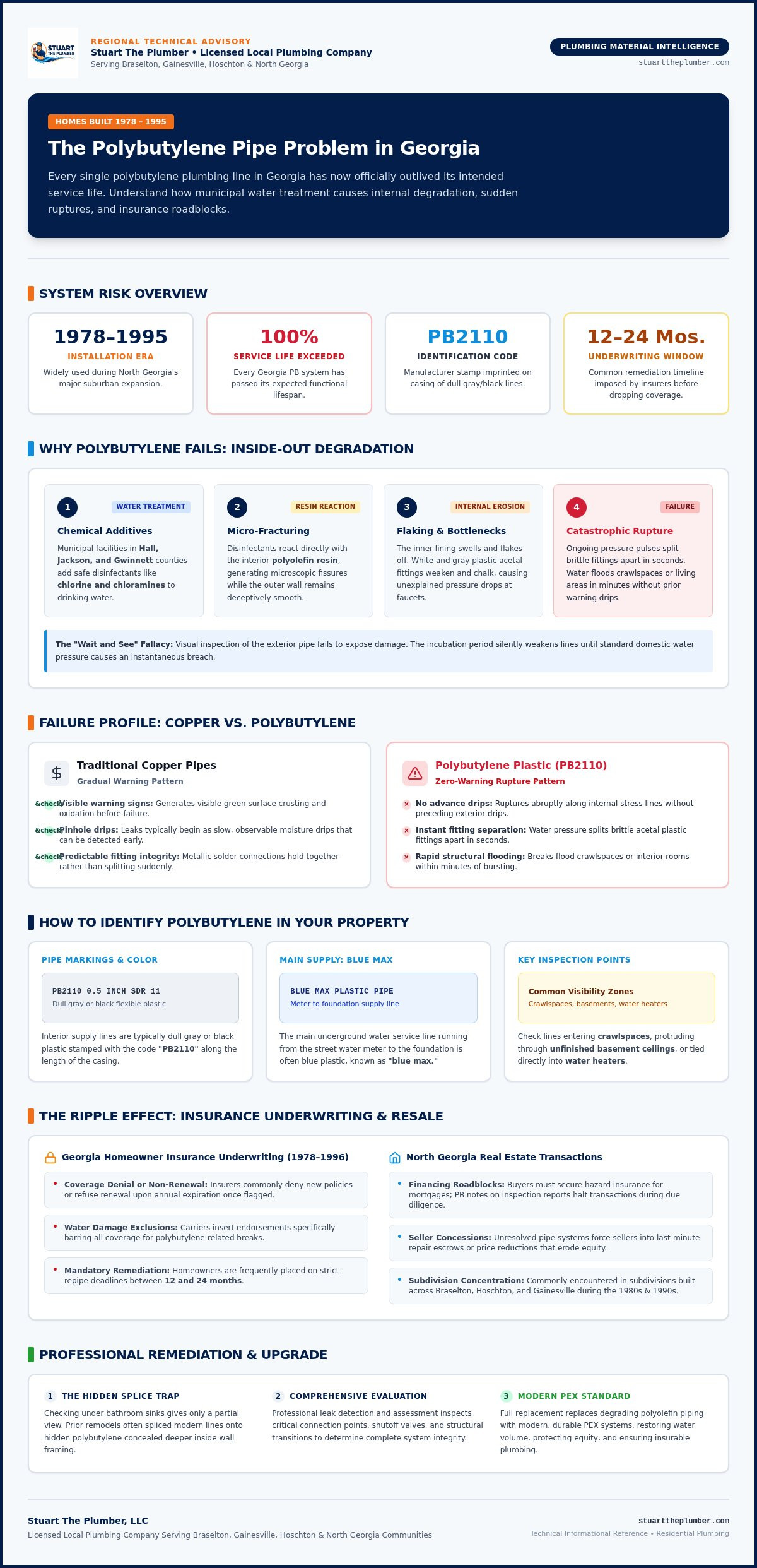
    Every single polybutylene pipe system in Georgia has now outlived its intended service life. If your home was built between 1978 and 1995, those dull gray lines behind your walls aren’t something you can safely ignore. Scheduling a polybutylene pipe replacement Georgia homeowners can rely on is no longer a matter of if, but when.

    It’s completely normal to feel uneasy about the risks. Nobody wants to deal with catastrophic leaks while away from home, unexpected insurance policy cancellations, or drops in resale value during a future home sale. You deserve dependable plumbing that protects your equity instead of keeping you on edge.

    This guide explains why polybutylene pipes fail in Georgia homes and how a professional replacement protects your property value and daily peace of mind. As a licensed local plumbing company serving Braselton and North Georgia, Stuart the Plumber, LLC breaks down common warning signs, modern repiping options, and the installation timeline so you know what to expect.

    Key Takeaways

    • Discover why standard municipal water additives cause gray plastic piping to deteriorate from the inside out.
    • Learn how to locate hidden polybutylene lines and spot physical warning signs around water heaters and crawlspaces.
    • Understand the step-by-step process of polybutylene pipe replacement Georgia homeowners use to upgrade to modern PEX.
    • Find out how proactive repiping helps prevent insurance coverage denials and preserves your property value.

    Understanding the Polybutylene Problem in Georgia Homes

    Polybutylene is a flexible, dull gray plastic pipe installed extensively in residential construction between 1978 and 1995. During North Georgia’s massive suburban expansion, builders favored this material because it was inexpensive and simple to rough in compared to rigid copper. Today, that short-term convenience creates serious liabilities for property owners. Scheduling a polybutylene pipe replacement Georgia specialists recommend is often the only permanent fix, because these lines fail from the inside out.

    A standard visual check will not tell you the whole story. The outer surface of the pipe can look completely smooth while the interior wall is flaking apart. That hidden degradation leaves homeowners unaware of the danger until a line suddenly lets go.

    The Role of Georgia Water Chemistry

    Municipal water treatment facilities across Hall, Jackson, and Gwinnett counties rely on chlorine and chloramines to keep drinking water safe. While harmless to drink, these disinfectants react directly with the polyolefin resin inside polybutylene. Over time, that chemical exposure creates microscopic fractures throughout the pipe walls and plastic fittings.

    As water pressure continuously pulses through the plumbing system, those micro-fractures spread. At Stuart the Plumber, LLC, our technicians regularly see these internal structural failures in subdivisions built across Braselton and Gainesville during the late 1980s and early 1990s.

    Why “Wait and See” is a Risky Strategy

    Pinhole leaks in copper lines typically give warning signs, such as green corrosion crust or slow, visible drips. Polybutylene behaves differently:

    • It ruptures along internal stress lines without dripping first.
    • Water pressure can split brittle fittings completely apart in seconds.
    • Unattended breaks can flood crawlspaces or finished living areas within minutes.

    The incubation period of polybutylene failure in Georgia climates is the multi-year chemical breakdown where treated water silently weakens the pipe until regular water pressure forces a sudden, catastrophic breach. Delaying your polybutylene pipe replacement Georgia project simply leaves your home vulnerable to sudden structural flooding when you least expect it. If a line does fail before you can schedule a replacement, having access to reliable emergency plumbing North Georgia homeowners can call immediately is critical to limiting water damage.

    Signs You Need Polybutylene Pipe Replacement

    Spotting trouble before a pipe bursts starts with knowing what materials sit behind your baseboards. Polybutylene interior lines are typically dull gray or black plastic, stamped with the code “PB2110” along the casing. You will most often spot them running into your crawlspace, sticking out from unfinished basement ceilings, or tied directly into your water heater connections. The main underground supply line running from your water meter out by the street to the foundation might also be blue plastic, known in the trade as “blue max.”

    Pay close attention to the fittings joining these pipes together. White or gray plastic acetal fittings often develop a chalky, flaking exterior as they break down. When water treatment chemicals weaken the plastic from within, the inner lining can swell and flake off. That internal bottleneck restricts water flow, causing unexplained pressure drops at your faucets. Worse, micro-fractures frequently create silent leaks inside stud bays, dripping into subfloors for months before peeling paint or musty odors expose the damage.

    Insurance and Resale Challenges in Georgia

    Carriers writing homeowners policies in Georgia maintain strict underwriting rules for properties built between 1978 and 1996. When underwriting inspections flag polybutylene, insurers commonly take one of three actions:

    • Deny new coverage or refuse to renew existing policies upon expiration.
    • Add specific water-damage exclusion endorsements that deny coverage for PB-related breaks.
    • Require homeowners to complete a repipe within a strict remediation window, often between 12 and 24 months.

    These policy restrictions directly affect home sales across Braselton and Hoschton. Buyers must secure hazard insurance to finalize mortgage financing. If a home inspector lists polybutylene, deals often stall during due diligence, forcing sellers into last-minute price concessions or repair escrows that hurt home equity.

    Visual Inspection vs. Professional Assessment

    Checking under a bathroom sink only gives you a tiny snapshot of your system. Many past remodels simply spliced modern materials onto hidden polybutylene lines deeper in the walls. Scheduling a professional leak detection can uncover active, hidden seepage before it destroys your flooring.

    During an on-site evaluation, a Stuart the Plumber, LLC technician examines connection points, shutoff valves, and structural transitions to determine the true state of your plumbing. If you suspect your lines are past their prime, you can reach out to our local team to review the best approach for a lasting polybutylene pipe replacement Georgia property owners can trust.

    The Replacement Process: What to Expect

    A full home repiping project sounds overwhelming, but an organized plan keeps the work running smoothly. The process breaks down into four practical stages:

    • Site assessment and mapping: Technicians survey the existing layout, locating all branch lines, main supply lines, and fixture connections throughout the structure.
    • Material selection: Modern flexible PEX piping is chosen for its longevity, thermal endurance, and resistance to municipal chlorine degradation.
    • Strategic access: Rather than tearing out entire walls, plumbers cut small, precision openings in drywall near fixture hookups to thread flexible lines through existing stud cavities.
    • Installation and testing: New lines are routed, secured, and pressure-tested before connecting to your fixtures, ensuring zero leaks prior to wall patching.

    Executing a proper polybutylene pipe replacement Georgia property owners can depend on means treating the home with care from start to finish.

    Trenchless Options for Service Lines

    Replacing the exterior polybutylene line that runs from the street meter to your foundation does not require destroying your front yard. With modern trenchless sewer and water line repair techniques, plumbers install durable new piping underground using minimal entry pits. This no-dig approach preserves mature Georgia landscaping, protects paved driveways, and completes exterior line work much faster than traditional open-trench digging.

    Minimizing Disruption in Your Daily Life

    Daily routines matter. Stuart The Plumber plans repipe work in organized zones, keeping your main water supply operational as long as possible each day. Service is usually shut off only during active line cutovers, with water restored by late afternoon whenever possible.

    Crews protect flooring with drop cloths, set up dust containment, and clean workspaces daily. For a standard North Georgia home, the plumbing installation typically takes between one and three days, followed by final county inspections and straightforward drywall restoration.

    Polybutylene Pipe Replacement in Georgia: 2026 Guide

    Investing in Your Home: ROI and Peace of Mind

    Replacing aging plumbing before it ruptures is one of the smartest investments a property owner can make. Emergency water extraction, structural drying, and mold remediation can quickly disrupt your life and generate huge out-of-pocket expenses, especially if an insurer denies the claim. A proactive upgrade eliminates that constant threat. Installing modern PEX tubing also delivers immediate daily improvements. PEX dampens the loud banging sounds caused by water hammer in older systems, and its smooth interior walls restore consistent water volume to your faucets and showers.

    Completing a professional repipe closes the loop with county inspectors and underwriters. Once the work receives final sign-off, you have the official documentation needed to satisfy insurance carriers and restore clean insurability to your title.

    Long-Term Durability of PEX vs. Polybutylene

    While polybutylene proved to be an unreliable experiment, PEX carries an expected design lifespan of up to 50 years. It handles North Georgia’s seasonal temperature swings with ease. Because flexible PEX tubing expands slightly under pressure changes, it provides superior resistance to splitting during harsh North Georgia winter freezes compared to rigid, embrittled plastic lines. In the event a freeze does cause a sudden pipe failure, knowing how to reach a trusted provider of emergency plumbing in North Georgia can make the difference between minor repairs and major structural damage.

    Choosing a Licensed Local Expert

    Repiping a residence involves pulling permits through county building offices in Jackson, Barrow, Hall, or Gwinnett. Working with a licensed Braselton plumber ensures every line meets the Georgia State Minimum Standard Plumbing Code. Local knowledge counts when navigating regional construction styles, crawlspace layouts, and utility connections.

    Scheduling a timely polybutylene pipe replacement Georgia homeowners can count on protects your equity before hidden leaks develop. Stuart The Plumber provides straightforward guidance and skilled craftsmanship to keep your water running safely. Protect your home and regain lasting peace of mind by getting in touch with our team today.

    Secure Your Georgia Home With Modern Piping

    Aging polybutylene plumbing puts your property at risk of sudden water damage, denied insurance claims, and complications during future resale. Proactive replacement solves these issues before a hidden line fails. Swapping fragile gray tubing for modern PEX restores reliable water pressure, eliminates pipe chatter, and provides dependable freeze resistance through cold Georgia winters.

    Stuart The Plumber is a licensed and insured local plumbing company serving Braselton and surrounding North Georgia communities. Our team specializes in repiping structures and trenchless utility line solutions, delivering careful craftsmanship with minimal disruption to your home. Taking control of your plumbing today ensures lasting protection for your investment and total peace of mind tomorrow.

    Scheduling a timely polybutylene pipe replacement Georgia experts recommend puts an end to plumbing worries and protects what matters most.

    Frequently Asked Questions

    How do I know if my Georgia home has polybutylene pipes?

    Inspect visible supply lines where water enters the house, such as around your water heater, basement ceilings, or crawlspace access points. Look for flexible, matte-gray tubing stamped with the code “PB2110” or blue plastic lines entering from the yard. If your property was built between 1978 and 1995 in communities like Braselton or Buford, having a licensed plumber confirm your pipe material removes the guesswork.

    Will my homeowners insurance cover a polybutylene pipe burst in 2026?

    Coverage depends entirely on your specific policy, but many Georgia carriers now restrict or completely exclude water damage caused by polybutylene failures. Insurers often add explicit exclusion endorsements or decline renewals once these pipes are flagged on an inspection report. Scheduling a proactive polybutylene pipe replacement Georgia plumbers perform is the safest way to prevent costly, uncovered restoration bills and maintain clean policy terms.

    How long does a full polybutylene pipe replacement take?

    The active plumbing installation typically takes one to three days for most single-family residences in North Georgia. Total time frames vary based on the square footage of your home, the number of bathrooms, and whether your house sits on a slab or crawlspace. Following the pipe installation, local county plumbing inspections and professional drywall patching usually take an additional day or two to wrap up completely.

    Do I have to move out of my house during the repiping process?

    No, you do not need to move out or book a hotel during the repiping process. Professional plumbing teams work in coordinated zones across your home to minimize daily disruption. Water service is shut off only during working hours while technicians install and tie in new lines. Crews make sure essential water service is restored by the end of each workday so your household remains functional overnight.

    What is the best material to replace polybutylene pipes with in Georgia?

    Cross-linked polyethylene, commonly known as PEX, is the preferred replacement material for Georgia residential plumbing systems. PEX is exceptionally durable, resists scaling and chlorine degradation from municipal water, and handles sudden regional freeze cycles better than rigid alternatives. Its flexibility allows plumbers to snake lines through existing wall framing with fewer fittings and significantly fewer drywall cuts than traditional copper pipe installations.

    Can I just replace the sections of pipe that are leaking?

    Spot repairs are not recommended because polybutylene breaks down uniformly throughout your entire plumbing system. Splicing a repair coupling onto a cracked line only shifts pressure to the next brittle section, practically guaranteeing another burst down the road. Investing in a comprehensive polybutylene pipe replacement Georgia specialists carry out permanently resolves the underlying risk, keeping your home dry and protecting your property value.

    Stuart Balestracci

    Article by

    Stuart Balestracci

    Stuart is a third-generation master plumber dedicated to providing dependable, honest plumbing service throughout Braselton and North Georgia. Building on a family tradition of hands-on trade expertise, he brings practical problem-solving and high standards to every job—from urgent leaks and clogged drains to water heaters, sewer lines, and whole-home repiping.

    Stuart believes customers deserve clear answers, quality workmanship, and repairs that address the real issue—not a quick fix that creates another problem later. Through Stuart the Plumber, LLC, he serves homeowners, property managers, and businesses with professional service, straightforward communication, and respect for their property. The company operates as a licensed Georgia plumbing business, license MP208668.

    Disclaimer

    The information in this article is provided for general educational and informational purposes only. While Sturat the Plumber, LLC makes reasonable efforts to keep information accurate and current, plumbing conditions, building systems, local codes, manufacturer instructions, and repair requirements vary by property and may change over time.

    This content is not a substitute for an on-site inspection, diagnosis, estimate, professional plumbing service, or advice from a properly licensed professional. Do not rely on this article to diagnose gas leaks, sewer backups, hidden water leaks, water-heater failures, burst pipes, or other potentially hazardous conditions.

    Plumbing work can involve risks including water damage, electrical hazards, gas hazards, sewage exposure, structural damage, and personal injury. Always follow applicable local codes, product instructions, and safety requirements. For active leaks, suspected gas leaks, sewage backups, flooding, loss of water service, or any situation that may create an immediate safety risk, contact a qualified professional or emergency services as appropriate.

    Sturat the Plumber, LLC does not guarantee that the information in this article is complete, suitable for every property, or applicable to your specific circumstances. Any decisions or actions taken based on this content are at your own risk. Sturat the Plumber, LLC disclaims liability for loss, damage, injury, expense, or other consequences arising from the use of or reliance on this information.

    For an evaluation of your specific plumbing concern, contact Sturat the Plumber, LLC for professional service. Sturat the Plumber, LLC is a licensed Georgia plumbing business, license MP208668.