
You step into the shower on a crisp morning in Braselton, expecting a warm start to your day, only to be shocked by a stream of ice-cold water. It’s an immediate disruption that leaves you wondering if you’re facing a simple fix or a massive repair bill. At Stuart The Plumber, we know that losing hot water feels like a household emergency. You’re likely concerned about the safety of your gas or electrical connections and whether you need a professional no hot water plumber Georgia families can rely on for an honest diagnosis.
We agree that nobody should have to endure cold showers or the stress of an undiagnosed plumbing failure. This guide will help you understand why your system stopped working and show you how to safely check for common issues like tripped breakers or extinguished pilot lights. We’ll walk through the most frequent causes of water heater failure in North Georgia, from sediment buildup to failing thermostats. You’ll learn exactly when a repair is possible and when the 2026 Georgia plumbing codes suggest it’s time to consider a more efficient replacement for your home.
Essential Water Heater Troubleshooting Tips
- Perform safe, basic checks on your breaker panel or gas pilot light to see if your hot water loss is a simple fix you can handle yourself.
- Identify the specific failure points for both tank and tankless systems, including how North Georgia’s water profile affects your unit’s lifespan.
- Learn when it is time to call a licensed no hot water plumber Georgia residents rely on for hazardous repairs involving gas lines or high-voltage electrical components.
- Recognize “red flag” symptoms, such as internal tank ruptures or persistent sediment issues, that signal your water heater needs professional intervention.
- Evaluate the long-term benefits of repairing your current unit versus upgrading to a high-efficiency system that meets the latest energy standards.
Initial Troubleshooting Checklist for Georgia Homeowners
Before you search for a no hot water plumber Georgia families trust, you can perform a few safe, basic checks. Sometimes the loss of hot water is caused by a simple external factor rather than a mechanical failure inside the unit. Stuart The Plumber recommends starting with your home’s utility connections to rule out common power or fuel interruptions.
Checking the Power and Gas Supply
Electric water heaters are high-draw appliances that can occasionally trip a circuit breaker. Locate your electrical panel and look for a double-pole breaker labeled for the water heater. If it’s in the “off” or “neutral” position, flip it fully to off and then back to on. If the breaker trips again immediately, stop and call a professional; this often indicates a shorted heating element or a wiring issue.
For gas units, verify that the gas shut-off valve on the supply line is in the “on” position, meaning the handle is parallel to the pipe. Check other gas appliances like your stove or furnace. If none of them are working, the issue is likely with your main gas supply or meter rather than the water heater itself. Technical designs for residential water heating systems vary, but they all require a stable fuel connection to function.
Inspecting the Pilot Light Safely
If you have an older gas water heater with a standing pilot, the small flame may have blown out. Follow the manufacturer’s instructions on the tank’s side panel to access the burner area. Modern units often use electronic ignition, which doesn’t have a constant flame. In these systems, you might hear a clicking sound as the unit tries to light. If you see a flame but it’s flickering or burning orange instead of a steady blue, this indicates incomplete combustion. This is a safety concern that requires a licensed no hot water plumber Georgia expert to clean the burner or adjust the gas-to-air ratio.
Finally, check the thermostat settings. It’s possible for the dial to be bumped or turned down accidentally. Ensure it’s set to 120°F, which is the standard recommendation for safety and efficiency. While you’re there, look for any signs of moisture or pooling water at the base of the tank. If you find a puddle, it’s time to contact a professional for water heater repair or replacement before a small leak becomes a major flood.
Understanding Why Your Water Heater Failed
If your initial checks didn’t restore service, the problem is likely an internal mechanical failure. In North Georgia, our water profile often includes minerals that settle at the bottom of the tank over time. This sediment buildup acts as a thermal barrier. It forces your system to work harder, which eventually leads to tank overheating or component burnout. For a detailed look at how local conditions impact your system, the UGA Extension water quality and water heater guide provides excellent data on sediment and tank health.
Common Issues with Electric vs. Gas Heaters
Electric water heaters rely on two heating elements to warm the water. If the upper element burns out, you won’t have any hot water at all. If the lower element fails, you’ll likely notice you have a very limited supply that runs cold almost immediately. Gas units operate differently and often fail due to a faulty thermocouple. A thermocouple is a safety device that shuts off gas if the pilot goes out. If this part is covered in soot or has simply worn out, your burner won’t ignite. These technical repairs are why homeowners often search for a no hot water plumber Georgia residents can rely on to handle gas and high-voltage electrical components safely.
Tankless System Error Codes and Failures
Tankless units are more complex than traditional tanks. They use a digital display to communicate specific problems through error codes. If your water is cold, check the screen for a flashing number. Common issues include ignition failure, which happens when the unit can’t spark a flame, or air intake blockages that prevent proper venting. If the system detects a vent obstruction, it will shut down automatically to prevent safety hazards. For a comprehensive breakdown of these error codes and how to address them, our guide on tankless water heater repair North Georgia homeowners rely on covers the most common failure points in detail. You can find more details on maintaining these high-efficiency units in our Tankless Water Heater Installation in Georgia guide.
Diagnosing these internal components requires specialized tools like multimeters or gas pressure gauges. If you’re unsure about the cause of your system failure, it’s a good idea to reach out to a local expert for a professional diagnostic visit. Stuart The Plumber can identify the exact part that failed and help you get your hot water back quickly.
When DIY Troubleshooting Isn’t Enough
While checking a breaker or a pilot light is safe for most homeowners, some water heater issues present significant risks. If your initial efforts didn’t restore heat, you might be facing a component failure that requires specialized tools. A no hot water plumber Georgia families trust can determine if your system is simply malfunctioning or if it has become a safety hazard. One critical component to watch is the Temperature and Pressure (T&P) Relief valve. If you see water spraying or constantly dripping from this valve, your tank may be overheating or under too much pressure. This is a safety feature, but a discharge often means the unit needs immediate professional attention before a more serious failure occurs.
Signs of a Leaking Tank or Internal Corrosion
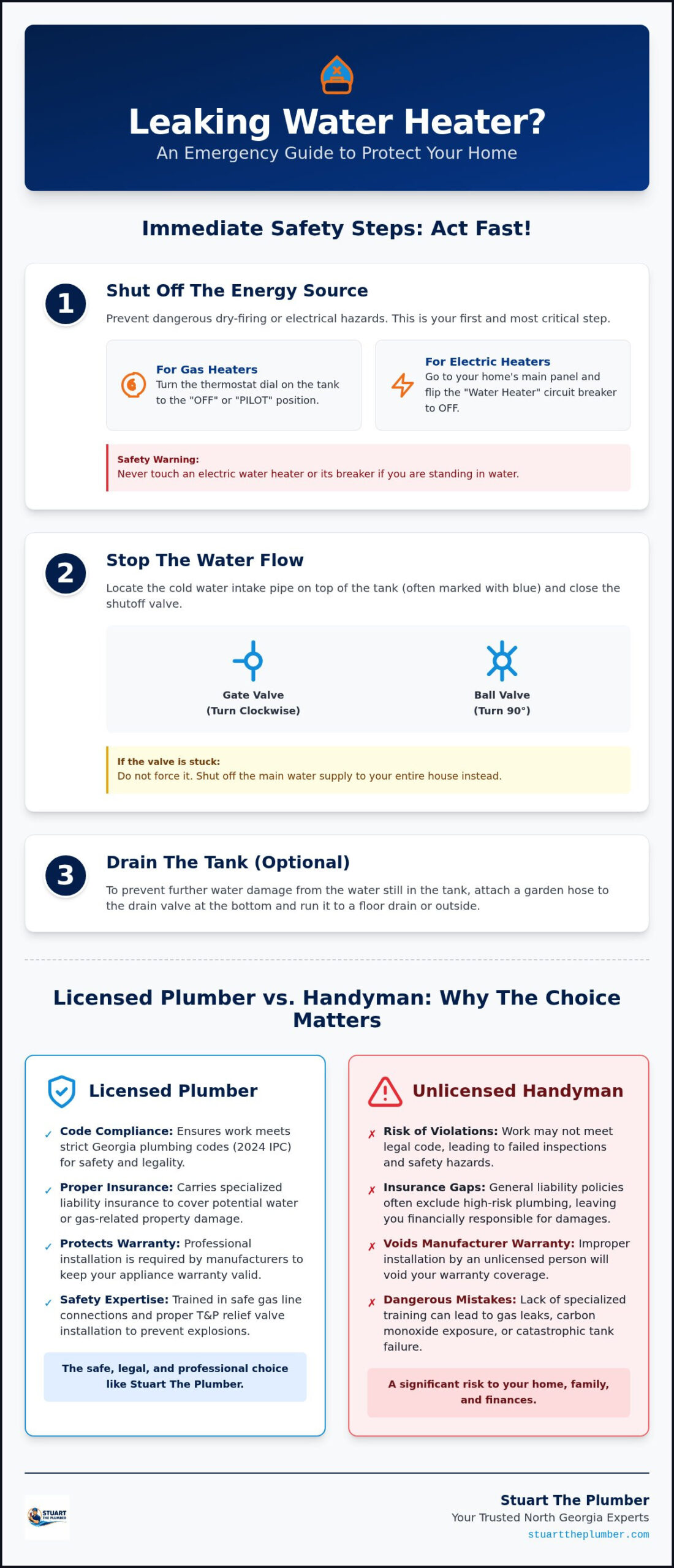
Internal corrosion is a silent killer for traditional tanks. If you notice a metallic smell or see rusty, discolored water at your faucets, the tank’s inner lining is likely deteriorating. This often leads to a tank breach where water begins pooling around the base. Unlike a loose fitting that can be tightened, a leaking tank usually cannot be repaired. It requires a full replacement to prevent structural damage to your home. You can learn more about the specific steps to take in our guide on Who to Call for a Leaking Water Heater. Maintaining the correct temperature is also vital for hygiene, as outlined in the CDC guidelines on water heater maintenance and temperature, which help prevent bacterial growth in the tank while protecting your family from scalding.
Handling Electrical or Gas Line Repairs Safely
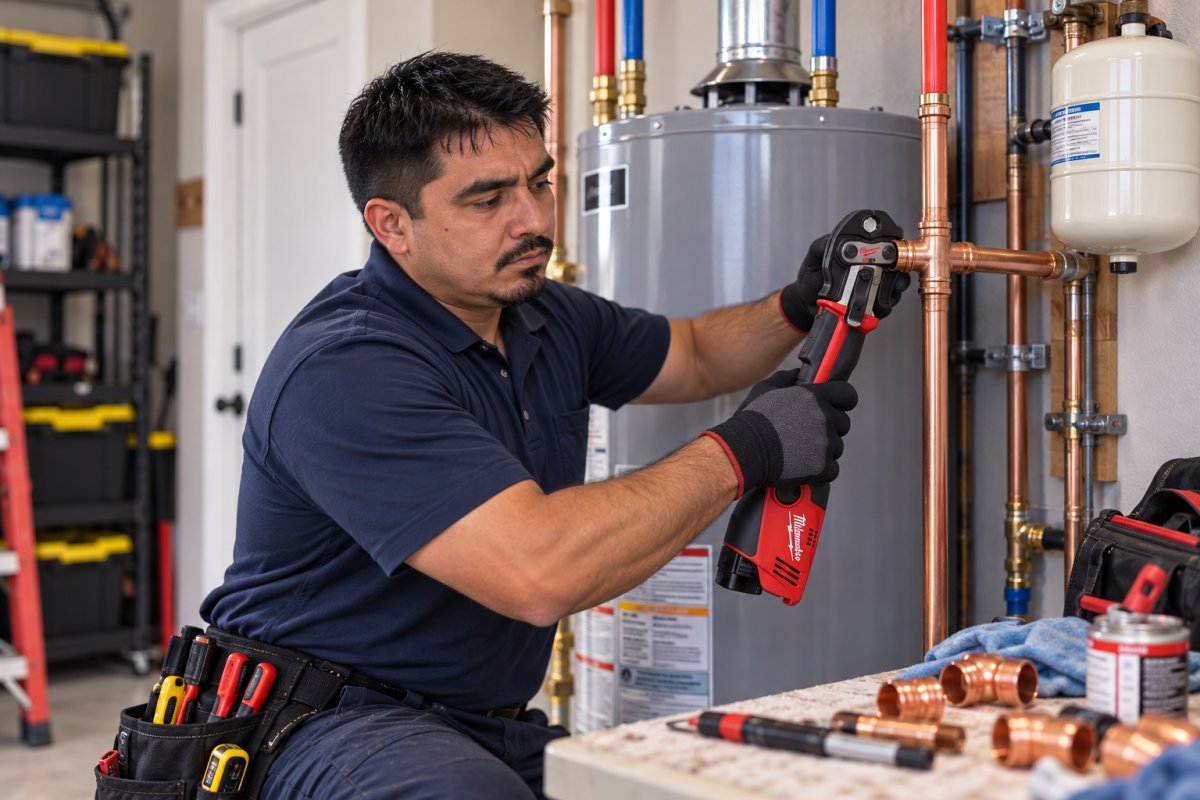
Electrical water heaters operate on a 240-volt circuit. This is enough voltage to cause serious injury if you attempt to replace heating elements without the proper training. Similarly, gas-fired units involve complex burner assemblies and gas control valves. A small mistake during a DIY gas repair can lead to leaks or carbon monoxide issues. Stuart The Plumber follows strict safety protocols to ensure every connection is secure and code-compliant. When you’re dealing with these high-risk components, it’s best to call for emergency plumbing services. A licensed no hot water plumber Georgia professional can safely test your thermostats and elements with a multimeter to find the exact point of failure without putting your home at risk.

Professional Water Heater Solutions in North Georgia
Deciding whether to sink money into a repair or invest in a new unit is a common challenge for homeowners. If you’ve been searching for a no hot water plumber Georgia families trust for an honest opinion, we can help. We use a straightforward framework to help you make the best choice for your budget and home comfort without the stress of high-pressure sales.
The Repair vs. Replace Decision Framework
We generally recommend the “50% rule” for older systems. If the cost of a professional repair exceeds half the price of a new unit, replacement is often the smarter long-term investment. This is especially relevant for traditional tank systems that are between 8 and 12 years old. At this stage, the risk of a secondary failure or a tank breach increases significantly. Upgrading to a modern, high-efficiency system can also reduce your household energy expenses, as water heating typically accounts for 18% of a home’s utility usage. You can explore current models and efficiency standards in our Braselton Water Heater Installation Guide.
Why Stuart The Plumber is the Local Choice
When you schedule a professional installation, we handle the technical details from start to finish. This process includes safely draining the old unit, verifying the new system aligns with the 2026 Georgia State Amendments for plumbing code, and testing every connection for leaks. Our team provides specialized service throughout Braselton and Gainesville. We bring deep knowledge of North Georgia’s specific water conditions and infrastructure to every job.
We believe in no-nonsense service and direct communication. You get a licensed expert who treats your property with respect and provides clear, practical solutions. Choosing a local no hot water plumber Georgia professional ensures you get a technician who is deeply invested in the community and understands the urgency of restoring your home’s hot water. We focus on quality craftsmanship to provide you with peace of mind and long-term reliability.
Restore Your Home’s Hot Water Reliability
Troubleshooting your water heater doesn’t have to be a stressful ordeal. By checking your power supply and pilot lights first, you can often solve minor issues on your own. However, if you find yourself dealing with internal leaks, electrical faults, or the effects of North Georgia’s mineral sediment, it’s time to call a professional. Stuart The Plumber is the no hot water plumber Georgia families have trusted for years to provide honest, no-nonsense diagnostics.
We are licensed and insured local experts with specialized experience in both tankless and traditional systems. Whether you need a simple part replacement or a full high-efficiency upgrade, we prioritize your safety and peace of mind. We’ve served Braselton and the surrounding communities with a commitment to straightforward communication and quality craftsmanship. Don’t let a cold shower ruin another morning when a local expert is just a click away.
We look forward to helping you get your home back to normal and ensuring your plumbing system is ready for the years ahead.
Frequently Asked Questions
Why did my hot water suddenly stop working?
Sudden hot water loss is usually linked to a power or fuel supply failure. For electric heaters, check your breaker panel for a tripped switch. For gas units, a draft may have extinguished the pilot light. If you have a tankless system in Gainesville, a blocked vent or a sensor error could be the cause. If these basic checks don’t solve the problem, an internal component like a thermostat or high-limit switch has likely failed.
How do I know if my water heater element is burned out?
If you have an electric unit, a burned-out element is likely if your water is consistently lukewarm or stays cold. A failed upper element means no hot water at all, while a failed lower element results in a very limited supply that runs out quickly. Stuart The Plumber can test these components with a multimeter to confirm failure. This is a common issue for homeowners in Braselton who haven’t had their tanks flushed recently.
Is it safe to relight my water heater pilot light myself?
It’s generally safe to relight a standing pilot light if you follow the manufacturer’s printed instructions on the side of the tank. Ensure the area is clear of flammable materials and you don’t smell gas before starting. If the pilot light refuses to stay lit after several attempts, it often indicates a faulty thermocouple or a clogged burner. In these cases, you should call a licensed expert to handle the gas assembly safely.
What is the most common reason for no hot water in Georgia?
Mineral sediment buildup is a frequent cause of failure in North Georgia homes, especially those using well water or older municipal lines. This sediment settles at the bottom of the tank, acting as a barrier between the burner and the water. This leads to popping sounds and eventual component burnout. Consulting a no hot water plumber Georgia professional for a professional flush can often prevent these premature mechanical failures from occurring.
How much does it cost to fix a water heater that is not heating?
The cost of repair depends entirely on the specific part that failed and the age of your system. Minor repairs like replacing a thermocouple or a single heating element are common solutions. However, if the internal tank has corroded or ruptured, a full replacement is the only safe option. We focus on providing an accurate diagnosis so you can decide if a repair or a high-efficiency upgrade is the better long-term choice.
Should I call a plumber or an electrician for no hot water?
You should almost always call a licensed plumber first for water heater issues. Stuart The Plumber is trained to handle the specialized electrical and gas components inside the unit, including thermostats and elements. While we don’t perform general home wiring, we can determine if the problem is mechanical or if you need an electrician to address a fault in your home’s main electrical panel or the dedicated circuit that powers the heater.

Article by
Stuart Balestracci
Stuart is a third-generation master plumber dedicated to providing dependable, honest plumbing service throughout Braselton and North Georgia. Building on a family tradition of hands-on trade expertise, he brings practical problem-solving and high standards to every job—from urgent leaks and clogged drains to water heaters, sewer lines, and whole-home repiping.
Stuart believes customers deserve clear answers, quality workmanship, and repairs that address the real issue—not a quick fix that creates another problem later. Through Stuart the Plumber, LLC, he serves homeowners, property managers, and businesses with professional service, straightforward communication, and respect for their property. The company operates as a licensed Georgia plumbing business, license MP208668.
Disclaimer
The information in this article is provided for general educational and informational purposes only. While Sturat the Plumber, LLC makes reasonable efforts to keep information accurate and current, plumbing conditions, building systems, local codes, manufacturer instructions, and repair requirements vary by property and may change over time.
This content is not a substitute for an on-site inspection, diagnosis, estimate, professional plumbing service, or advice from a properly licensed professional. Do not rely on this article to diagnose gas leaks, sewer backups, hidden water leaks, water-heater failures, burst pipes, or other potentially hazardous conditions.
Plumbing work can involve risks including water damage, electrical hazards, gas hazards, sewage exposure, structural damage, and personal injury. Always follow applicable local codes, product instructions, and safety requirements. For active leaks, suspected gas leaks, sewage backups, flooding, loss of water service, or any situation that may create an immediate safety risk, contact a qualified professional or emergency services as appropriate.
Sturat the Plumber, LLC does not guarantee that the information in this article is complete, suitable for every property, or applicable to your specific circumstances. Any decisions or actions taken based on this content are at your own risk. Sturat the Plumber, LLC disclaims liability for loss, damage, injury, expense, or other consequences arising from the use of or reliance on this information.
For an evaluation of your specific plumbing concern, contact Sturat the Plumber, LLC for professional service. Sturat the Plumber, LLC is a licensed Georgia plumbing business, license MP208668.