
Is your project on the water main, or on the line that carries water from the main to your property? That distinction shapes the scope of water main installation North Georgia property owners may need. It also affects how the route, access, excavation, and nearby landscaping are considered.
A useful first step is to identify the section of pipe involved. A water main usually serves a broader distribution system, while a service line connects an individual property to that system. The terms are sometimes used loosely, so locating the suspected problem or proposed connection helps define the work.
This guide explains the difference between a water main and a service line, what installation may involve, and which property details can affect planning. Stuart the Plumber, LLC is a licensed local plumbing company serving Braselton and nearby North Georgia communities. The company handles service line installation and heavy underground main work for residential and commercial properties. Gathering details about the route, access, and symptoms can help you have a focused conversation about next steps.
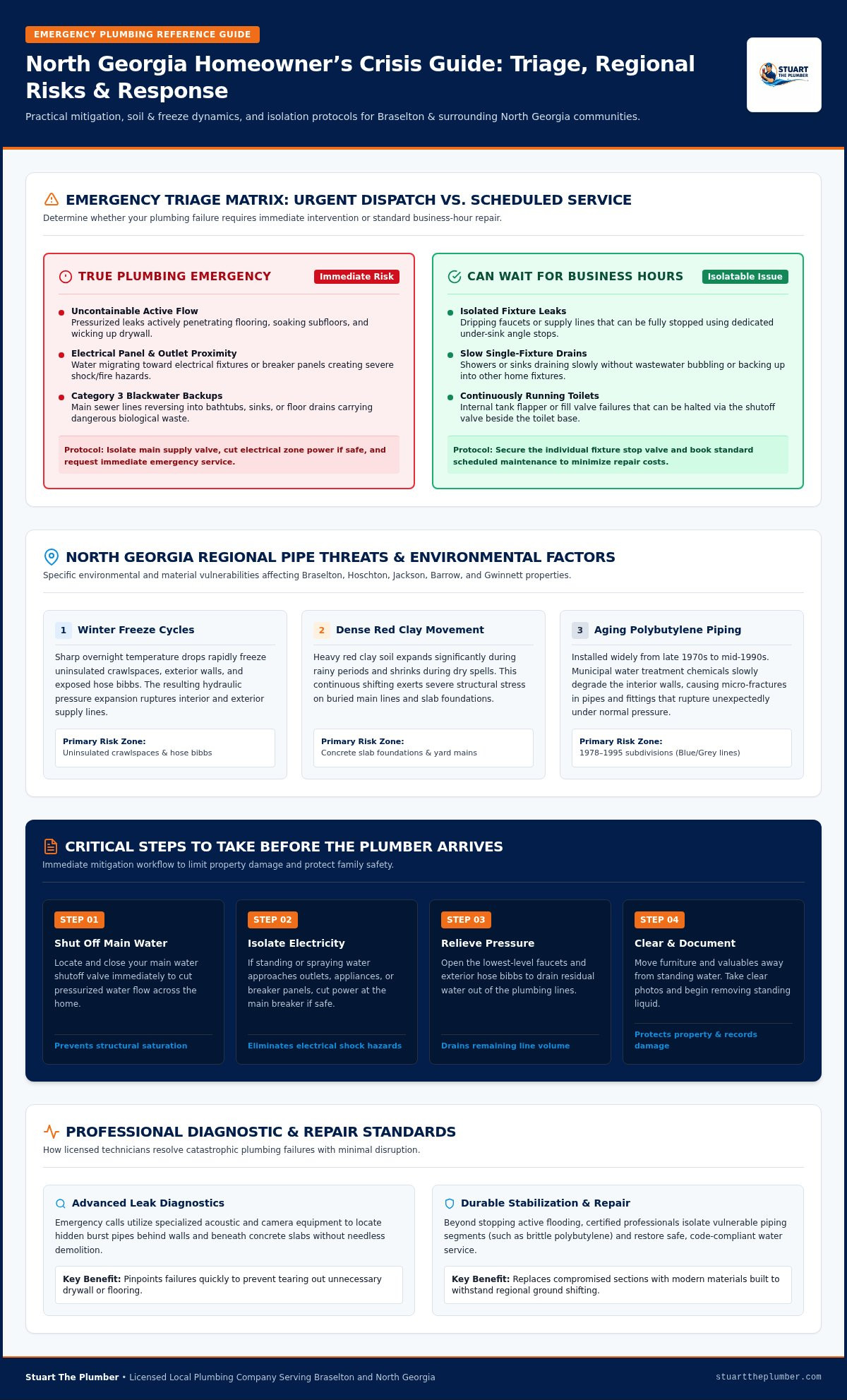
Essential Steps for Managing Burst Pipe Emergencies
- Clarify whether the project involves a shared water main or the service line supplying your property.
- Route, connection points, access, existing underground infrastructure, and property use all help shape an installation plan.
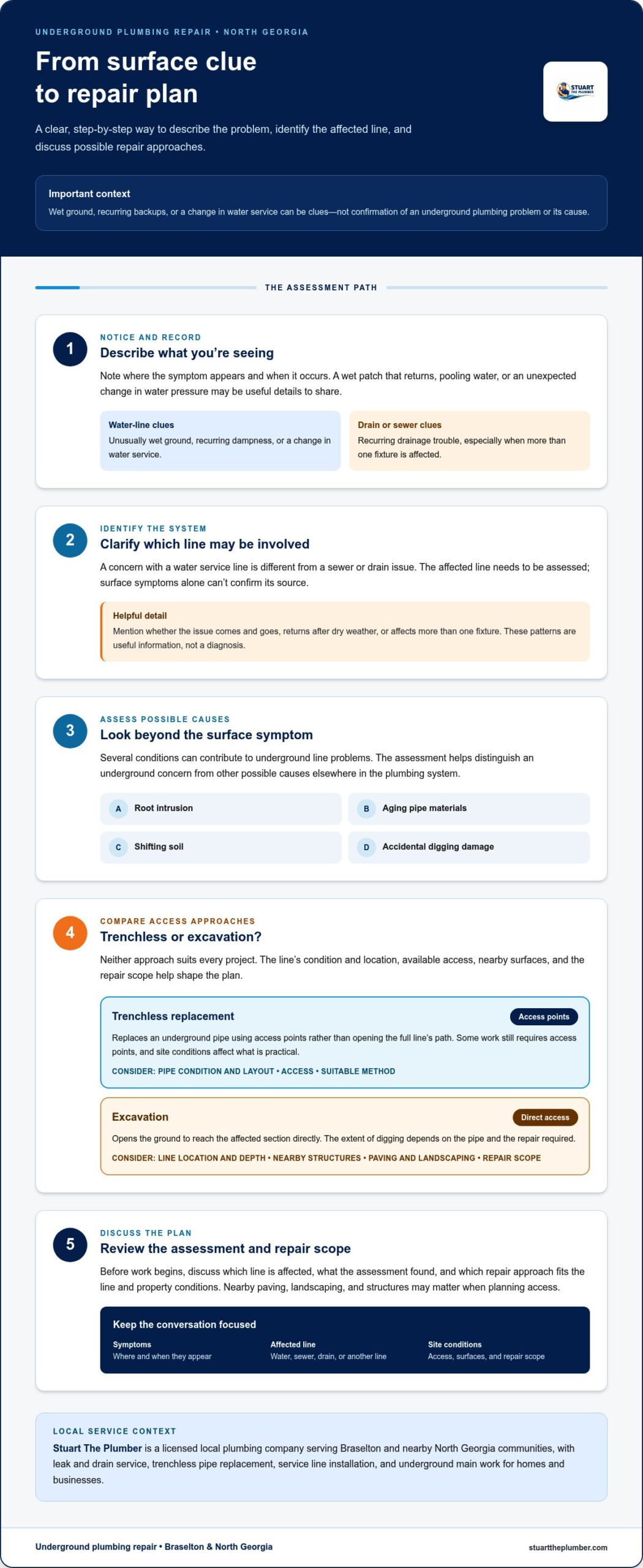
- Excavation or trenchless work may be considered according to site conditions and project needs.
- For water main installation North Georgia properties may need, gather information about the route, symptoms, affected areas, and access.
- Stuart The Plumber handles underground main and service line work for residential and commercial properties in Braselton and nearby North Georgia communities.
Water Main Installation in North Georgia: What Work Does Your Property Need?
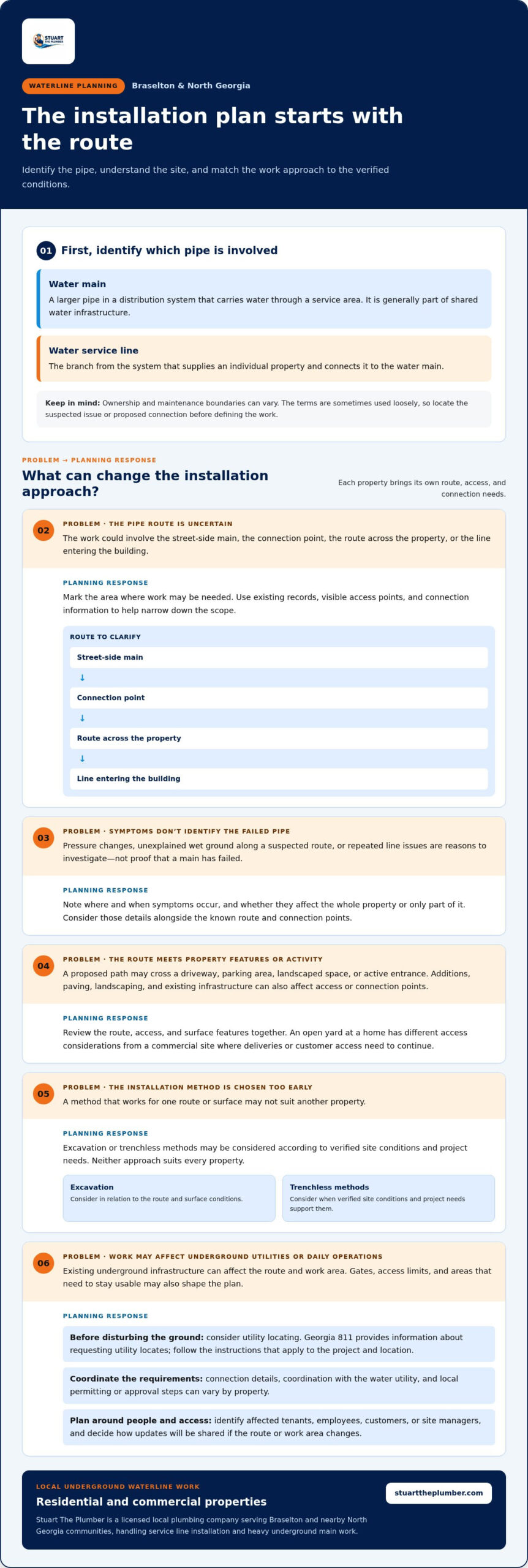
Before planning water main installation North Georgia property owners should identify which part of the water system is involved. Work on a line serving one home or business differs from work on a larger main. The route, connection points, site access, and intended use all help define the scope.
Water main or water service line: what is the difference?
A water main is a larger pipe in a distribution system that carries water through a service area. A water service line branches from that system and supplies an individual property. The main is generally part of shared water infrastructure; the service line connects the property to it. Ownership and maintenance boundaries can vary, so don’t assume the terms refer to the same pipe. The water distribution system overview explains how mains fit into the wider network.
Mark the area where work may be needed: the street-side main, connection point, route across the property, or line entering the building. Existing records, visible access points, and information about the connection can help narrow down the scope. Stuart The Plumber handles underground main work for residential and commercial properties, including heavy commercial waterline installation.
When might a North Georgia property need a new installation?
New construction may need a waterline connection as the property is developed. A major improvement can also change water needs or call for a different connection plan. Property owners may consider replacement when a line has recurring problems or as part of broader site work. The right scope depends on the property and the section of pipe involved.
Pressure changes, unexplained wet ground along a suspected route, or repeated line issues are reasons to investigate, not proof that a main has failed. Note where and when symptoms occur and whether they affect the whole property or only part of it. Those details, together with the known route and connection points, can help determine whether the concern involves the service line or another part of the system.
For a home, the project may focus on its service connection. A commercial property or larger site may involve underground main work across a broader route. Defining the difference early keeps the installation discussion focused on the right section of the system.
What Shapes a Water Main Installation Plan in North Georgia?
A practical plan accounts for more than the pipe. Route length, connection points, equipment access, underground utilities, surface features, and the way the property is used can all affect the work. A route that looks direct on a site plan may cross a driveway, parking area, landscaped space, or active entrance. Those conditions can influence how the project is approached.
Which site conditions can change the installation approach?
The existing line’s route may not suit a new installation. Building additions, paving, landscaping, or other site changes can affect access or the location of a useful connection point. Excavation may work for some routes and surface conditions. Trenchless methods may also be considered when the verified site conditions and project needs support them. Neither approach suits every property.
The installation method should fit the verified route, site conditions, and connection needs, not a one-size-fits-all assumption.
An open yard at a home presents different access considerations from a commercial property where deliveries or customer access need to continue. Existing underground infrastructure matters too, since its location can affect the proposed route and work area. Stuart The Plumber handles underground waterline work for residential and commercial properties, including heavy commercial waterline installation.
What should be coordinated before excavation?
Utility locating is an important step to consider before disturbing the ground. Georgia 811 provides information about requesting utility locates. Follow the instructions that apply to the project and location. Connection details, coordination with the water utility, and local permitting or approval steps can also vary, so account for the requirements that apply to the property when planning the work.
Prepare a clear picture of the work area and how it is used. Identify gates or access limits, areas that need to stay usable, and people who may be affected, such as tenants, employees, customers, or site managers. Decide how updates will be shared if the route or work area needs to change. These details help keep the plan connected to the property’s day-to-day needs.
Waterline work is part of broader community infrastructure planning. The EPA Water Infrastructure resource covers infrastructure maintenance and project support. For property-specific planning, contact Stuart The Plumber to discuss the underground waterline work and site conditions involved.
How to Prepare for Water Main Installation: A Practical Project Checklist
Preparation gives the plumber a clearer starting point and helps property owners plan around the work. For water main installation North Georgia projects, gather what you know about the property and the issue. Then use those details to discuss scope, access, and communication. The installation method, approvals, schedule, and final scope depend on the site, so treat them as open until the property has been assessed.
What information should a property owner gather?
Start with the water entry point and any drawings, prior installation records, or notes about past line work. If you don’t know the route, say so rather than guessing. Record pressure concerns, visible wet areas, recurring issues, when they began, and which parts of the property are affected. This context helps the plumbing team assess the situation without assuming a symptom identifies the cause.
- Property use: Note whether the site is a home, rental property, or commercial space.
- Known line details: Share the suspected route, entry point, connection information, and any available records.
- Observed concerns: Describe symptoms, when they occur, and where you notice them.
- Work area: Identify driveways, landscaping, entrances, and other areas that could be affected.
Be clear about whether you’re planning a new connection, addressing an existing problem, or considering replacement. A repair may address a specific issue, while replacement involves changing an existing line. The water line repair and replacement page covers that related work.
How can you plan around underground work?
Think through how people and vehicles use the site. At a home, consider access for residents and visitors. At a commercial property, note operating hours, deliveries, customer routes, and areas staff need to reach. Share these needs with the plumber so they can be considered during planning. Related underground plumbing work also shows why site conditions matter.
The amount of excavation and surface restoration depends on the project approach and conditions found at the property. Keep residents, tenants, employees, or site managers informed, and decide who should receive updates. This preparation helps everyone understand where access may be affected without assuming the work area or schedule in advance.
Choosing Water Main Installation Support in North Georgia
Choose support that matches the project’s scale and the property’s use. A home’s service line project and a commercial site’s underground main work can involve different routes, connections, and operating constraints. For water main installation North Georgia property owners should look for a scope explained in relation to the actual site, rather than assumptions about method, cost, schedule, or outcome.
What should a water main installation plan address?
A useful project discussion should clarify which line is involved, where the work is expected to take place, and how the proposed route connects to the property or wider system. It should also cover access, known utility conflicts, connection points, and areas that need to remain in use. If a detail is uncertain, treat it as an open question instead of assuming it is settled.
For commercial properties, consider how underground water work fits with other planned site projects. If the property has connected plumbing work, such as a grease trap project, coordinate the work areas and operating needs in the broader plan. Stuart The Plumber also provides commercial grease trap installation.
As you review a proposed scope, discuss what it includes, which site conditions could change the approach, and how updates will be communicated. A clear conversation helps property owners and managers understand the work without relying on promises about timing or results.
How Stuart The Plumber supports North Georgia waterline work
Stuart The Plumber is a licensed local plumbing company serving Braselton and nearby North Georgia communities. Its underground work includes service line installation and heavy underground main work for residential and commercial properties. Homeowners, property managers, and commercial customers can discuss the property type, line location, access needs, connections, and project constraints with a local plumbing company.
Bring available site information to the conversation, including the property’s intended use and any known access or operating limits. Stuart The Plumber can discuss the waterline work in relation to those details, keeping the plan focused on the site and scope.
Take the Next Step With a Clear Starting Point
You don’t need every project detail settled before starting a conversation. For water main installation North Georgia properties may need, separate what you know from what still needs assessment. This keeps early decisions grounded in the property rather than assumptions about the route or work involved.
Decide who will coordinate questions and share project updates. That person might be the homeowner, property manager, or designated commercial site contact. Having one point of contact can make it easier to discuss the property’s needs and organize next steps.
Stuart The Plumber can discuss your waterline project. Bring your questions, even if the route or scope is still uncertain. A focused conversation can help identify what information to gather and how to move planning forward.
Start with the details you have. The next step can become clearer from there.
Frequently Asked Questions
What is the difference between a water main and a water service line?
A water main carries water through a shared distribution network, while a water service line branches from that network to supply a particular property. The service line connects the property to the main, but the exact project boundary depends on the site and connection arrangement. Work near the connection point may involve a different section of pipe than work farther along the route toward a home or business.
What are common signs that a property may need water main installation?
Unexplained wet areas, changes in water pressure, or recurring line concerns are reasons to investigate waterline work. These signs don’t prove that a main has failed, since different issues can affect water delivery. Note where the concern appears, whether it changes over time, and whether it affects one part of the property or the whole building. That context can help guide an assessment.
Does water main installation always require excavation?
No single installation method suits every property. Excavation may be part of the work, while trenchless methods may be considered when the route, access, existing utilities, and verified site conditions support them. Trenchless work shouldn’t be assumed to be suitable or free of surface effects. A site-specific assessment helps identify an appropriate approach and which areas may be affected.
Do I need utility locating before water main work in Georgia?
Utility locating is an important planning consideration before underground work. Georgia 811 provides information about requesting utility locates. Follow its current instructions and account for the requirements that apply to your project and location. Don’t rely on memory or visible surface markers alone to determine what may be underground. Share any available site drawings or records with the plumbing team during planning.
How long does water main installation take?
The time needed depends on the project scope and property conditions. Route length, access, existing utilities, connection details, and the work area can all affect the sequence. A property connection and a larger underground project may require different plans. Discuss known constraints, such as building access or business operations, as the scope is developed. Don’t assume a duration before the site is assessed.
Who installs a water main in North Georgia?
Property owners can discuss underground waterline work with Stuart The Plumber, a licensed local plumbing company serving Braselton and nearby North Georgia communities. Service areas include Braselton, Hoschton, Auburn, Winder, Dacula, Jefferson, Flowery Branch, Oakwood, Gainesville, Buford, Sugar Hill, Lawrenceville, Suwanee, Duluth, Grayson, Loganville, Commerce, and Johns Creek. Share whether the project is residential or commercial and which line or connection is involved.
Planning waterline work in Braselton or another nearby North Georgia community? Call Stuart The Plumber or schedule a service discussion to talk through your property, the line involved, and the next steps.

Article by
Stuart Balestracci
Stuart is a third-generation master plumber dedicated to providing dependable, honest plumbing service throughout Braselton and North Georgia. Building on a family tradition of hands-on trade expertise, he brings practical problem-solving and high standards to every job—from urgent leaks and clogged drains to water heaters, sewer lines, and whole-home repiping.
Stuart believes customers deserve clear answers, quality workmanship, and repairs that address the real issue—not a quick fix that creates another problem later. Through Stuart the Plumber, LLC, he serves homeowners, property managers, and businesses with professional service, straightforward communication, and respect for their property. The company operates as a licensed Georgia plumbing business, license MP208668.
Disclaimer
The information in this article is provided for general educational and informational purposes only. While Sturat the Plumber, LLC makes reasonable efforts to keep information accurate and current, plumbing conditions, building systems, local codes, manufacturer instructions, and repair requirements vary by property and may change over time.
This content is not a substitute for an on-site inspection, diagnosis, estimate, professional plumbing service, or advice from a properly licensed professional. Do not rely on this article to diagnose gas leaks, sewer backups, hidden water leaks, water-heater failures, burst pipes, or other potentially hazardous conditions.
Plumbing work can involve risks including water damage, electrical hazards, gas hazards, sewage exposure, structural damage, and personal injury. Always follow applicable local codes, product instructions, and safety requirements. For active leaks, suspected gas leaks, sewage backups, flooding, loss of water service, or any situation that may create an immediate safety risk, contact a qualified professional or emergency services as appropriate.
Sturat the Plumber, LLC does not guarantee that the information in this article is complete, suitable for every property, or applicable to your specific circumstances. Any decisions or actions taken based on this content are at your own risk. Sturat the Plumber, LLC disclaims liability for loss, damage, injury, expense, or other consequences arising from the use of or reliance on this information.
For an evaluation of your specific plumbing concern, contact Sturat the Plumber, LLC for professional service. Sturat the Plumber, LLC is a licensed Georgia plumbing business, license MP208668.