
Tag: commercial plumbing

  • Water Main Installation in North Georgia: A Property Owner’s Guide

    Water Main Installation in North Georgia: A Property Owner’s Guide

    Is your project on the water main, or on the line that carries water from the main to your property? That distinction shapes the scope of water main installation North Georgia property owners may need. It also affects how the route, access, excavation, and nearby landscaping are considered.

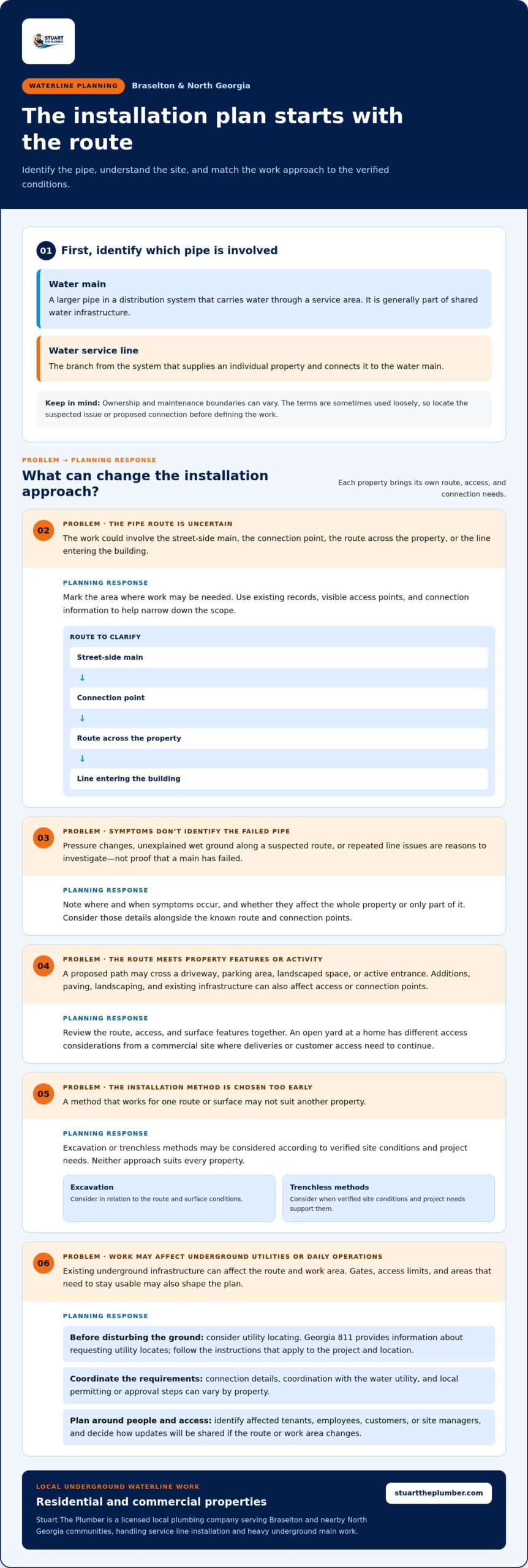
    A useful first step is to identify the section of pipe involved. A water main usually serves a broader distribution system, while a service line connects an individual property to that system. The terms are sometimes used loosely, so locating the suspected problem or proposed connection helps define the work.

    This guide explains the difference between a water main and a service line, what installation may involve, and which property details can affect planning. Stuart the Plumber, LLC is a licensed local plumbing company serving Braselton and nearby North Georgia communities. The company handles service line installation and heavy underground main work for residential and commercial properties. Gathering details about the route, access, and symptoms can help you have a focused conversation about next steps.

    Essential Benefits of Professional Commercial Plumbing

    • Clarify whether the project involves a shared water main or the service line supplying your property.
    • Route, connection points, access, existing underground infrastructure, and property use all help shape an installation plan.
    • Excavation or trenchless work may be considered according to site conditions and project needs.
    • For water main installation North Georgia properties may need, gather information about the route, symptoms, affected areas, and access.
    • Stuart The Plumber handles underground main and service line work for residential and commercial properties in Braselton and nearby North Georgia communities.

    Water Main Installation in North Georgia: What Work Does Your Property Need?

    Before planning water main installation North Georgia property owners should identify which part of the water system is involved. Work on a line serving one home or business differs from work on a larger main. The route, connection points, site access, and intended use all help define the scope.

    Water main or water service line: what is the difference?

    A water main is a larger pipe in a distribution system that carries water through a service area. A water service line branches from that system and supplies an individual property. The main is generally part of shared water infrastructure; the service line connects the property to it. Ownership and maintenance boundaries can vary, so don’t assume the terms refer to the same pipe. The water distribution system overview explains how mains fit into the wider network.

    Mark the area where work may be needed: the street-side main, connection point, route across the property, or line entering the building. Existing records, visible access points, and information about the connection can help narrow down the scope. Stuart The Plumber handles underground main work for residential and commercial properties, including heavy commercial waterline installation.

    When might a North Georgia property need a new installation?

    New construction may need a waterline connection as the property is developed. A major improvement can also change water needs or call for a different connection plan. Property owners may consider replacement when a line has recurring problems or as part of broader site work. The right scope depends on the property and the section of pipe involved.

    Pressure changes, unexplained wet ground along a suspected route, or repeated line issues are reasons to investigate, not proof that a main has failed. Note where and when symptoms occur and whether they affect the whole property or only part of it. Those details, together with the known route and connection points, can help determine whether the concern involves the service line or another part of the system.

    For a home, the project may focus on its service connection. A commercial property or larger site may involve underground main work across a broader route. Defining the difference early keeps the installation discussion focused on the right section of the system.

    What Shapes a Water Main Installation Plan in North Georgia?

    A practical plan accounts for more than the pipe. Route length, connection points, equipment access, underground utilities, surface features, and the way the property is used can all affect the work. A route that looks direct on a site plan may cross a driveway, parking area, landscaped space, or active entrance. Those conditions can influence how the project is approached.

    Which site conditions can change the installation approach?

    The existing line’s route may not suit a new installation. Building additions, paving, landscaping, or other site changes can affect access or the location of a useful connection point. Excavation may work for some routes and surface conditions. Trenchless methods may also be considered when the verified site conditions and project needs support them. Neither approach suits every property.

    The installation method should fit the verified route, site conditions, and connection needs, not a one-size-fits-all assumption.

    An open yard at a home presents different access considerations from a commercial property where deliveries or customer access need to continue. Existing underground infrastructure matters too, since its location can affect the proposed route and work area. Stuart The Plumber handles underground waterline work for residential and commercial properties, including heavy commercial waterline installation.

    What should be coordinated before excavation?

    Utility locating is an important step to consider before disturbing the ground. Georgia 811 provides information about requesting utility locates. Follow the instructions that apply to the project and location. Connection details, coordination with the water utility, and local permitting or approval steps can also vary, so account for the requirements that apply to the property when planning the work.

    Prepare a clear picture of the work area and how it is used. Identify gates or access limits, areas that need to stay usable, and people who may be affected, such as tenants, employees, customers, or site managers. Decide how updates will be shared if the route or work area needs to change. These details help keep the plan connected to the property’s day-to-day needs.

    Waterline work is part of broader community infrastructure planning. The EPA Water Infrastructure resource covers infrastructure maintenance and project support. For property-specific planning, contact Stuart The Plumber to discuss the underground waterline work and site conditions involved.

    How to Prepare for Water Main Installation: A Practical Project Checklist

    Preparation gives the plumber a clearer starting point and helps property owners plan around the work. For water main installation North Georgia projects, gather what you know about the property and the issue. Then use those details to discuss scope, access, and communication. The installation method, approvals, schedule, and final scope depend on the site, so treat them as open until the property has been assessed.

    What information should a property owner gather?

    Start with the water entry point and any drawings, prior installation records, or notes about past line work. If you don’t know the route, say so rather than guessing. Record pressure concerns, visible wet areas, recurring issues, when they began, and which parts of the property are affected. This context helps the plumbing team assess the situation without assuming a symptom identifies the cause.

    • Property use: Note whether the site is a home, rental property, or commercial space.
    • Known line details: Share the suspected route, entry point, connection information, and any available records.
    • Observed concerns: Describe symptoms, when they occur, and where you notice them.
    • Work area: Identify driveways, landscaping, entrances, and other areas that could be affected.

    Be clear about whether you’re planning a new connection, addressing an existing problem, or considering replacement. A repair may address a specific issue, while replacement involves changing an existing line. The water line repair and replacement page covers that related work.

    How can you plan around underground work?

    Think through how people and vehicles use the site. At a home, consider access for residents and visitors. At a commercial property, note operating hours, deliveries, customer routes, and areas staff need to reach. Share these needs with the plumber so they can be considered during planning. Related underground plumbing work also shows why site conditions matter.

    The amount of excavation and surface restoration depends on the project approach and conditions found at the property. Keep residents, tenants, employees, or site managers informed, and decide who should receive updates. This preparation helps everyone understand where access may be affected without assuming the work area or schedule in advance.
    Water Main Installation in North Georgia: A Property Owner’s Guide

    Choosing Water Main Installation Support in North Georgia

    Choose support that matches the project’s scale and the property’s use. A home’s service line project and a commercial site’s underground main work can involve different routes, connections, and operating constraints. For water main installation North Georgia property owners should look for a scope explained in relation to the actual site, rather than assumptions about method, cost, schedule, or outcome.

    What should a water main installation plan address?

    A useful project discussion should clarify which line is involved, where the work is expected to take place, and how the proposed route connects to the property or wider system. It should also cover access, known utility conflicts, connection points, and areas that need to remain in use. If a detail is uncertain, treat it as an open question instead of assuming it is settled.

    For commercial properties, consider how underground water work fits with other planned site projects. If the property has connected plumbing work, such as a grease trap project, coordinate the work areas and operating needs in the broader plan. Stuart The Plumber also provides commercial grease trap installation.

    As you review a proposed scope, discuss what it includes, which site conditions could change the approach, and how updates will be communicated. A clear conversation helps property owners and managers understand the work without relying on promises about timing or results.

    How Stuart The Plumber supports North Georgia waterline work

    Stuart The Plumber is a licensed local plumbing company serving Braselton and nearby North Georgia communities. Its underground work includes service line installation and heavy underground main work for residential and commercial properties. Homeowners, property managers, and commercial customers can discuss the property type, line location, access needs, connections, and project constraints with a local plumbing company.

    Bring available site information to the conversation, including the property’s intended use and any known access or operating limits. Stuart The Plumber can discuss the waterline work in relation to those details, keeping the plan focused on the site and scope.

    Take the Next Step With a Clear Starting Point

    You don’t need every project detail settled before starting a conversation. For water main installation North Georgia properties may need, separate what you know from what still needs assessment. This keeps early decisions grounded in the property rather than assumptions about the route or work involved.

    Decide who will coordinate questions and share project updates. That person might be the homeowner, property manager, or designated commercial site contact. Having one point of contact can make it easier to discuss the property’s needs and organize next steps.

    Stuart The Plumber can discuss your waterline project. Bring your questions, even if the route or scope is still uncertain. A focused conversation can help identify what information to gather and how to move planning forward.

    Start with the details you have. The next step can become clearer from there.

    Frequently Asked Questions

    What is the difference between a water main and a water service line?

    A water main carries water through a shared distribution network, while a water service line branches from that network to supply a particular property. The service line connects the property to the main, but the exact project boundary depends on the site and connection arrangement. Work near the connection point may involve a different section of pipe than work farther along the route toward a home or business.

    What are common signs that a property may need water main installation?

    Unexplained wet areas, changes in water pressure, or recurring line concerns are reasons to investigate waterline work. These signs don’t prove that a main has failed, since different issues can affect water delivery. Note where the concern appears, whether it changes over time, and whether it affects one part of the property or the whole building. That context can help guide an assessment.

    Does water main installation always require excavation?

    No single installation method suits every property. Excavation may be part of the work, while trenchless methods may be considered when the route, access, existing utilities, and verified site conditions support them. Trenchless work shouldn’t be assumed to be suitable or free of surface effects. A site-specific assessment helps identify an appropriate approach and which areas may be affected.

    Do I need utility locating before water main work in Georgia?

    Utility locating is an important planning consideration before underground work. Georgia 811 provides information about requesting utility locates. Follow its current instructions and account for the requirements that apply to your project and location. Don’t rely on memory or visible surface markers alone to determine what may be underground. Share any available site drawings or records with the plumbing team during planning.

    How long does water main installation take?

    The time needed depends on the project scope and property conditions. Route length, access, existing utilities, connection details, and the work area can all affect the sequence. A property connection and a larger underground project may require different plans. Discuss known constraints, such as building access or business operations, as the scope is developed. Don’t assume a duration before the site is assessed.

    Who installs a water main in North Georgia?

    Property owners can discuss underground waterline work with Stuart The Plumber, a licensed local plumbing company serving Braselton and nearby North Georgia communities. Service areas include Braselton, Hoschton, Auburn, Winder, Dacula, Jefferson, Flowery Branch, Oakwood, Gainesville, Buford, Sugar Hill, Lawrenceville, Suwanee, Duluth, Grayson, Loganville, Commerce, and Johns Creek. Share whether the project is residential or commercial and which line or connection is involved.

    Planning waterline work in Braselton or another nearby North Georgia community? Call Stuart The Plumber or schedule a service discussion to talk through your property, the line involved, and the next steps.

    Stuart Balestracci

    Article by

    Stuart Balestracci

    Stuart is a third-generation master plumber dedicated to providing dependable, honest plumbing service throughout Braselton and North Georgia. Building on a family tradition of hands-on trade expertise, he brings practical problem-solving and high standards to every job—from urgent leaks and clogged drains to water heaters, sewer lines, and whole-home repiping.

    Stuart believes customers deserve clear answers, quality workmanship, and repairs that address the real issue—not a quick fix that creates another problem later. Through Stuart the Plumber, LLC, he serves homeowners, property managers, and businesses with professional service, straightforward communication, and respect for their property. The company operates as a licensed Georgia plumbing business, license MP208668.

    Disclaimer

    The information in this article is provided for general educational and informational purposes only. While Sturat the Plumber, LLC makes reasonable efforts to keep information accurate and current, plumbing conditions, building systems, local codes, manufacturer instructions, and repair requirements vary by property and may change over time.

    This content is not a substitute for an on-site inspection, diagnosis, estimate, professional plumbing service, or advice from a properly licensed professional. Do not rely on this article to diagnose gas leaks, sewer backups, hidden water leaks, water-heater failures, burst pipes, or other potentially hazardous conditions.

    Plumbing work can involve risks including water damage, electrical hazards, gas hazards, sewage exposure, structural damage, and personal injury. Always follow applicable local codes, product instructions, and safety requirements. For active leaks, suspected gas leaks, sewage backups, flooding, loss of water service, or any situation that may create an immediate safety risk, contact a qualified professional or emergency services as appropriate.

    Sturat the Plumber, LLC does not guarantee that the information in this article is complete, suitable for every property, or applicable to your specific circumstances. Any decisions or actions taken based on this content are at your own risk. Sturat the Plumber, LLC disclaims liability for loss, damage, injury, expense, or other consequences arising from the use of or reliance on this information.

    For an evaluation of your specific plumbing concern, contact Sturat the Plumber, LLC for professional service. Sturat the Plumber, LLC is a licensed Georgia plumbing business, license MP208668.

  • Grease Trap Repair in Georgia: Guide for Restaurants

    Grease Trap Repair in Georgia: Guide for Restaurants

    What if the grease you can see isn’t the reason your kitchen drains are backing up? Slow drains, foul odors, or wastewater around a trap can point to buildup, a damaged unit, or a problem farther along the connected drain line. Identifying the cause is the first step in deciding what kind of grease trap repair Georgia restaurants may need.

    Plumbing trouble can interrupt prep or service, especially when it’s unclear whether cleaning will help or a repair is needed. The right next step depends on the condition of the trap and connected plumbing, not just what’s visible at the unit.

    This guide covers common warning signs, how a plumber assesses the trap and connected plumbing, and when repair, replacement, or drain-line work may be considered. You’ll also learn what details to share when arranging service, including which fixtures are affected and when the problem started. Stuart The Plumber is a licensed local plumbing company serving Braselton and nearby North Georgia communities, with commercial plumbing, grease trap installation and replacement, and drain service.

    Essential Benefits of Professional Commercial Plumbing

    • Recurring backups, slow drains, odors, or leaks can point to an issue beyond routine grease buildup.
    • Grease trap repair Georgia starts with determining whether the source is the trap, connected piping, or another drain-line concern.
    • Sharing which fixtures are affected, when symptoms began, and what service has already been done gives the plumber useful context.
    • Maintenance, repair, and replacement address different conditions. Repeated symptoms are a reason to investigate the underlying cause.

    Grease Trap Problems in Georgia: Signs That Point Beyond Routine Cleaning

    Recurring backups, slow drains, unusual odors, or visible leakage can disrupt a restaurant kitchen and raise an immediate question: will cleaning solve the problem, or is something wrong with the plumbing? These signs deserve attention, especially when they return after routine cleaning.

    Cleaning removes accumulated grease and solids. It doesn’t repair a damaged trap or a problem in the piping connected to it. A grease trap separates fats, oils, and grease from wastewater before it continues through the drain system. Trouble may involve the unit, its inlet or outlet piping, or another part of the line.

    When a symptom keeps returning, identify its cause rather than assuming another cleaning will solve it. That’s a practical starting point for determining what kind of grease trap repair Georgia restaurants may need.

    Which grease trap symptoms should a restaurant take seriously?

    Watch for persistent slow drainage at sinks connected to the system, repeated backups, odors that linger near the trap or drains, and visible leakage around the unit or nearby piping. Note when the issue occurs and which fixtures are affected. These details help describe the problem clearly.

    A symptom alone doesn’t identify a specific failure. If the same trouble returns after cleaning, don’t assume another cleaning will address it. The cause could be buildup, a component concern, or a connected drain issue that needs a plumbing assessment.

    Is a grease trap problem always caused by grease buildup?

    No. Accumulated grease can restrict flow, but similar symptoms may come from damage to the trap or a concern in the inlet, outlet, or connected drain line. A slow sink and a recurring backup can appear similar from the kitchen, even when their sources differ. An assessment helps narrow down where the problem starts.

    System layout matters, too. For background on how a trap fits into a commercial kitchen’s plumbing, see the article on commercial grease trap installation. If the issue appears to extend into the connected piping, drain-line repair may be relevant. Stuart The Plumber serves Braselton and nearby North Georgia communities with commercial plumbing and drain service.

    Grease Trap Repair in Georgia: How Plumbers Find the Actual Cause

    Grease trap repair starts with identifying a plumbing fault. Removing accumulated grease may restore flow when buildup is the issue, but cleaning alone won’t correct damage to the trap or a problem in connected piping. For restaurants considering grease trap repair Georgia, the goal is to match the next step to the condition found rather than assume every drainage symptom has the same cause.

    What may need attention around a commercial grease trap?

    A plumber assesses the trap and the accessible piping connected to it, including the inlet, outlet, and nearby drain line. Depending on the symptoms and what can be inspected, concerns may include a blockage, damage, or recurring drainage trouble elsewhere in the system. A smell or slow sink by itself doesn’t confirm any of these causes.

    The assessment connects what staff have observed with the condition of the plumbing. If signs point beyond the trap, the problem may involve a broader drain-line repair concern. The findings help determine an appropriate next step.

    When does cleaning differ from repair or replacement?

    Each option addresses a different condition: cleaning removes accumulated material, repair addresses an identified fault when the trap can be repaired, and replacement is considered when the trap’s condition makes repair unsuitable. A plumber reviews the source of the trouble and the state of the trap before discussing which option fits.

    That distinction matters when a restaurant is deciding what to do about recurring symptoms. If the trap is in sound condition and accumulated material is the issue, maintenance may be appropriate. If an identifiable plumbing fault is found, repair may be an option. If the trap is too compromised for a suitable repair, replacement may be discussed. Stuart The Plumber provides commercial plumbing, grease trap installation and replacement, and drain service in Braselton and nearby North Georgia communities.

    Keep track of which fixtures are affected and whether the problem changes after routine cleaning. Those observations can help focus the assessment. If you’re dealing with recurring trouble, contact Stuart The Plumber about your grease trap concern.

    What to Expect During a North Georgia Grease Trap Plumbing Assessment

    A plumbing assessment follows a practical sequence: the plumber reviews the symptoms with you, checks relevant accessible components, considers how connected drains are behaving, and explains the likely source and possible next steps. The recommendation depends on what the assessment reveals and the condition of the plumbing.

    What information should a restaurant prepare before service?

    A clear account of the problem helps focus the visit. Before service, note when symptoms began, whether they return after cleaning, and which sinks, drains, or other kitchen fixtures are affected. Share the business type and any previous cleaning or plumbing service related to the issue.

    Also mention visible changes, such as moisture near the trap or a new odor. Don’t open or dismantle plumbing components to investigate. Staff observations are useful without taking on an invasive inspection.

    How does an assessment lead to a repair recommendation?

    The plumber compares the reported pattern with visible conditions at the trap and connected plumbing. If a fixture or drain line appears involved, the assessment may extend to that part of the system. A concern in connected piping, for example, may call for drain-line repair rather than work limited to the trap.

    Once the likely source is clearer, the plumber can explain the findings in plain language and discuss appropriate next steps. Depending on the trap’s condition and the source of the problem, those may include repair or replacement. For restaurants considering grease trap repair Georgia, sharing symptom history and prior service helps make the conversation more specific, though it can’t determine the cause on its own.

    Stuart The Plumber serves Braselton and nearby North Georgia communities with commercial plumbing, grease trap installation and replacement, and drain service. An assessment helps connect the kitchen’s symptoms to the condition of the plumbing before a next step is chosen.

    Grease Trap Repair in Georgia: Guide for Restaurants

    Choosing the Next Step for Grease Trap Repair or Replacement in Georgia

    Once the likely cause is clearer, the next step should match the condition found. Maintenance addresses accumulated material. Repair addresses an identified plumbing fault when the affected components can be repaired. Replacement may be considered when the trap’s condition makes repair unsuitable. These options solve different problems, so the recommendation should follow an assessment rather than a one-size-fits-all rule.

    How can a business think through repair versus replacement?

    Start with two questions: where is the trouble coming from, and what condition is the trap in? If the issue is limited to an identifiable fault and the trap remains suitable for repair, repair may be an option. If the trap itself is in a condition that makes repair unsuitable, replacement may make more sense. The assessment findings, including whether connected piping is involved, shape that decision.

    Repeated symptoms deserve attention. If backups or drainage trouble return after cleaning, another cleaning may not address the underlying cause. A plumbing assessment can help distinguish a maintenance need from a fault in the trap or connected plumbing. Repeated symptoms do not automatically mean the trap needs replacement.

    When should a restaurant contact a local plumber?

    Contact a plumber if backups persist, drainage trouble keeps returning, or you see leakage around the trap or connected piping. Share which fixtures are affected, when the problem occurs, and whether it has returned after cleaning. That history gives the plumber useful context without asking staff to investigate plumbing themselves.

    Stuart The Plumber is a licensed local plumbing company serving Braselton and nearby North Georgia communities. Its commercial plumbing services include grease trap installation and replacement, along with drain service. If you’re planning broader system work, read the commercial grease trap installation guide for additional context.

    For grease trap repair Georgia restaurants can take a practical approach: have recurring symptoms assessed, understand the likely source, and weigh the next step against the trap’s condition. Contact Stuart The Plumber to discuss a commercial grease trap or connected plumbing concern.

    Take the Next Step Toward Reliable Kitchen Drainage

    Recurring backups, slow drains, odors, or visible leakage deserve more than an automatic repeat of the last cleaning. The right next step depends on the source of the trouble and the condition of the trap and connected plumbing. Cleaning addresses accumulated material; repair or replacement may be appropriate when an assessment identifies a plumbing fault or a trap that isn’t suitable for repair.

    For grease trap repair Georgia restaurants can start with a useful account of the problem: which fixtures are affected, when symptoms began, and whether they returned after cleaning. That history helps a plumber assess the situation and explain practical options without assuming the cause in advance.

    Stuart The Plumber is a licensed local plumbing company serving Braselton and nearby North Georgia communities. Its commercial plumbing services include grease trap installation and replacement, drain cleaning, and underground utility work, supporting a practical approach to water main installation North Georgia property owners may need.

    Call Stuart The Plumber or schedule service to discuss grease trap installation or replacement, drain concerns, or related commercial plumbing in Braselton and nearby North Georgia communities.

    Frequently Asked Questions

    Can a grease trap problem be fixed without replacing the whole unit?

    Yes, some grease trap problems can be addressed without replacing the unit. The right option depends on the cause and the condition of the trap and affected components. A plumber can assess the trap and connected plumbing, then explain whether repair or replacement is appropriate. Don’t assume every backup means the entire unit has failed. The source of the problem and the trap’s condition guide the next step.

    How do I know if my restaurant needs grease trap cleaning or repair?

    Cleaning removes accumulated grease and related material, while repair addresses an identified plumbing fault or damage. Persistent slow drainage or repeated backups may have more than one cause, so symptoms alone can’t establish whether cleaning or repair is needed. If the problem continues after routine cleaning, arrange a plumbing assessment. The plumber can examine accessible parts of the trap and related plumbing and explain what the findings suggest.

    What causes a grease trap to keep backing up after cleaning?

    A backup that returns after cleaning may involve the trap, connected drain piping, or another part of the drainage system. The symptom alone doesn’t identify a failed component, so avoid assuming the trap needs replacement or another cleaning. Tell the plumber when the backups happen, which fixtures are affected, and whether cleaning changed the symptoms. That history helps direct an assessment toward the likely source.

    What happens during a commercial grease trap repair assessment?

    A plumber reviews the symptoms you report, asks which fixtures are affected, and assesses accessible parts of the trap and connected plumbing. They use the observed conditions and your account to narrow down the likely source, then explain practical next steps in plain language. Depending on the findings, repair or replacement may be discussed. The recommendation depends on the property and conditions observed.

    When should a Georgia restaurant call a plumber about its grease trap?

    Contact a plumber if drainage problems persist, backups return after cleaning, or you notice visible leakage around the trap or connected piping. Share when the symptoms began and which fixtures are affected. Stuart The Plumber is a licensed local plumbing company serving Braselton, Hoschton, Auburn, Winder, Dacula, Jefferson, Flowery Branch, Oakwood, Gainesville, Buford, Sugar Hill, Lawrenceville, Suwanee, Duluth, Grayson, Loganville, Commerce, and Johns Creek.

    Does grease trap repair include cleaning the trap?

    Repair and cleaning address different needs, so one doesn’t automatically include the other. Cleaning removes accumulated material; plumbing repair addresses an identified fault in the trap or related piping. A business may need cleaning, repair, or both, depending on the condition found. Ask the plumber to explain the assessment findings and recommendation clearly. Recurring symptoms alone don’t prove that cleaning will resolve the plumbing concern.

    Stuart Balestracci

    Article by

    Stuart Balestracci

    Stuart is a third-generation master plumber dedicated to providing dependable, honest plumbing service throughout Braselton and North Georgia. Building on a family tradition of hands-on trade expertise, he brings practical problem-solving and high standards to every job—from urgent leaks and clogged drains to water heaters, sewer lines, and whole-home repiping.

    Stuart believes customers deserve clear answers, quality workmanship, and repairs that address the real issue—not a quick fix that creates another problem later. Through Stuart the Plumber, LLC, he serves homeowners, property managers, and businesses with professional service, straightforward communication, and respect for their property. The company operates as a licensed Georgia plumbing business, license MP208668.

    Disclaimer

    The information in this article is provided for general educational and informational purposes only. While Sturat the Plumber, LLC makes reasonable efforts to keep information accurate and current, plumbing conditions, building systems, local codes, manufacturer instructions, and repair requirements vary by property and may change over time.

    This content is not a substitute for an on-site inspection, diagnosis, estimate, professional plumbing service, or advice from a properly licensed professional. Do not rely on this article to diagnose gas leaks, sewer backups, hidden water leaks, water-heater failures, burst pipes, or other potentially hazardous conditions.

    Plumbing work can involve risks including water damage, electrical hazards, gas hazards, sewage exposure, structural damage, and personal injury. Always follow applicable local codes, product instructions, and safety requirements. For active leaks, suspected gas leaks, sewage backups, flooding, loss of water service, or any situation that may create an immediate safety risk, contact a qualified professional or emergency services as appropriate.

    Sturat the Plumber, LLC does not guarantee that the information in this article is complete, suitable for every property, or applicable to your specific circumstances. Any decisions or actions taken based on this content are at your own risk. Sturat the Plumber, LLC disclaims liability for loss, damage, injury, expense, or other consequences arising from the use of or reliance on this information.

    For an evaluation of your specific plumbing concern, contact Sturat the Plumber, LLC for professional service. Sturat the Plumber, LLC is a licensed Georgia plumbing business, license MP208668.

  • Commercial Grease Trap Installation in North Georgia: What Businesses Should Know

    Commercial Grease Trap Installation in North Georgia: What Businesses Should Know

    What if the best spot for a grease trap depends on more than the space available beneath the kitchen floor? Commercial grease trap installation starts with the property’s plumbing layout, drainage connections, and day-to-day kitchen needs. Choosing a location without considering those details can complicate the work and disrupt construction or kitchen operations.

    If you’re planning a new kitchen, renovation, or replacement, it’s reasonable to have questions about where the equipment will go and how it will connect to existing plumbing. The right plan accounts for the building and the work schedule before installation begins.

    This guide explains the main stages of a commercial grease trap project, the property and plumbing details that can affect planning, and how to coordinate installation with other work. Stuart the Plumber, LLC is a licensed local plumbing company serving Braselton and nearby North Georgia communities, with commercial grease trap installation and replacement among its services. Here’s what to consider as you prepare for the project.

    Essential Benefits of Professional Commercial Plumbing

    • Understand how grease traps and interceptors support wastewater plumbing in food-service properties.
    • Learn how site assessment, plumbing access, and drainage routes shape commercial grease trap installation.
    • Compare a new installation with replacement or connection to existing plumbing based on your property’s needs.
    • Plan plumbing work alongside construction or kitchen operations to help manage project coordination.
    • See when to discuss your project with Stuart The Plumber, a licensed local company serving Braselton and nearby North Georgia communities.

    Commercial Grease Trap Installation: When a North Georgia Business Needs a Plan

    A grease trap is a plumbing device that separates fats, oils, and grease from wastewater before it flows farther through a property’s drainage system. In a commercial kitchen, wastewater from connected fixtures flows through the grease-control equipment as part of the plumbing path. For a basic overview of what a grease trap is, see this general reference.

    Restaurants and other food-service businesses should consider grease control as part of their plumbing plans because kitchen wastewater can carry grease into the drain system. Planning early helps owners account for the equipment’s location and connection to the building’s plumbing, rather than treating it as an afterthought during construction or a kitchen change.

    What does a commercial grease trap do?

    The equipment slows and separates grease from wastewater so it can be held apart from the water moving through the plumbing. The specific setup and connection depend on the property. Existing drain routes, available access, and the kitchen’s fixtures all influence how the system fits into the building.

    Which businesses should consider installation or replacement?

    Restaurants and other food-service properties may need to plan a new installation when building a kitchen or changing how it will be used. Replacement may be worth assessing when existing equipment is damaged, shows signs of leakage, or no longer fits the property’s plumbing arrangement or intended use. Recurring drain problems can also be a reason to have the connected plumbing assessed, though they don’t identify the cause on their own.

    Installation planning is separate from routine cleaning and ongoing maintenance. A plumbing assessment can help clarify whether the project involves adding equipment, replacing an existing unit, or adapting the connection to the kitchen’s current layout. The right approach depends on the site and business use, not on assuming every property has the same setup.

    Stuart the Plumber, LLC is a licensed local plumbing company serving Braselton and nearby North Georgia communities, with commercial grease trap installation and replacement services. Review the commercial grease trap installation service to learn more about planning this work for your property.

    How Commercial Grease Trap Installation Is Planned and Carried Out

    Site conditions shape the installation plan because the equipment must connect to the building’s plumbing and fit the property’s layout and intended use. A commercial grease trap installation typically moves from assessment to preparation, plumbing work, equipment installation, and final checks. The exact scope depends on the site, including how kitchen drains can reach the proposed location.

    What happens during the site and plumbing assessment?

    The plumber reviews how the kitchen will be used, the existing plumbing, available access, and potential equipment locations. This helps identify how wastewater lines can connect and whether the route may be affected by walls, paved areas, other utilities, or the building’s layout. The assessment also helps define the project scope before work begins, rather than assuming one placement suits every property.

    Local requirements can vary with the project and the authority responsible for the site. The EPA describes the broader national pretreatment program, while applicable local requirements should be considered for the specific installation.

    What are the main installation stages?

    Once the project plan is established, work generally proceeds in a practical sequence:

    • Prepare the site: Coordinate access and work areas with the property owner and any construction team.
    • Connect the plumbing: Route or adapt drainage lines to link the kitchen plumbing with the grease-control equipment.
    • Install the equipment: Set it in the planned location and complete the required plumbing connections.
    • Check the work: Review connections and drainage flow as part of the project’s final checks.

    Excavation or underground utility work may be part of the scope if the planned location and drainage route require it. It isn’t necessary for every property. For a project tied to a new build, coordinating the plumbing plan with construction work can help keep the different stages aligned. Learn more about commercial new construction plumbing.

    Stuart the Plumber, LLC is a licensed local plumbing company serving Braselton and nearby North Georgia communities. If you’re planning a project and want to discuss the property’s plumbing layout, contact Stuart the Plumber, LLC about your project.

    Choosing the Right Installation Approach for Your Commercial Property

    The right approach depends on what’s already in place and how the property will be used. A new restaurant buildout may need grease-control plumbing planned alongside the kitchen drains. An operating business may be considering replacement or changes to existing connections. A site assessment helps determine the work involved without assuming the current equipment or plumbing is suitable as-is.

    New installation or grease trap replacement?

    For a new commercial kitchen, installation planning can account for the intended business use, proposed equipment location, and connection to the drainage system. For an existing property, replacement may be appropriate to consider if the equipment is damaged, shows signs of leakage, or no longer fits the plumbing arrangement or operational needs. Drain problems may also prompt an assessment, but they don’t prove that the grease trap has failed. The condition of the equipment and connected plumbing needs to be evaluated on site.

    What details shape the project scope?

    Property access, plumbing connections, site layout, and business operations all influence the project scope. The location of kitchen drains affects possible connection routes. Limited access or work near paved areas and underground utilities may change how the work is planned. If the project is part of a buildout, installation sequencing may need to align with other construction activity.

    For an active kitchen, discuss the work plan early so the project can account for access to the work area and the business’s operating needs. For new construction, early coordination helps the plumbing work fit into the wider construction schedule. Pricing and schedules vary by site and project scope, so an estimate depends on the property and the work identified after assessment.

    Stuart The Plumber provides commercial grease trap installation and replacement for businesses in Braselton and nearby North Georgia communities. A site-specific discussion can help clarify which approach fits your building and planned use.

    Commercial Grease Trap Installation in North Georgia: What Businesses Should Know

    Arrange Commercial Grease Trap Installation in Braselton and North Georgia

    Once you know whether your project involves a new installation or replacing existing equipment, it’s time to discuss the property with a commercial plumber. A site-specific conversation can clarify what information is available, how the existing plumbing fits the project, and what questions need attention before work is planned.

    Stuart The Plumber is a licensed local plumbing company serving Braselton and nearby North Georgia communities. Its commercial plumbing work includes grease trap installation and replacement. You can also review the company’s commercial plumbing services in Braselton.

    What information helps prepare for a project discussion?

    A few practical details can help make the initial conversation more useful. Share what you know, even if you don’t have complete construction plans or plumbing records:

    • Property location and project type: Note whether the work is for a new buildout, renovation, or existing business.
    • Business use: Describe the kitchen or food-service operation and any planned changes to how the space will be used.
    • Existing plumbing: Share available information about drain connections, current grease-control equipment, and its location.
    • Project concern: Explain whether you’re planning a new installation, considering replacement, or responding to a problem with the existing setup.

    Construction plans, photos, or other relevant property information can help show how the proposed work may fit the site. A plumber can discuss access, connection points, and the relationship between existing plumbing and the intended use. You don’t need to diagnose the cause of a problem before starting that conversation.

    Plan your next step with a local commercial plumber

    The right commercial grease trap installation approach depends on the property, current plumbing, access, and business plans. Stuart The Plumber can discuss installation or replacement in the context of those details, helping you understand the plumbing work involved before moving ahead with project planning.

    Plan Your Grease Trap Project with Confidence

    A successful commercial grease trap installation starts with the property, not a one-size-fits-all plan. Site access, existing plumbing, drainage routes, and the kitchen’s intended use all help shape whether the project calls for a new installation, a replacement, or changes to existing connections. Planning around those details can also help you coordinate plumbing work with construction or kitchen operations.

    Stuart The Plumber is a licensed local plumbing company serving Braselton and nearby North Georgia communities. The team provides commercial grease trap installation and replacement, with specialized underground utility work that may be relevant when a project’s site conditions call for it. A discussion about your property can help clarify the project scope and practical next steps.

    With the right information and a site-focused plan, you can move forward with a clearer understanding of the plumbing work ahead.

    Frequently Asked Questions

    What is a commercial grease trap, and what does it do?

    A commercial grease trap is a plumbing device that separates fats, oils, and grease from wastewater before it continues through the drainage system. Wastewater from connected kitchen fixtures flows through the device, where grease is held apart from the water. The equipment and its connection depend on the property’s plumbing layout and intended use. A site assessment can clarify how grease-control equipment fits into the kitchen’s drainage system.

    When should a business consider commercial grease trap installation?

    A business may consider commercial grease trap installation when building a commercial kitchen, changing how an existing kitchen is used, or planning plumbing for a food-service operation. An existing setup may also need assessment if equipment is damaged, leaking, or doesn’t fit the property’s current plumbing or intended use. Recurring drain issues can be a reason to look into the system, but they don’t confirm the cause without an assessment.

    How does commercial grease trap installation work?

    Installation generally starts with reviewing the kitchen’s intended use, existing plumbing, access, and possible equipment location. The plumber then plans the connections and prepares the work area. Depending on the property, the project may involve adapting drainage lines, installing the equipment, and checking the plumbing connections. Excavation or underground utility work may be part of some projects, but it isn’t needed for every property. Construction work may also require coordination.

    How long does it take to install a commercial grease trap?

    There isn’t one installation timeline that fits every property. The schedule depends on the project scope, access to the work area, the condition and location of existing plumbing, and whether drainage connections need to be changed. Excavation, underground work, or coordination with a larger construction project can also affect sequencing. A plumber can discuss timing after reviewing the site and the work involved, rather than relying on a generic estimate.

    Do local requirements apply to commercial grease trap installation in Georgia?

    Local requirements may apply, and the details depend on the project and the authority responsible for the property. Requirements for one North Georgia location may differ from those for another. Avoid assuming that a previous project’s process applies to a new site. Include local requirements in project planning and identify which authority has jurisdiction before work proceeds. A plumber can discuss the installation’s plumbing scope as part of that planning.

    Can an existing commercial grease trap be replaced?

    Yes. Replacement may be considered if existing equipment is damaged, leaking, or no longer suits the property’s plumbing arrangement or business use. A site assessment can help determine whether replacement or another plumbing approach fits the conditions. The review should account for the equipment, connection points, access, and planned kitchen operations. Stuart The Plumber serves Braselton, Hoschton, Auburn, Winder, Dacula, Jefferson, Flowery Branch, Oakwood, Gainesville, Buford, Sugar Hill, Lawrenceville, Suwanee, Duluth, Grayson, Loganville, Commerce, and Johns Creek.

    Stuart Balestracci

    Article by

    Stuart Balestracci

    Stuart is a third-generation master plumber dedicated to providing dependable, honest plumbing service throughout Braselton and North Georgia. Building on a family tradition of hands-on trade expertise, he brings practical problem-solving and high standards to every job—from urgent leaks and clogged drains to water heaters, sewer lines, and whole-home repiping.

    Stuart believes customers deserve clear answers, quality workmanship, and repairs that address the real issue—not a quick fix that creates another problem later. Through Stuart the Plumber, LLC, he serves homeowners, property managers, and businesses with professional service, straightforward communication, and respect for their property. The company operates as a licensed Georgia plumbing business, license MP208668.

    Disclaimer

    The information in this article is provided for general educational and informational purposes only. While Sturat the Plumber, LLC makes reasonable efforts to keep information accurate and current, plumbing conditions, building systems, local codes, manufacturer instructions, and repair requirements vary by property and may change over time.

    This content is not a substitute for an on-site inspection, diagnosis, estimate, professional plumbing service, or advice from a properly licensed professional. Do not rely on this article to diagnose gas leaks, sewer backups, hidden water leaks, water-heater failures, burst pipes, or other potentially hazardous conditions.

    Plumbing work can involve risks including water damage, electrical hazards, gas hazards, sewage exposure, structural damage, and personal injury. Always follow applicable local codes, product instructions, and safety requirements. For active leaks, suspected gas leaks, sewage backups, flooding, loss of water service, or any situation that may create an immediate safety risk, contact a qualified professional or emergency services as appropriate.

    Sturat the Plumber, LLC does not guarantee that the information in this article is complete, suitable for every property, or applicable to your specific circumstances. Any decisions or actions taken based on this content are at your own risk. Sturat the Plumber, LLC disclaims liability for loss, damage, injury, expense, or other consequences arising from the use of or reliance on this information.

    For an evaluation of your specific plumbing concern, contact Sturat the Plumber, LLC for professional service. Sturat the Plumber, LLC is a licensed Georgia plumbing business, license MP208668.

  • Commercial Plumber in Braselton, GA: Licensed Expert Services for 2026

    Commercial Plumber in Braselton, GA: Licensed Expert Services for 2026

    What if a hidden leak beneath your shop’s floor is quietly eroding your foundation while you focus on daily sales? In North Georgia, plumbing failures aren’t just inconveniences; they’re significant liabilities that can lead to insurance denials and expensive code violations. Finding a reliable commercial plumber Braselton GA is the first step in safeguarding your property value and ensuring long-term system reliability. You need a partner who understands the local soil conditions and municipal requirements without the need for high-pressure sales tactics or confusing industry jargon.

    Stuart the Plumber, LLC provides the licensed expertise needed to navigate the 2026 Georgia State Plumbing Code and handle heavy underground utilities. Whether you’re dealing with complex grease traps or require a full facility repipe, we offer the straightforward, professional resolution your business deserves. This guide explores why choosing a credentialed local expert is critical for your property’s health and how we manage the “heavy lifting” of commercial plumbing with neighborly integrity and technical precision.

    Essential Benefits of Professional Commercial Plumbing

    • Understand why a Georgia state license is the only way to protect your commercial property from insurance claim denials and code violations.
    • Learn how a specialized commercial plumber Braselton GA handles complex underground utilities, including grease trap installation for restaurant compliance.
    • Discover how professional leak detection technology can identify hidden issues before they cause expensive damage to your building’s foundation.
    • Find out how modernizing older North Georgia structures with polybutylene pipe replacement can prevent catastrophic system failures.
    • Get a clear look at the Stuart the Plumber, LLC service process, emphasizing direct communication and thorough site cleanup.

    Why a Licensed Commercial Plumber in Braselton, GA is Critical

    A licensed professional is more than just a technician; they are a state-certified expert vetted by the Georgia State Board of Construction Industry. Choosing a commercial plumber Braselton GA ensures your property remains compliant with the latest mandatory statewide codes, including the 2024 International Plumbing Code and its specific Georgia amendments. Working with uncredentialed contractors creates a significant legal risk, as many insurance providers will deny water damage claims if the work wasn’t performed by a licensed master plumber. This technical safeguard is the only way to verify that your facility’s Plumbing systems meet the rigorous safety standards required by both Jackson and Gwinnett County authorities.

    Georgia Licensing vs. Handyman Services

    While a handyman might handle minor cosmetic repairs, complex commercial tasks like grease trap replacement or service line installation require the rigorous training associated with a Georgia Master Plumber license. This credential requires thousands of hours of documented field experience and passing comprehensive state exams that test knowledge of safety and sanitation. Stuart the Plumber, LLC maintains this high level of certification to provide Braselton business owners with essential liability protection. If a system failure occurs, having a licensed professional on record ensures that your maintenance history adheres to industry best practices and local legal requirements.

    Local Infrastructure and Building Codes

    Braselton sits in a region with specific soil conditions and water table levels that directly impact underground utility work. A local commercial plumber Braselton GA understands these North Georgia variables and how they affect the durability of your pipes. This expertise is particularly valuable for navigating the municipal permitting process for new commercial construction or major renovations. Our team focuses on clearing these regulatory hurdles efficiently, ensuring your water service line installation meets local depth and material standards without the delays that often plague projects handled by out-of-town contractors.

    • Verification of compliance with EPA WaterSense-certified high-efficiency fixture mandates.
    • Ensuring all underground work accounts for North Georgia’s specific clay soil density.
    • Coordination with city inspectors to verify that all utility connections meet current safety marks.

    Comprehensive Solutions for Braselton Commercial Properties

    High-traffic commercial facilities in North Georgia require more than standard residential fixes. They need plumbing systems that can withstand constant use and high pressure without failing under the strain. Stuart the Plumber, LLC offers a full suite of services designed specifically for the rigors of commercial operations. As a seasoned commercial plumber Braselton GA, we prioritize efficiency to keep your business running without interruption. Our approach combines technical expertise with the right tools for heavy-duty environments.

    Commercial Leak Detection and Foundation Protection

    Foundation leaks are a quiet threat to commercial structures in our area. You might notice damp spots on carpets or a sudden, unexplained spike in your monthly utility bill. These are common warning signs of a slab leak that could eventually compromise your building’s structural integrity. We use advanced technology for professional leak detection in Braselton, GA to locate the source without digging up your entire floor. Finding these issues early prevents foundation erosion and mold growth while minimizing business disruption.

    High-Performance Drain and Sewer Cleaning

    Retail centers and local restaurants deal with heavy grease and debris that standard snakes simply can’t clear. We utilize high-pressure sewer jetting to scour the inside of your pipes and restore full flow. This sewer jetting service in Georgia is the most effective way to clear stubborn blockages and prevent future backups. Safety is always our first priority during these heavy-duty operations. We strictly follow OSHA safety standards to ensure a secure work environment for our team and your staff.

    Commercial Water Heater Solutions

    A lack of hot water can halt production in a commercial kitchen or medical office instantly. We specialize in high-capacity water heater repair and replacement for both traditional and tankless systems. Tankless units are often preferred in Braselton for their ability to provide continuous hot water on demand while taking up less space. To keep these systems running at peak performance, we recommend annual flushing to remove mineral buildup. If you’re experiencing fluctuating temperatures, it’s a good idea to talk with our team about a professional assessment before a total failure occurs.

    When a pipe bursts or a main line backs up, you need a quick, professional response from someone who knows the area. Stuart the Plumber, LLC handles emergency situations across North Georgia with a focus on immediate stabilization. We understand that every hour of downtime is lost revenue, so we work to provide a professional resolution as efficiently as possible.

    Specialized Commercial Pipe and Utility Services

    Specialized utility work requires a level of expertise that goes beyond basic indoor repairs. For many businesses, the most critical components of their plumbing system are buried deep underground or hidden behind walls. Finding a qualified commercial plumber Braselton GA is essential when your facility needs heavy-duty pipe replacement or municipal compliance upgrades. Stuart The Plumber specializes in these high-stakes projects, ensuring your infrastructure is built to last. We focus on durable results that protect your property and your bottom line.

    Grease Trap Installation and Replacement

    Braselton restaurants must adhere to strict environmental standards to prevent fats, oils, and grease from entering the municipal sewer system. Proper grease trap installation involves precise sizing based on your kitchen’s peak output. If you notice persistent foul odors or slow-moving floor drains, your current unit may be failing. We replace outdated or undersized traps with modern systems that meet all Georgia environmental regulations. This helps you avoid heavy municipal fines and prevents the kind of backups that can force an emergency shutdown.

    The Polybutylene Pipe “Ticking Time Bomb”

    Many commercial units and older properties in North Georgia still contain polybutylene piping. This material is often called a ticking time bomb because it can become brittle and burst without any external warning signs. Over time, the chemicals used to treat local water supplies cause the plastic to flake and crack from the inside out. We help property owners mitigate this risk through professional repiping. Replacing these old lines with durable PEX or copper modernizes your structure. This proactive step often leads to lower insurance premiums and a measurable increase in property value.

    Heavy Underground Waterline Installation

    Managing a main service line break requires specialized equipment and a deep understanding of Georgia plumber licensing requirements. Our team handles the heavy lifting involved in heavy commercial waterline installation and repair. We prioritize trenchless options whenever possible. This technology allows us to replace or repair deep underground pipes without destroying your parking lot or landscaping. Stuart The Plumber is the commercial plumber Braselton GA trusts to resolve sewer line breaks and service line failures with minimal surface disruption.

    Commercial Plumber in Braselton, GA: Licensed Expert Services for 2026

    Your Trusted Neighborly Plumber in North Georgia

    Choosing a commercial plumber Braselton GA means finding a partner who values your business’s uptime as much as you do. At Stuart The Plumber, our process is designed to be as efficient and transparent as possible. We begin every project with a thorough diagnosis to identify the root cause of the issue. Once we have a clear plan, we perform the necessary repairs or installations using professional-grade materials. Our work isn’t finished until we conduct a final inspection and a complete site cleanup. We believe that a job well done includes leaving your property in better shape than we found it.

    Direct communication is the foundation of our service. We don’t use confusing jargon or high-pressure sales tactics to create a sense of urgency. Instead, we provide practical solutions and clear explanations so you can make informed decisions about your property. This no-nonsense attitude has made us a dependable resource for property managers who need honest assessments and reliable results. We treat every commercial facility with the same respect we would show a neighbor’s home.

    Our service area extends well beyond the Braselton city limits. We are proud to serve the wider North Georgia region, providing expert plumbing support in Hoschton, Winder, and Gainesville. Being locally owned and operated gives us a unique perspective on the challenges facing businesses in our community. We know the local codes, the regional infrastructure, and the specific needs of North Georgia property owners.

    Our Commitment to the Braselton Community

    Local accountability is vital when managing a commercial property. If a problem arises, you need to know that your contractor is just a phone call away and deeply invested in the community’s success. We combine the technical precision of a state-licensed contractor with the approachable, neighborly service that defines our brand. You can learn more about our history and our dedication to quality by visiting our About Stuart The Plumber page.

    Scheduling Your Commercial Service

    Whether you are dealing with a plumbing emergency or planning a system upgrade, we are ready to help. We maintain a consistent presence in Braselton and the surrounding towns, ensuring we can reach your facility when you need us most. Protecting your commercial investment starts with a reliable plumbing system. Contact Stuart The Plumber today to schedule a professional consultation and keep your business running smoothly.

    Secure Your Facility with Expert Plumbing Solutions

    Maintaining a commercial property in North Georgia requires a proactive approach to plumbing infrastructure. From ensuring grease traps meet current environmental codes to modernizing older buildings through polybutylene replacement, the technical details matter. Stuart The Plumber is a licensed Georgia Plumbing Contractor committed to providing the community with reliable, neighborly service. We specialize in the heavy underground utility work and grease trap services that many general contractors avoid; this gives you a single point of contact for complex facility needs.

    Choosing an expert commercial plumber Braselton GA ensures that your repairs are handled with the precision required by state board standards. Being locally owned and operated means we understand the specific challenges of our region’s soil and water systems. We focus on long-term reliability so you can stay focused on your daily business operations. Our team is ready to help you safeguard your property and maintain compliance with straightforward, honest service.

    We look forward to helping your business thrive with a dependable plumbing system you can trust.

    Frequently Asked Questions

    How do I verify a Georgia commercial plumbing license?

    You can verify a license through the Georgia Secretary of State’s online portal. Search the Professional Licensing Boards database by the individual’s name or business license number. A commercial project requires a Master Plumber license to ensure the work meets state safety codes. As a licensed commercial plumber Braselton GA, Stuart The Plumber encourages all property managers to verify credentials before any major utility work begins on their site.

    What are the signs that my business needs grease trap replacement?

    Signs of a failing grease trap include persistent foul odors in the kitchen, slow-moving floor drains, or frequent sewage backups. If your unit is physically corroded or requires cleaning much more often than usual, it may be time for a grease trap replacement. Stuart The Plumber provides expert installation for Braselton businesses to ensure your facility remains compliant with local environmental regulations and avoids heavy municipal fines.

    Does Stuart The Plumber handle trenchless sewer repair in Braselton?

    Yes, we specialize in trenchless pipe replacement for businesses throughout the Braselton area. This technology allows us to repair or replace damaged sewer lines without the need for massive trenches that disrupt your parking lot or landscaping. It’s a faster, cleaner alternative to traditional excavation. Stuart The Plumber utilizes this method to maintain your facility’s integrity while minimizing the impact on your daily commercial operations and customer access.

    Why is my commercial water pressure low?

    Low water pressure in a commercial setting often stems from a malfunctioning pressure-reducing valve or mineral buildup in high-traffic fixtures. However, it can also indicate a more serious issue like a hidden slab leak. Hiring a commercial plumber Braselton GA for professional leak detection is the best way to identify the cause. We use advanced diagnostic tools to find underground breaks that might be starving your building of necessary water flow.

    How long does a commercial water heater installation take?

    Installation time varies based on whether you are installing a traditional high-capacity tank or a modern tankless system. Factors like existing gas line capacity, venting requirements, and the complexity of the plumbing manifold all influence the project’s length. Stuart The Plumber prioritizes a methodical approach to ensure every connection is secure and code-compliant. We work to complete the process as efficiently as possible to restore hot water to your facility.

    Are polybutylene pipes common in Braselton commercial properties?

    Polybutylene pipes are quite common in Braselton properties constructed between 1978 and 1995. These pipes are often described as a ticking time bomb because they fail from the inside out due to chemical reactions with treated water. Stuart The Plumber specializes in polybutylene replacement for commercial units across North Georgia. Modernizing your system with durable materials like PEX or copper prevents sudden, catastrophic leaks and helps protect your overall property value.

    Stuart Balestracci

    Article by

    Stuart Balestracci

    Stuart is a third-generation master plumber dedicated to providing dependable, honest plumbing service throughout Braselton and North Georgia. Building on a family tradition of hands-on trade expertise, he brings practical problem-solving and high standards to every job—from urgent leaks and clogged drains to water heaters, sewer lines, and whole-home repiping.

    Stuart believes customers deserve clear answers, quality workmanship, and repairs that address the real issue—not a quick fix that creates another problem later. Through Stuart the Plumber, LLC, he serves homeowners, property managers, and businesses with professional service, straightforward communication, and respect for their property. The company operates as a licensed Georgia plumbing business, license MP208668.

    Disclaimer

    The information in this article is provided for general educational and informational purposes only. While Sturat the Plumber, LLC makes reasonable efforts to keep information accurate and current, plumbing conditions, building systems, local codes, manufacturer instructions, and repair requirements vary by property and may change over time.

    This content is not a substitute for an on-site inspection, diagnosis, estimate, professional plumbing service, or advice from a properly licensed professional. Do not rely on this article to diagnose gas leaks, sewer backups, hidden water leaks, water-heater failures, burst pipes, or other potentially hazardous conditions.

    Plumbing work can involve risks including water damage, electrical hazards, gas hazards, sewage exposure, structural damage, and personal injury. Always follow applicable local codes, product instructions, and safety requirements. For active leaks, suspected gas leaks, sewage backups, flooding, loss of water service, or any situation that may create an immediate safety risk, contact a qualified professional or emergency services as appropriate.

    Sturat the Plumber, LLC does not guarantee that the information in this article is complete, suitable for every property, or applicable to your specific circumstances. Any decisions or actions taken based on this content are at your own risk. Sturat the Plumber, LLC disclaims liability for loss, damage, injury, expense, or other consequences arising from the use of or reliance on this information.

    For an evaluation of your specific plumbing concern, contact Sturat the Plumber, LLC for professional service. Sturat the Plumber, LLC is a licensed Georgia plumbing business, license MP208668.