
Water is spreading across the floor, and you’re not sure where to shut it off. In that moment, knowing what to do first can limit damage while you arrange burst pipe repair North Georgia homeowners can rely on. Start by locating the main water shut-off valve and stopping the flow if you can do so safely.
A burst pipe can threaten walls, floors, and belongings, and the repair cost may feel like one more uncertainty. You don’t have to diagnose the break yourself. Stuart the Plumber, LLC is a licensed local plumbing company serving Braselton and nearby North Georgia communities, with experience in emergency plumbing, leak detection, and polybutylene pipe replacement.
This guide explains the immediate steps to take, what to expect when a plumber assesses the damage, and why a lasting repair may involve more than patching the visible leak. You’ll also learn how freezing temperatures and older pipes can contribute to bursts, plus practical ways to protect plumbing during Georgia cold snaps.
Essential Burst Pipe Repair Insights for Homeowners
- Learn how to shut off the water and drain remaining water from the lines to limit additional damage.
- Understand how North Georgia’s winter temperature swings, aging pipes, and high water pressure can contribute to pipe failures.
- See what to expect from burst pipe repair North Georgia, including locating hidden leaks and assessing repair or replacement options.
- Find out why structural pipe work is best handled by a licensed plumbing professional.
- Prepare for cold weather by protecting exposed pipes and taking care of outdoor faucets before freezing conditions arrive.
Immediate Steps for Burst Pipe Repair in North Georgia
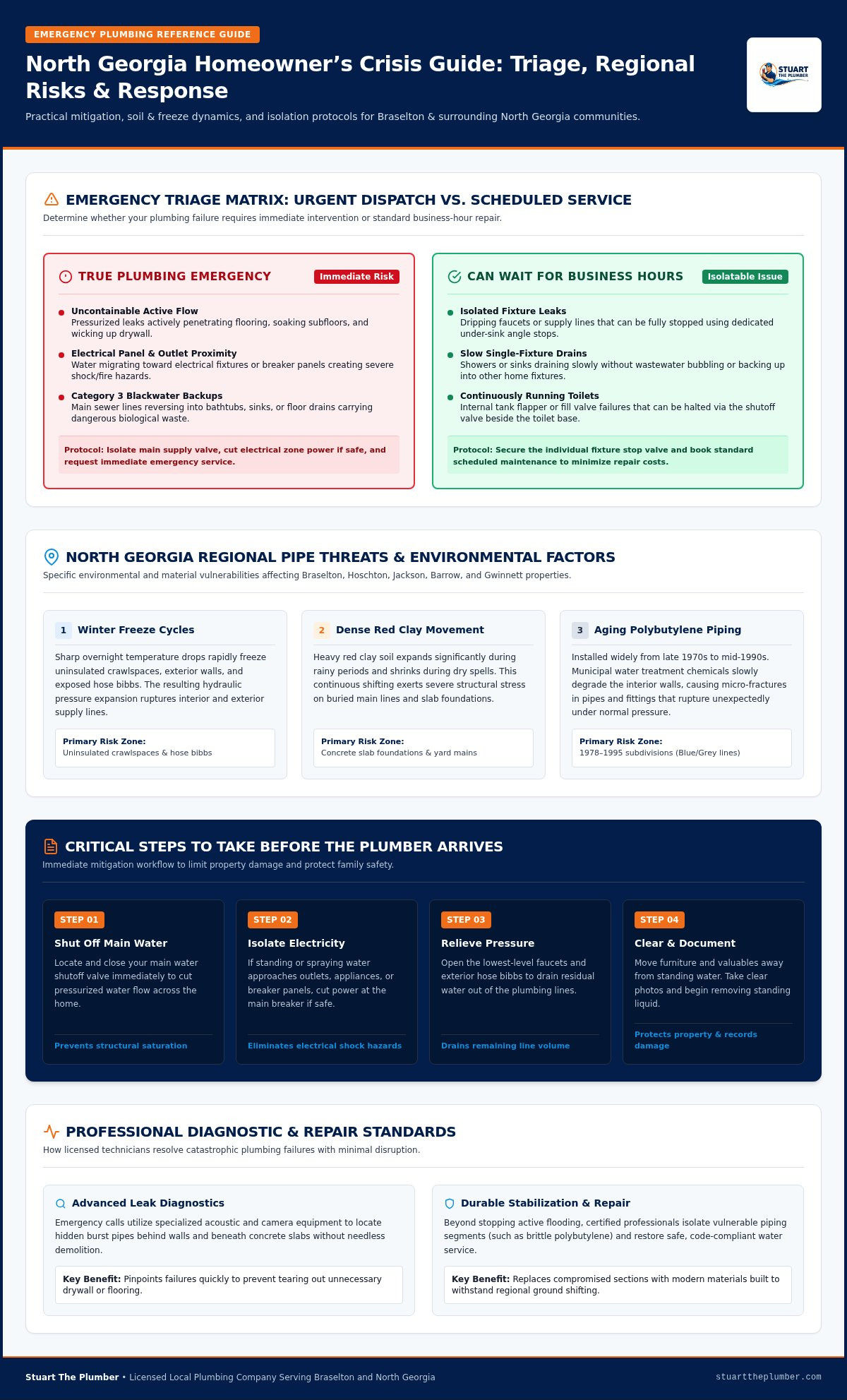
Water is moving fast. In the first minute, stop the supply if you can reach the main shut-off valve safely. This limits how much more water enters the damaged line and can help reduce damage to floors, walls, and belongings. If you can’t find or operate the valve, move people away from the leak and call a licensed plumber for guidance.
Once the supply is off, open hot and cold faucets to help drain water left in the lines and relieve pressure. Keep clear of wet electrical equipment. If water is near outlets, wiring, or appliances, don’t enter the affected area. Only turn off the main breaker if you can reach it without stepping into water or touching wet surfaces. If it isn’t safe, stay away and contact emergency services for help with the electrical hazard.
Locating Your Main Water Shut-Off Valve
Look near where the water line enters the home, such as a basement or crawlspace. Some homes have a shut-off near the water meter or street-side service entry. A ball valve usually turns a quarter turn, so its handle sits across the pipe when closed. A gate valve typically closes by turning its wheel clockwise. Don’t force a stuck or corroded valve; it could break or worsen the leak. Tell the plumber the valve isn’t working.
Temporary Mitigation While You Wait for a Plumber
After the water is off and the area is safe, photograph or video the leak and visible damage before cleanup. This record may be useful when you contact your insurer. Then remove standing water with towels, a mop, or a wet vacuum if available. Fans and dehumidifiers can help dry damp areas, but don’t use electrical equipment where water could reach it. Avoid patch kits on pressurized lines. A temporary patch may fail to address the damaged pipe or hidden leaks.
A permanent fix may require locating the break behind a wall or replacing a damaged section. Plumbing systems use different materials, each with its own repair considerations; see this overview of modern plumbing systems. For older homes with polybutylene piping, learn about polybutylene pipe replacement.
Stuart the Plumber, LLC is a licensed local company serving Braselton and nearby North Georgia communities. For burst pipe repair North Georgia homeowners can discuss the damage and permanent repair options with a plumbing professional. If you need to find a plumber emergency near me who serves your specific community, confirm service-area coverage and availability before requesting help. Call or schedule emergency plumbing service when the water is controlled and it’s safe to do so.
Common Causes of Pipe Failures in the North Georgia Region
A burst can follow a sudden cold snap, but winter isn’t the only possible cause. Excessive water pressure, corrosion, and aging or damaged pipe materials can also contribute. Finding the likely cause helps a plumber determine whether the damaged section needs repair or whether a broader pipe concern should be checked.
Winter Freezes and Exposed Plumbing
In North Georgia, temperatures can swing between mild days and freezing nights. Pipes in crawlspaces, attics, garages, and exterior walls have less protection from cold air. If water inside a pipe freezes, it expands and puts pressure on the pipe. Thawing may reveal a split or leak. The American Red Cross offers practical guidance on preventing and thawing frozen pipes.
There’s no verified basis here for ranking North Georgia cities by freeze-related plumbing calls. Homeowners in Braselton and nearby communities should focus on the conditions at their own property, especially exposed lines and unheated spaces.
Pressure, Corrosion, and Aging Pipes
Water pressure that’s too high can strain plumbing connections and pipe walls. A plumber can check the pressure and determine whether a pressure-reducing valve is appropriate for the home. Corrosion can also weaken older metal pipes. Pipe material, water conditions, installation, and maintenance all affect how a system holds up, so there isn’t one reliable lifespan that applies to every property.
Homes with older plumbing may benefit from an inspection if there are recurring leaks, visible corrosion, or changes in water flow. A burst pipe doesn’t automatically mean the entire system needs replacement, but the surrounding line should be assessed before choosing a repair.
Polybutylene Pipes: A Regional Risk
Polybutylene piping may appear as flexible gray, blue, or black plastic tubing, though color alone can’t confirm the material. It’s found in some older homes, including properties built in the late twentieth century. The pipe can fail unexpectedly, so visible leaks or signs of deterioration warrant attention. A licensed plumber can identify the material and discuss whether repair or replacement makes sense. For background on longer-term options, see the Polybutylene Pipe Replacement in Georgia guide.
Stuart the Plumber, LLC is a licensed local company serving Braselton and nearby North Georgia communities. If you’re concerned about aging or polybutylene piping, contact Stuart the Plumber, LLC to discuss an assessment and possible next steps.
Professional Burst Pipe Repair and Replacement Options
Once the water is off, a plumber can locate the damage, assess the affected pipe, and explain repair options. The right approach depends on where the break is, the pipe material, and whether nearby sections show signs of wear. Stuart the Plumber, LLC is a licensed local company serving Braselton and North Georgia, with experience in leak detection and pipe replacement.
Finding Hidden Leaks and Choosing a Repair
A leak behind a wall or beneath a floor may not appear directly above the damaged pipe. A plumber can use leak-detection methods to narrow down the source and check the surrounding line. Acoustic equipment or thermal imaging may be used in some investigations, depending on the conditions. More precise locating can help limit unnecessary access openings, though the extent of any wall or floor work depends on the leak.
For a localized break in an otherwise sound line, a plumber may recommend replacing the damaged section. If leaks recur or multiple areas show deterioration, whole-house repiping may be worth discussing. A professional assessment helps distinguish an isolated failure from a broader problem. Read more about leak detection in Braselton.
Underground Line Repair Options
For an underground leak, the repair plan depends on the line involved, its location, access, and the condition of the pipe. Trenchless methods can reduce the amount of excavation in some suitable situations, while conventional digging may be needed when the damaged section is difficult to access or the pipe requires direct replacement. A plumber can explain the tradeoffs for the property rather than assume one method fits every yard.
Stuart the Plumber, LLC provides trenchless pipe replacement expertise. The available approach should be confirmed for the specific line and repair. The company’s trenchless sewer repair guide explains one application of trenchless work.
Planning a Permanent Fix
Before work begins, ask what portion of the line is damaged, whether nearby piping needs inspection, and what repair or replacement options are appropriate. For burst pipe repair North Georgia homeowners should use a licensed professional for structural pipe work, especially when the leak is concealed or involves an underground line. Clear findings help you understand the proposed scope and next steps.

How to Prevent Future Pipe Bursts in North Georgia
Make prevention part of your routine, not just a response to a cold forecast. Check exposed plumbing before winter and after unusually cold weather. Remove garden hoses before freezing conditions and use insulated covers on outdoor faucets. During an extreme freeze, a slow drip from a vulnerable faucet may help keep water moving. If you’re unsure which fixtures or lines need attention, ask a plumber to assess your home.
Your Annual Winterization Checklist
- Look for gaps that let cold air reach plumbing in crawlspaces and other unheated areas.
- Confirm you know how to access the main water shut-off valve.
- Ask a plumber to check for recurring leaks, weakened pipe sections, or signs of excessive water pressure.
- Have water-heater components, including the pressure relief valve, checked by a qualified professional if you have concerns about their condition.
A routine plumbing inspection can help identify concerns before they become an emergency. It’s also a good time to discuss practical winter precautions for your property, especially if pipes have leaked before or are hard to access.
When Repiping May Be Worth Discussing
Seasonal precautions can help reduce freeze-related risks, but they won’t resolve deterioration throughout an aging plumbing system. If your home has recurring leaks or polybutylene pipes, ask a licensed plumber whether repairing a section or repiping is appropriate. The recommendation depends on the pipe material, its condition, and the history of leaks. Learn more about polybutylene pipe replacement in Georgia.
Repiping can involve replacing part or more of a home’s plumbing, depending on the assessment. Stuart the Plumber, LLC is a licensed local plumbing company serving Braselton and nearby North Georgia communities. A plumber can explain the proposed scope, expected disruption, and options before work begins.
Protect Your Home With a Clear Repair Plan
A burst pipe calls for quick, safe action: shut off the water if you can, stay clear of electrical hazards, and document visible damage before cleanup. Once the immediate leak is controlled, a plumber can locate the failure and explain whether a focused repair or broader replacement makes sense.
North Georgia cold snaps can put exposed pipes at risk, while aging materials may fail for different reasons. Insulating vulnerable lines and checking older plumbing can help you prepare, but recurring leaks deserve a professional assessment. Stuart the Plumber, LLC is a licensed local plumbing company serving Braselton and nearby North Georgia communities, with experience in leak detection and polybutylene pipe replacement.
If you’re dealing with a leak now, share what you’ve observed and ask about the next steps for burst pipe repair North Georgia. Clear information from a plumbing professional can help you make a practical plan for your home.
Taking action early can help you move from uncertainty toward a sound repair plan and better preparation for the next cold snap.
Frequently Asked Questions
How much does burst pipe repair cost in North Georgia?
There’s no single set price for burst pipe repair North Georgia; the scope depends on the break’s location, pipe material, access, and whether nearby sections need attention. Ask the plumber to inspect the damage and explain the proposed repair before work begins. Stuart the Plumber, LLC serves Braselton, Hoschton, Auburn, Winder, Dacula, Jefferson, Flowery Branch, Oakwood, Gainesville, Buford, Sugar Hill, Lawrenceville, Suwanee, Duluth, Grayson, Loganville, Commerce, and Johns Creek.
Is a burst pipe covered by my homeowner’s insurance?
Coverage depends on your policy, the cause of the damage, and your insurer’s review, so don’t assume a burst pipe is covered. Contact your insurance company to ask what your policy requires. If it’s safe, take photos or videos before cleanup, keep records of related expenses, and document the plumbing work. A plumber can assess the pipe and describe the repair, but your insurer determines coverage.
How do I know if a pipe has burst inside my wall?
Possible clues include damp or discolored drywall, bubbling paint, a soft or swollen area, a musty smell, or the sound of water when fixtures are off. These signs can point to a leak, but they don’t confirm a burst pipe. If you suspect hidden water, shut off the main supply if it’s safe and contact a plumber. Leak detection can help locate the source before deciding what access or repair is needed.
Can I use a hair dryer to thaw a frozen pipe safely?
A hair dryer may be used on an exposed frozen pipe only if the pipe and surrounding area are dry and you can work safely. Keep the dryer away from water, use gentle heat, and never use an open flame. Don’t try to thaw a pipe that’s leaking, hidden, or near wet electrical equipment. If you can’t safely reach the pipe or aren’t sure it’s intact, stop and call a plumber.
What should I do if my main water shut-off valve is broken?
Don’t force a stuck or corroded valve with a wrench or pliers; it could break further or worsen the leak. Keep clear of standing water and electrical hazards, and contact a licensed plumber for help shutting off the supply and assessing the valve. If water is spreading near electrical equipment, don’t enter the area. Tell the plumber where the valve is and what happens when you try to operate it.
Why do pipes burst even if the temperature is above freezing?
The outdoor temperature doesn’t reflect conditions around every pipe. Lines in a crawlspace, attic, garage, or exterior wall can get much colder than the air outside. A pipe stressed by freezing may not show a leak until ice thaws. Excessive water pressure, corrosion, aging materials, or a blockage can also contribute to failure. If you notice damp areas, water sounds, or a sudden change in flow, contact a plumber emergency near me in North Georgia to investigate.
Article by
Stuart Balestracci
Stuart is a third-generation master plumber dedicated to providing dependable, honest plumbing service throughout Braselton and North Georgia. Building on a family tradition of hands-on trade expertise, he brings practical problem-solving and high standards to every job—from urgent leaks and clogged drains to water heaters, sewer lines, and whole-home repiping.
Stuart believes customers deserve clear answers, quality workmanship, and repairs that address the real issue—not a quick fix that creates another problem later. Through Stuart the Plumber, LLC, he serves homeowners, property managers, and businesses with professional service, straightforward communication, and respect for their property. The company operates as a licensed Georgia plumbing business, license MP208668.
Disclaimer
The information in this article is provided for general educational and informational purposes only. While Sturat the Plumber, LLC makes reasonable efforts to keep information accurate and current, plumbing conditions, building systems, local codes, manufacturer instructions, and repair requirements vary by property and may change over time.
This content is not a substitute for an on-site inspection, diagnosis, estimate, professional plumbing service, or advice from a properly licensed professional. Do not rely on this article to diagnose gas leaks, sewer backups, hidden water leaks, water-heater failures, burst pipes, or other potentially hazardous conditions.
Plumbing work can involve risks including water damage, electrical hazards, gas hazards, sewage exposure, structural damage, and personal injury. Always follow applicable local codes, product instructions, and safety requirements. For active leaks, suspected gas leaks, sewage backups, flooding, loss of water service, or any situation that may create an immediate safety risk, contact a qualified professional or emergency services as appropriate.
Sturat the Plumber, LLC does not guarantee that the information in this article is complete, suitable for every property, or applicable to your specific circumstances. Any decisions or actions taken based on this content are at your own risk. Sturat the Plumber, LLC disclaims liability for loss, damage, injury, expense, or other consequences arising from the use of or reliance on this information.
For an evaluation of your specific plumbing concern, contact Sturat the Plumber, LLC for professional service. Sturat the Plumber, LLC is a licensed Georgia plumbing business, license MP208668.