

North Georgia homeowners face a clear tradeoff: traditional tank units run $882–$1,826 installed, while tankless systems cost $1,000–$3,500 fully installed. Tankless units save space and energy over a longer lifespan but demand pricier upfront work. Sizing depends on household size and simultaneous hot-water use. Stuart The Plumber serves North Georgia with upfront, project-specific estimates for either system.
Tankless vs. Traditional: Which Is Right for North Georgia?
Choosing between a tankless and a traditional water heater affects monthly energy bills and daily hot water availability. Heating water accounts for roughly 18 percent of a household’s energy use, according to the U.S. Department of Energy, making this decision critical for North Georgia homeowners. The right choice depends on household size, budget, and long-term priorities.
How Long Does Each System Last?
Traditional tank water heaters typically last 8–12 years before requiring replacement. Tankless units often operate for 20 years or more with proper maintenance. That longer lifespan offsets the higher upfront cost for many homeowners who plan to stay in their homes long-term.
What About Hot Water Supply?
A traditional tank heater stores 40–50 gallons of hot water and takes time to reheat after depletion. Tankless systems heat water on demand, providing an unlimited supply. Larger North Georgia households with multiple bathrooms benefit significantly from this continuous flow.
Why Energy Efficiency Matters in North Georgia
Standby heat loss is a hidden cost with traditional tanks. The unit constantly reheats stored water, even when nobody uses it. Tankless models eliminate this waste entirely. For North Georgia homeowners with older electric water heaters, the energy savings become even more significant.
Making the Final Decision
Homeowners seeking lower upfront costs and simpler installation often choose traditional tanks. Those prioritizing long-term savings, unlimited hot water, and space efficiency lean toward tankless. Stuart The Plumber provides licensed, local plumbers with fast, reliable service and upfront pricing for [residential plumbing](https://stuarttheplumber.com/braselton-plumber-stuart-the-plumber/) needs across North Georgia. Whether the project involves [water heater installation Braselton GA](https://stuarttheplumber.com/water-heater-repair-replacement/) or a [tankless water heater Winder GA](https://stuarttheplumber.com/winder-plumber-stuart-the-plumber/) upgrade, the team helps homeowners evaluate both options against their specific household demands.
What Does Water Heater Replacement Cost in 2026?
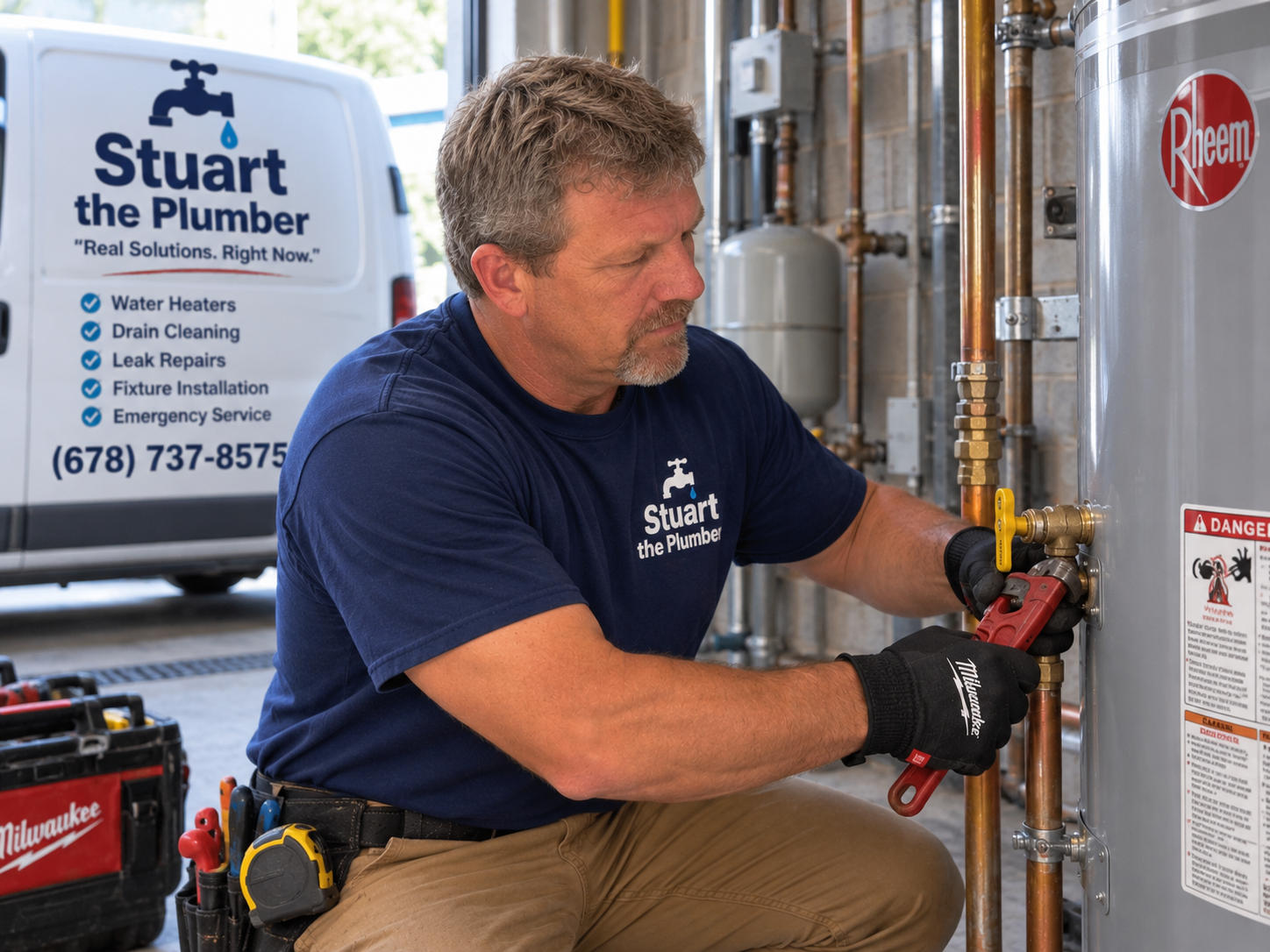
Water heater replacement costs in 2026 range from $882 to $1,826 installed, with a national average of $1,347, according to Angi’s water heater replacement guide (national estimate, July 2026). Tankless systems carry a higher price tag. A tankless water heater costs $500–$2,800 for the unit and $1,000–$3,500 fully installed in 2026, depending on fuel type and installation complexity.
How Do Tank and Tankless Costs Compare?
The table below shows the key cost differences between standard tank and tankless water heaters for North Georgia homeowners.
Replacing an existing tankless system usually costs less than converting from a tank. The gas line, venting, and electrical work are already in place for a like-for-like swap. A conversion from a storage tank requires new venting and often a gas line upgrade, which pushes the total higher.
What Factors Affect the Final Price for North Georgia Homes?
Several variables influence the final cost for residential plumbing projects in the region. Fuel type matters: gas units typically cost more to install than electric models due to venting requirements. Installation complexity also plays a role. A straightforward replacement in an accessible basement costs less than a retrofit in a tight crawlspace or attic.
Stuart The Plumber provides upfront pricing for water heater installation Braselton GA homeowners can trust. Clients know the total cost before any work begins, eliminating surprise charges. This approach applies to both standard tank replacements and tankless water heater Winder GA installations. The company serves North Georgia properties with licensed, local plumbers who complete the job right the first time.
How Do Energy Efficiency and Savings Compare?
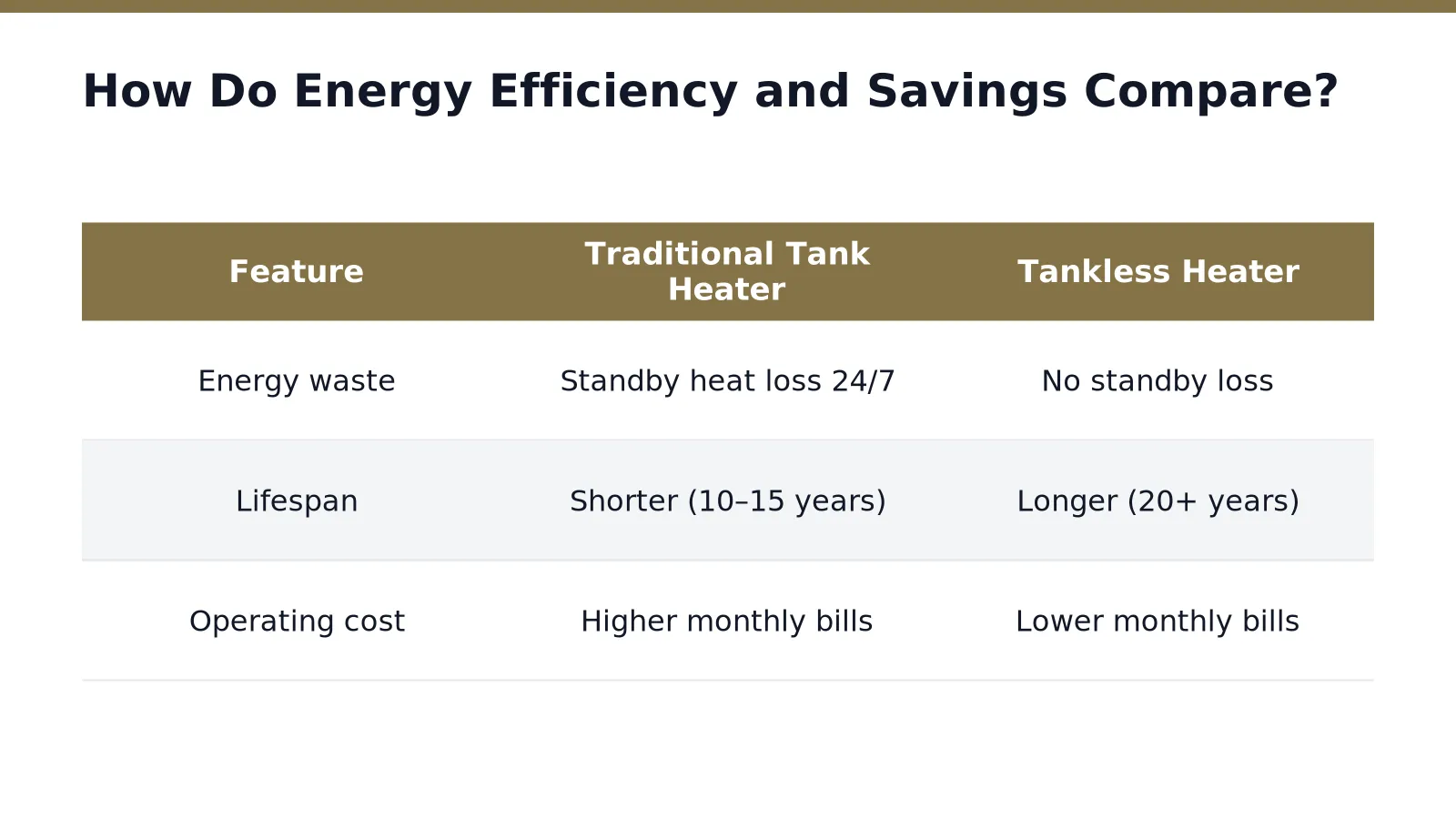
Energy efficiency determines how much a water heater costs to operate over its lifetime. A newer model almost always outperforms an older one on efficiency, thanks to updated U.S. Department of Energy standards. Homeowners in North Georgia who choose a high-efficiency system lock in lower utility bills for the next decade or more.
What Makes Tankless Systems More Efficient?
Tankless water heaters heat water only on demand, eliminating standby heat loss. Traditional tank units keep 40 to 50 gallons hot around the clock, wasting energy even when no one uses water. This constant reheating adds measurable cost to monthly bills. A tankless water heater winder ga household can expect to see that waste disappear after installation.
How Do Lifespan and Long-Term Savings Compare?
Tankless units typically last longer than tank-style heaters, which reduces replacement frequency. A longer service life combined with lower daily energy use creates substantial savings over time. For homeowners evaluating residential plumbing upgrades, the efficiency gap between tank and tankless models makes a clear financial difference.
A water heater installation braselton ga project that switches from a tank to a tankless system eliminates the hidden cost of keeping water hot when nobody needs it. The efficiency gain pays back year after year.
What Size Water Heater Does Your North Georgia Home Need?
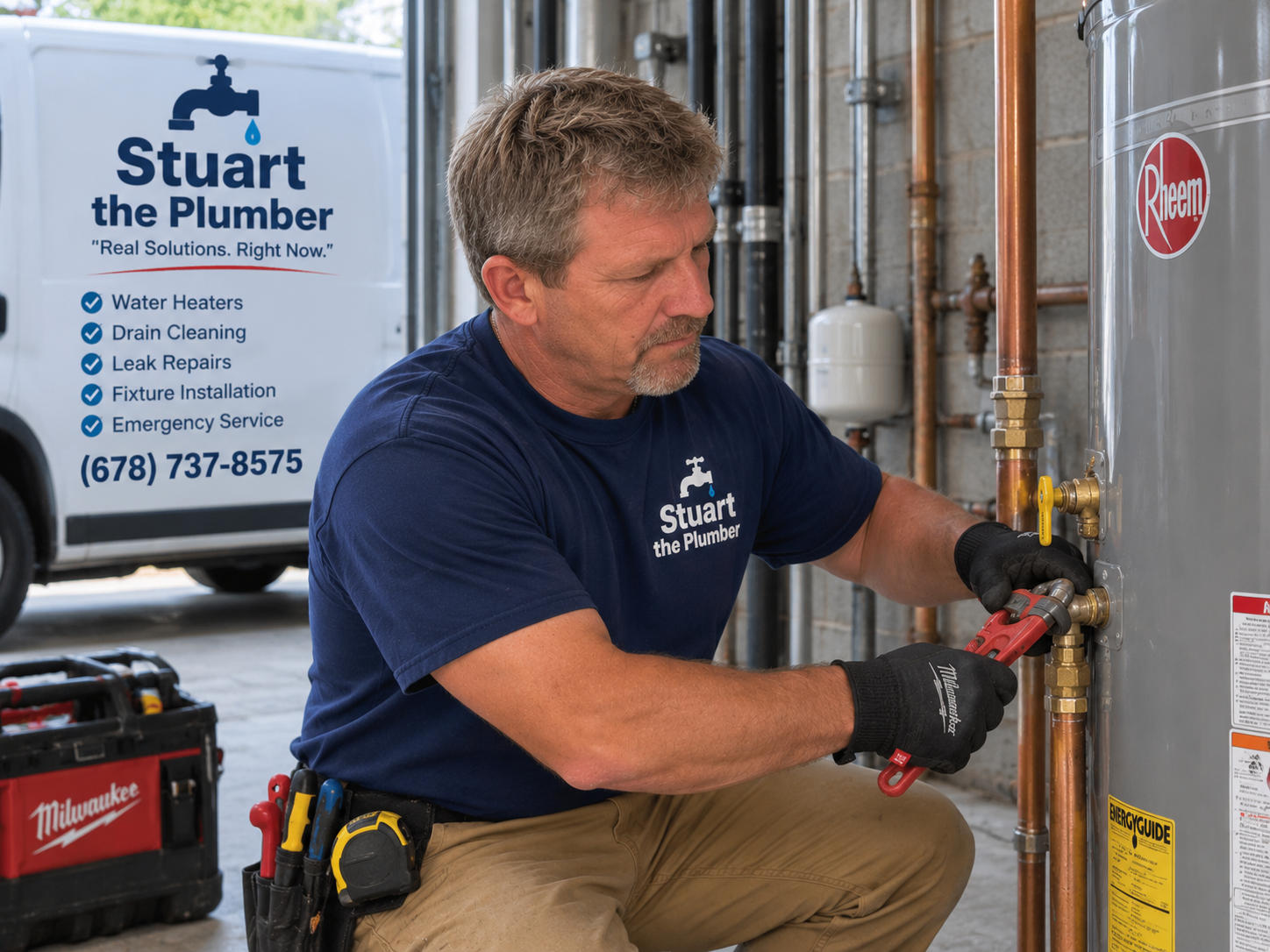
Selecting the correct water heater size for a North Georgia home depends primarily on household hot water demand and the type of system chosen. Most U.S. homes still use 40–50 gallon storage tank water heaters, a standard that suits many families but has clear limitations. A tank system stores and reheats a fixed volume of water, meaning a household of four or more can exhaust that supply during back-to-back showers or simultaneous appliance use. The result is cold water mid-shower, a frustration that signals undersizing.
How Does Household Size Affect Water Heater Capacity?
A family of two or three in a North Georgia home typically manages well with a 40-gallon tank. Larger households of four or more often require a 50-gallon or even 80-gallon unit to maintain consistent hot water during peak morning and evening routines. Traditional tank water heaters have a limited hot water supply, which can be a drawback for larger families. The recovery rate, how fast the unit reheats the stored water, also matters. Gas models recover faster than electric ones. A gas 40-gallon tank can sometimes outperform an electric 50-gallon unit in continuous use.
When Does a Tankless System Make More Sense?
Tankless water heaters provide unlimited hot water on demand, ideal for North Georgia homes with high usage. Instead of storing 40 or 50 gallons, a tankless unit heats water instantly as it flows through the system. This eliminates the risk of running out of hot water entirely. A whole-house tankless unit sized for the home’s peak flow rate, measured in gallons per minute, supports multiple showers, a dishwasher, and a washing machine running simultaneously. For homeowners considering a tankless water heater winder ga installation, proper sizing by a professional ensures the unit matches the home’s gas line capacity and fixture count.
A licensed residential plumbing contractor evaluates the home’s existing infrastructure before recommending a size. Stuart The Plumber treats each customer’s home like their own, ensuring proper sizing for North Georgia properties. The team measures fixture flow rates, checks gas line pressure for tankless models, and accounts for seasonal groundwater temperature. Colder incoming water in North Georgia winters requires more heating capacity. This thorough approach prevents the costly mistake of an undersized unit that leaves a family without hot water or an oversized one that wastes energy.
How to Choose Between Tank and Tankless for Your Home?
The choice between a tank and a tankless water heater comes down to upfront cost versus long-term energy savings. Tankless systems cost more up front but use less energy over time, making them a strong fit for many North Georgia households.
What Are the Main Trade-Offs?
Traditional tank water heaters carry a lower initial price tag, which appeals to many homeowners in Braselton and surrounding areas. However, those units come with a larger footprint, taking up valuable floor space in basements, garages, or utility closets. A bulky 40 to 50 gallon tank can crowd a tight space and limit storage options.
Tankless water heaters solve that problem. These space-saving systems mount directly on a wall, freeing up floor space in basements or closets for other uses. The compact design appeals to homeowners who want a cleaner, more organized utility area.
How Does Energy Efficiency Affect the Decision?
Energy efficiency drives the long-term value of either choice. A tankless unit heats water only when needed, which explains its lower energy consumption. That efficiency translates into reduced utility bills month after month, offsetting the higher purchase price over the life of the system.
Why Does Professional Guidance Matter?
Selecting the right system involves more than comparing price tags. A licensed plumber can assess the home’s water usage patterns, available space, and existing gas or electrical connections. Stuart The Plumber provides transparent and personalized service to help North Georgia homeowners make the right choice, treating each customer’s home like their own. That level of care ensures the selected unit fits the property’s specific needs and delivers reliable residential plumbing performance for years to come.
What Are the Installation Requirements for Each Type?
A tank-to-tankless conversion in North Georgia requires new gas line, venting, and electrical work. Replacing an existing tankless system is simpler since that infrastructure is already in place. These differences directly affect project complexity and cost for homeowners considering a water heater installation Braselton GA property owners can plan around.
What changes are needed for a tank-to-tankless conversion?
Switching from a storage tank to a tankless unit demands three major infrastructure upgrades. The gas line must be sized to handle the higher BTU demand of an on-demand heater. Venting materials and routing change completely, since tankless units use power-vent or direct-vent systems rather than natural draft. Electrical work is also required, even for gas models, because the ignition and control boards need a dedicated circuit.
Why does replacing a tankless system cost less?
Replacing an existing tankless unit avoids all three infrastructure changes. The gas line, venting, and electrical connections are already in place and properly sized. This reduces labor time and material costs significantly. For homeowners exploring tankless water heater Winder GA options, a like-for-like replacement keeps the project straightforward.
Stuart The Plumber handles both conversion and replacement projects across North Georgia. The company’s residential plumbing team assesses existing infrastructure before any work begins, ensuring the installation meets local code requirements without surprises.
How Does Maintenance Differ Between Tank and Tankless?
Maintenance requirements differ significantly between tank and tankless water heaters, affecting long-term costs and reliability for North Georgia homeowners. Tankless units demand periodic descaling to remove mineral buildup, while tank models require annual flushing and anode rod inspections.
What Maintenance Does a Tankless Water Heater Need?
Tankless water heaters require descaling every 12 to 24 months, depending on local water hardness. This process removes calcium and lime deposits that accumulate inside the heat exchanger. Neglecting this maintenance reduces efficiency and shortens the unit’s lifespan. Homeowners in North Georgia with hard water may need more frequent service.
How Often Should a Tank Water Heater Be Serviced?
Traditional tank water heaters need annual flushing to remove sediment from the bottom of the tank. Anode rods should be inspected yearly and replaced when corroded. These steps prevent rust and extend the unit’s life. A tank water heater typically lasts 8 to 12 years, requiring more frequent replacement than a tankless system.
Residential plumbing professionals recommend factoring maintenance costs into the total ownership decision. Tankless systems have higher upfront service expenses but fewer replacements over time. Stuart The Plumber provides maintenance for both system types across North Georgia, ensuring plumbing issues are fixed right the first time. Regular service protects equipment investment and prevents unexpected failures.
Why Choose Stuart The Plumber for Your Replacement?
Homeowners in North Georgia need a plumbing partner who delivers reliable work without surprises. Stuart The Plumber provides licensed, local plumbers with fast, reliable service and upfront pricing, ensuring plumbing issues are fixed right the first time. This approach eliminates the guesswork that often accompanies emergency repairs or planned replacements.
What makes their service approach different?
The company is committed to community-centric values with a focus on transparent and personalized service. Stuart The Plumber treats each customer’s home like their own, ensuring quality workmanship on every job. This philosophy means the team takes the same care with a water heater installation braselton ga project as they would with their own property.
How does this benefit a tankless water heater installation?
For a tankless water heater winder ga installation, precision matters. A poorly installed unit wastes energy and shortens equipment life. Stuart The Plumber’s upfront pricing and thorough approach to residential plumbing mean homeowners receive a system that performs as designed from day one.
Choosing a company that combines technical skill with transparent communication protects both the investment and the homeowner’s peace of mind.
Conclusion
In closing, the choice between tankless and traditional water heaters shapes North Georgia homeowners’ comfort and utility costs for years ahead. Whether you prioritize lower operating expenses or simpler maintenance, the right decision rests on your home’s specific needs and infrastructure. Stuart The Plumber’s licensed team delivers the transparent guidance and skilled installation that transforms this complex decision into confident action, ensuring your water heating system performs reliably from day one.
Leave a Reply